Necessary Cookies

Required for the site to function. Cannot be disabled.

Analytics Cookies

Help us understand how visitors interact with our site (Google Analytics via GTM).

Marketing Cookies

Used to track visitors and deliver personalised advertisements.

We use cookies to enhance your browsing experience and analyse site traffic. By clicking Accept All, you consent to our use of cookies. Privacy Policy
NewsFire Global
Home News Europe World Christianity Culture Wars Opinion Video
Information
About Us Authors Advertising Terms & Conditions Privacy Policy Contact
R2B Media
R2B NEWSFIRE.GR PAPAFOTIS.GR THRACTION HELLENIC CONSERVATIVES RIGHT2THEBONE YT
News World

Second Amendment Battles Erupt Over 3D-Printed Gun Laws

At least 16 states have enacted laws restricting 3D-printed ghost guns in 2026, with seven passing major restrictions this year amid heated constitutional debates over Second Amendment rights.
Stefanos Banos
Stefanos Banos Staff Writer
JUNE 12, 2026 AT 4:11 PM

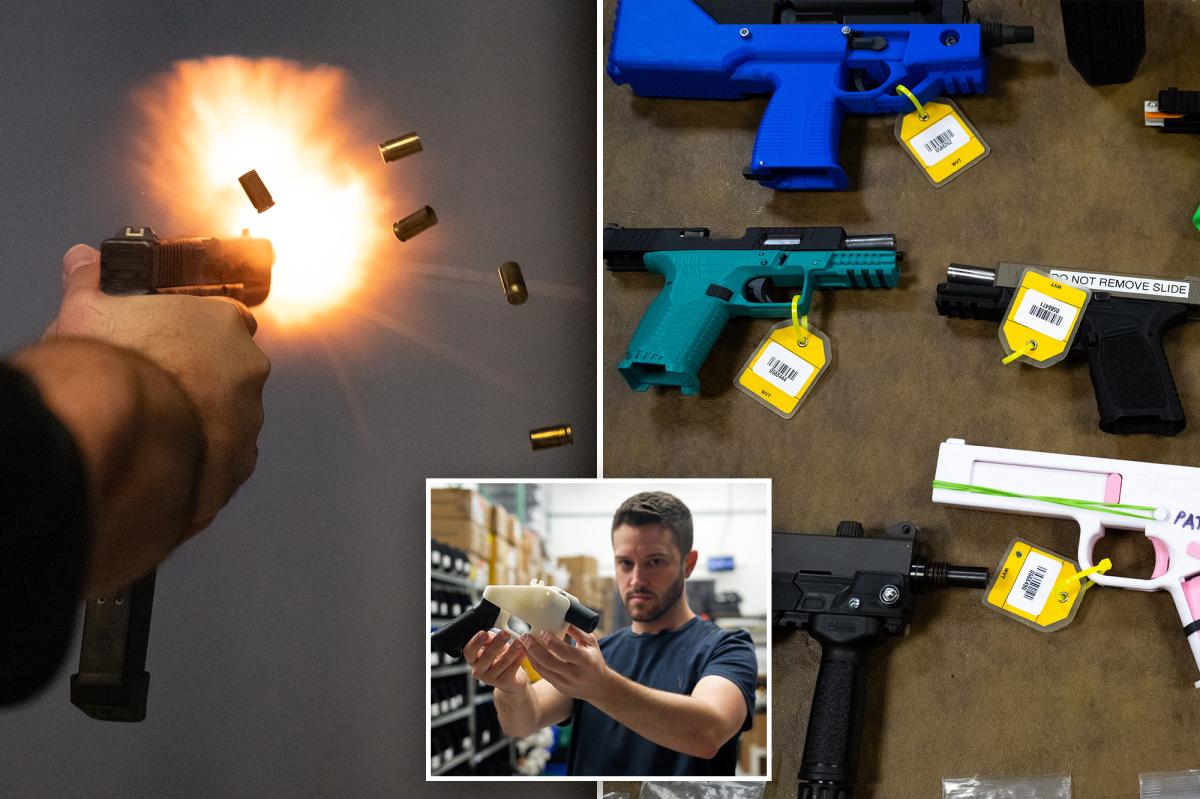
According to New York Post, at least 16 states have now enacted legislation targeting 3D-printed weapons, with seven states passing major restrictions this year alone. These firearms, manufactured without serial numbers and often produced using 3D printers, have become a flashpoint in the national debate over gun rights.

This year has seen lawmakers in Colorado, New Jersey, Maine, New York, Virginia and Washington impose various limitations on weapons manufactured without serial numbers. California has gone further still, advancing legislation that would mandate 3D printer manufacturers install blocking technology to prevent their devices from printing firearm components.

New York incorporated similar requirements into its state budget, with the law set to take effect by mid-June. Manhattan District Attorney Alvin Bragg, a Democrat, drew parallels between the new restrictions and existing safeguards that prevent commercial printers from reproducing US currency.

Maine’s legislature passed a bill in January requiring all firearms, including those manufactured through 3D printing, to carry serial numbers. That same month, then-Governor Phil Murphy signed Bill A4975 in New Jersey, which goes so far as to require state residents to hold a firearms license merely to possess instructions or blueprints for printing 3D firearms.

Colorado and Virginia have enacted comparable measures against serialless weapons. Washington state Governor Bob Ferguson signed legislation in March restricting possession of such firearms while also imposing controls on digital blueprints and manufacturing devices.

A comprehensive Minnesota legislative package addressing these weapons failed to clear the statehouse in March.

The regulatory push comes amid a dramatic surge in 3D-printed firearms recovered at crime scenes nationwide. Bureau of Alcohol, Tobacco, Firearms and Explosives data shows authorities recovered more than 27,000 3D-printed ghost guns from crime scenes in January 2023, compared to just over 1,600 in January 2017.

Gun control advocates point to the proliferation of accessible 3D printing technology as a public safety threat. Everytown For Gun Safety warns that as printing technology becomes more affordable, young people can increasingly manufacture firearms without parental knowledge, with the issue now reaching school classrooms where 3D printers are used for educational purposes.

Second Amendment advocates sharply dispute these restrictions as constitutional violations. William Sack, senior director of legal operations at the Second Amendment Foundation, argued that bans fail to address the root cause of gun violence. The gun is not the problem. The individual committing the crime is the problem, Sack told Stateline.

Multiple states now face constitutional challenges over their restrictions. In February, a three-judge panel of the United States Court of Appeals for the Third Circuit ruled against Texas-based Defense Distributed, a 3D-gun blueprint designer, upholding New Jersey’s cease and desist order that blocked the company from distributing gun-printing blueprints to unlicensed individuals.

Defense Distributed is requesting the full court reconsider the case and plans to petition the Supreme Court if unsuccessful, according to the Association of New Jersey Rifle and Pistol Clubs.

With information from New York Post

Share:
Stefanos Banos
Stefanos Banos

Stefanos Banos was born in Piraeus and is an editor at NewsFire.GR, specializing in political analysis and international relations. He graduated from the Department of Communication and Media at the University of Bremen in Germany, where he also completed his Master of Arts in Communication and Media Studies. Married to Zoi, he is a proud father of three boys.

According to New York Post, at least 16 states have now enacted legislation targeting 3D-printed weapons, with seven states passing major restrictions this year alone. These firearms, manufactured without serial numbers and often produced using 3D printers, have become a flashpoint in the national debate over gun rights.

This year has seen lawmakers in Colorado, New Jersey, Maine, New York, Virginia and Washington impose various limitations on weapons manufactured without serial numbers. California has gone further still, advancing legislation that would mandate 3D printer manufacturers install blocking technology to prevent their devices from printing firearm components.

New York incorporated similar requirements into its state budget, with the law set to take effect by mid-June. Manhattan District Attorney Alvin Bragg, a Democrat, drew parallels between the new restrictions and existing safeguards that prevent commercial printers from reproducing US currency.

Maine’s legislature passed a bill in January requiring all firearms, including those manufactured through 3D printing, to carry serial numbers. That same month, then-Governor Phil Murphy signed Bill A4975 in New Jersey, which goes so far as to require state residents to hold a firearms license merely to possess instructions or blueprints for printing 3D firearms.

Colorado and Virginia have enacted comparable measures against serialless weapons. Washington state Governor Bob Ferguson signed legislation in March restricting possession of such firearms while also imposing controls on digital blueprints and manufacturing devices.

A comprehensive Minnesota legislative package addressing these weapons failed to clear the statehouse in March.

The regulatory push comes amid a dramatic surge in 3D-printed firearms recovered at crime scenes nationwide. Bureau of Alcohol, Tobacco, Firearms and Explosives data shows authorities recovered more than 27,000 3D-printed ghost guns from crime scenes in January 2023, compared to just over 1,600 in January 2017.

Gun control advocates point to the proliferation of accessible 3D printing technology as a public safety threat. Everytown For Gun Safety warns that as printing technology becomes more affordable, young people can increasingly manufacture firearms without parental knowledge, with the issue now reaching school classrooms where 3D printers are used for educational purposes.

Second Amendment advocates sharply dispute these restrictions as constitutional violations. William Sack, senior director of legal operations at the Second Amendment Foundation, argued that bans fail to address the root cause of gun violence. The gun is not the problem. The individual committing the crime is the problem, Sack told Stateline.

Multiple states now face constitutional challenges over their restrictions. In February, a three-judge panel of the United States Court of Appeals for the Third Circuit ruled against Texas-based Defense Distributed, a 3D-gun blueprint designer, upholding New Jersey’s cease and desist order that blocked the company from distributing gun-printing blueprints to unlicensed individuals.

Defense Distributed is requesting the full court reconsider the case and plans to petition the Supreme Court if unsuccessful, according to the Association of New Jersey Rifle and Pistol Clubs.

With information from New York Post

