Necessary Cookies

Required for the site to function. Cannot be disabled.

Analytics Cookies

Help us understand how visitors interact with our site (Google Analytics via GTM).

Marketing Cookies

Used to track visitors and deliver personalised advertisements.

We use cookies to enhance your browsing experience and analyse site traffic. By clicking Accept All, you consent to our use of cookies. Privacy Policy
NewsFire Global
Home News Europe World Christianity Culture Wars Opinion Video
Information
About Us Authors Advertising Terms & Conditions Privacy Policy Contact
R2B Media
R2B NEWSFIRE.GR PAPAFOTIS.GR THRACTION HELLENIC CONSERVATIVES RIGHT2THEBONE YT
News Europe

Dreams of an EU army just crashed into reality

The Franco-German fighter jet project collapsed after years of negotiations, exposing deep fractures in EU military integration dreams built on decades of American defense subsidies.

Dimitris Papafotis
Dimitris Papafotis Editor in Chief
JUNE 12, 2026 AT 10:05 AM

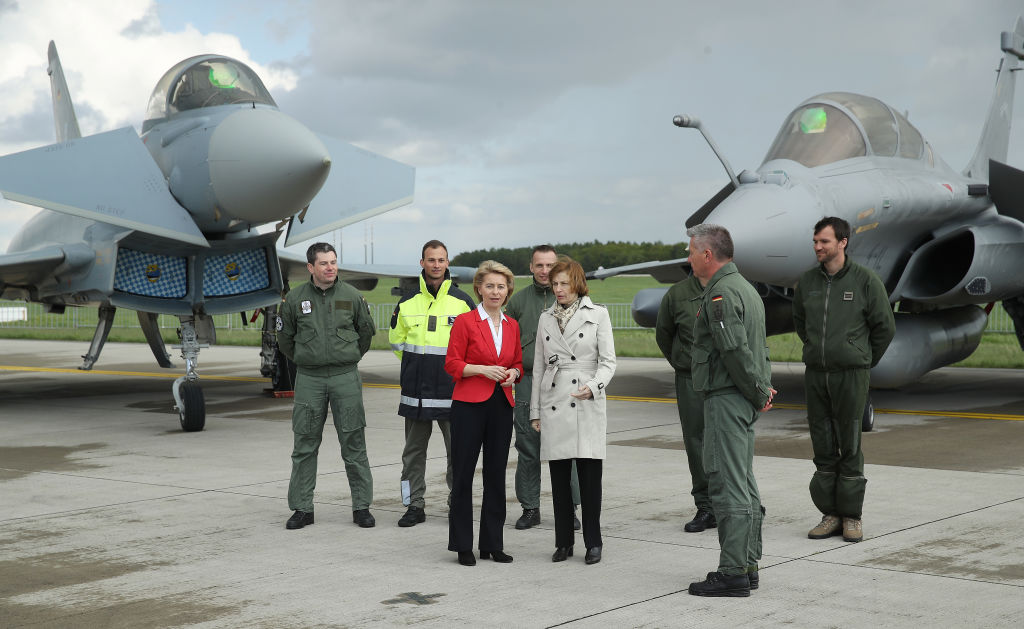
According to Brussels Signal, the multi-billion euro project between aerospace giants Airbus and Dassault Aviation has been scrapped after years of negotiations broke down over a fundamental issue: neither side could agree on who would lead and who would follow. The German-Spanish consortium Airbus and France’s Dassault Aviation were meant to jointly develop a next-generation fighter jet to replace the Eurofighter Typhoon and Dassault Rafale currently in service.

French President Emmanuel Macron famously declared the initiative a revolution back in 2017. Last week, however, he met with German Chancellor Friedrich Merz and confirmed the project would not be moving forward. The failure marks more than just an industrial setback — it symbolizes the unraveling of the EU’s most concrete attempt at military integration.

The EU Paradise Built on American Protection

The collapse of the fighter jet program reveals uncomfortable truths about the European Union’s structural weaknesses. For over three decades, Brussels has operated within a geopolitical bubble sustained by a simple formula: high taxation, minimal defense spending subsidized by Washington, and cheap Russian energy. This arrangement funded generous social programs including universal healthcare, extended vacation periods, and robust pension systems.

As Brussels Signal reports, it is no accident that the European Union was formally established in 1992, just one year after the Cold War ended and America’s unipolar dominance began. Equally telling is the fact that every EU member state except Sweden and Finland joined NATO before joining the EU — sometimes by mere months, as with the Baltic states in 2004.

European nations first secured themselves under America’s security umbrella before submitting to Brussels’ regulatory authority. That umbrella, however, is now rapidly closing.

Washington’s Patience Runs Out

After years of warnings that went largely unheeded, American frustration with European free-riding has reached a breaking point. Thousands of U.S. troops are scheduled to withdraw from Germany, and the Pentagon has announced plans to reduce both troop levels and materiel commitments to NATO in future crisis scenarios.

The departure of America as Europe’s security guarantor will create a power vacuum that will inevitably resurface old geopolitical realities. European nations have historically been defined by separate and often conflicting national interests. There is no natural reason Spain and Estonia, or Romania and France, should share foreign policy objectives. American military presence eliminated the need — and the ability — for European powers to pursue independent or antagonistic policies.

Multipolarity Without Balance

History shows that prolonged peace in a multipolar Europe requires either overwhelming force or extraordinarily delicate balancing acts. The relatively peaceful period from 1815 to 1870 was maintained through careful diplomatic equilibrium, much of it orchestrated by Austrian statesman Klemens von Metternich, who worked tirelessly to preserve his fragile multi-ethnic empire.

Those arrangements were grounded in hard power and tangible national interests. The European Union, by contrast, rests on abstract liberal internationalist principles and feel-good rhetoric that lacks enforcement mechanisms or genuine deterrent capability. Such foundations cannot hold a continent together when real geopolitical pressures return.

France and Germany Face Strategic Divergence

The failed fighter jet project highlights growing strategic divergence between Europe’s two largest powers. Macron has consistently pursued French leadership of a more autonomous European defense structure, while German interests and industrial priorities increasingly pull in different directions. Without American oversight to paper over these differences, the fundamental incompatibility of French and German ambitions becomes impossible to ignore.

The death of the Franco-German fighter jet is more than an industrial failure. It represents the collision of EU federalist fantasy with the harsh reality of competing national interests, divergent strategic priorities, and the end of the post-Cold War security order that made European integration possible in the first place.

With information from Brussels Signal

Share:
Dimitris Papafotis
Dimitris Papafotis

Dimitris Papafotis is the editor-in-chief of NewsFire.GR. He was born and raised in Athens. He studied at the Journalism Workshop (1991-1993). He currently lives in Pyrgos, Ilia, where he has been active in radio and various newspapers, while also maintaining his personal blog, Papafotis.gr.

According to Brussels Signal, the multi-billion euro project between aerospace giants Airbus and Dassault Aviation has been scrapped after years of negotiations broke down over a fundamental issue: neither side could agree on who would lead and who would follow. The German-Spanish consortium Airbus and France’s Dassault Aviation were meant to jointly develop a next-generation fighter jet to replace the Eurofighter Typhoon and Dassault Rafale currently in service.

French President Emmanuel Macron famously declared the initiative a revolution back in 2017. Last week, however, he met with German Chancellor Friedrich Merz and confirmed the project would not be moving forward. The failure marks more than just an industrial setback — it symbolizes the unraveling of the EU’s most concrete attempt at military integration.

The EU Paradise Built on American Protection

The collapse of the fighter jet program reveals uncomfortable truths about the European Union’s structural weaknesses. For over three decades, Brussels has operated within a geopolitical bubble sustained by a simple formula: high taxation, minimal defense spending subsidized by Washington, and cheap Russian energy. This arrangement funded generous social programs including universal healthcare, extended vacation periods, and robust pension systems.

As Brussels Signal reports, it is no accident that the European Union was formally established in 1992, just one year after the Cold War ended and America’s unipolar dominance began. Equally telling is the fact that every EU member state except Sweden and Finland joined NATO before joining the EU — sometimes by mere months, as with the Baltic states in 2004.

European nations first secured themselves under America’s security umbrella before submitting to Brussels’ regulatory authority. That umbrella, however, is now rapidly closing.

Washington’s Patience Runs Out

After years of warnings that went largely unheeded, American frustration with European free-riding has reached a breaking point. Thousands of U.S. troops are scheduled to withdraw from Germany, and the Pentagon has announced plans to reduce both troop levels and materiel commitments to NATO in future crisis scenarios.

The departure of America as Europe’s security guarantor will create a power vacuum that will inevitably resurface old geopolitical realities. European nations have historically been defined by separate and often conflicting national interests. There is no natural reason Spain and Estonia, or Romania and France, should share foreign policy objectives. American military presence eliminated the need — and the ability — for European powers to pursue independent or antagonistic policies.

Multipolarity Without Balance

History shows that prolonged peace in a multipolar Europe requires either overwhelming force or extraordinarily delicate balancing acts. The relatively peaceful period from 1815 to 1870 was maintained through careful diplomatic equilibrium, much of it orchestrated by Austrian statesman Klemens von Metternich, who worked tirelessly to preserve his fragile multi-ethnic empire.

Those arrangements were grounded in hard power and tangible national interests. The European Union, by contrast, rests on abstract liberal internationalist principles and feel-good rhetoric that lacks enforcement mechanisms or genuine deterrent capability. Such foundations cannot hold a continent together when real geopolitical pressures return.

France and Germany Face Strategic Divergence

The failed fighter jet project highlights growing strategic divergence between Europe’s two largest powers. Macron has consistently pursued French leadership of a more autonomous European defense structure, while German interests and industrial priorities increasingly pull in different directions. Without American oversight to paper over these differences, the fundamental incompatibility of French and German ambitions becomes impossible to ignore.

The death of the Franco-German fighter jet is more than an industrial failure. It represents the collision of EU federalist fantasy with the harsh reality of competing national interests, divergent strategic priorities, and the end of the post-Cold War security order that made European integration possible in the first place.

With information from Brussels Signal

