Necessary Cookies

Required for the site to function. Cannot be disabled.

Analytics Cookies

Help us understand how visitors interact with our site (Google Analytics via GTM).

Marketing Cookies

Used to track visitors and deliver personalised advertisements.

We use cookies to enhance your browsing experience and analyse site traffic. By clicking Accept All, you consent to our use of cookies. Privacy Policy
NewsFire Global
Home News Europe World Christianity Culture Wars Opinion Video
Information
About Us Authors Advertising Terms & Conditions Privacy Policy Contact
R2B Media
R2B NEWSFIRE.GR PAPAFOTIS.GR THRACTION HELLENIC CONSERVATIVES RIGHT2THEBONE YT
News World

Colombian President Invokes Nazi Comparisons at UN Summit

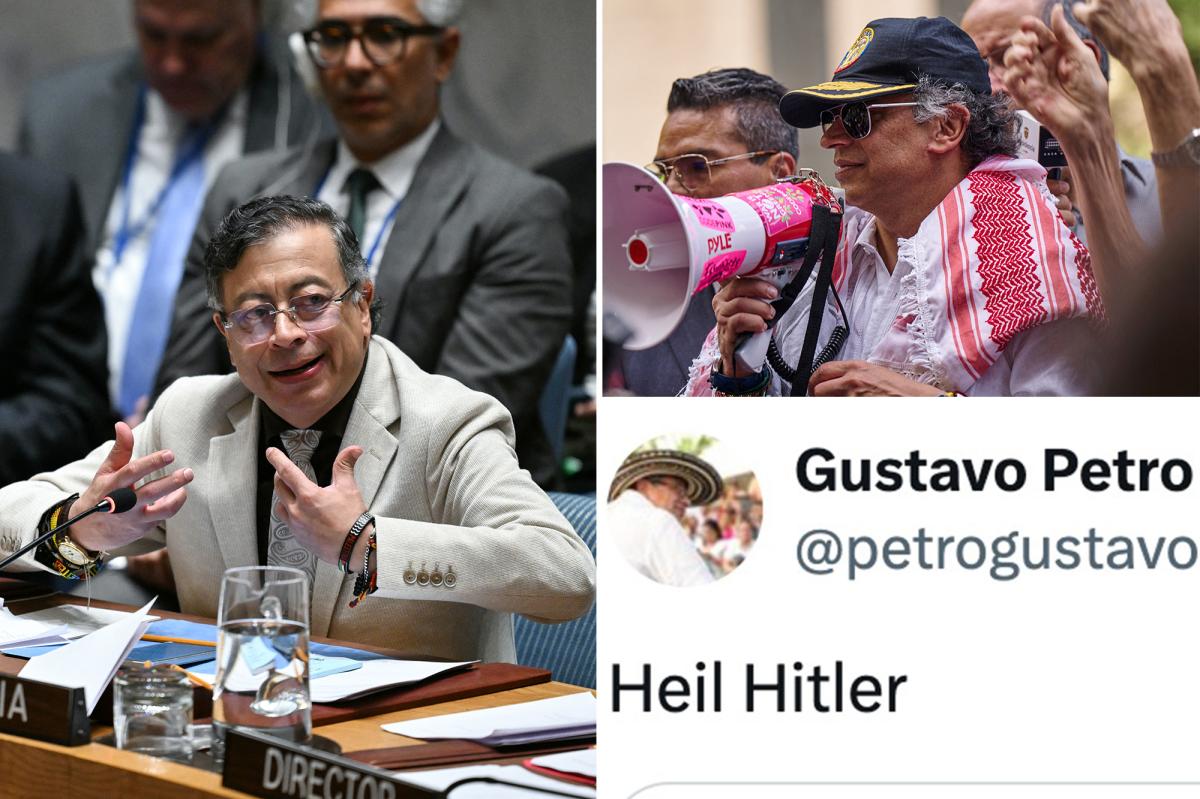
Israel's UN ambassador condemned Colombian President Gustavo Petro for invoking Nazi Germany when discussing Israel at a Security Council session days after writing "heil Hitler" on social media.

Newsroom
Newsroom Staff Writer
JUNE 11, 2026 AT 11:31 PM

Gustavo Petro, who had written “heil Hitler” on social media just days earlier, told the council that we are going back to the era of the Nazis, according to New York Post. The comments came as Colombia holds the rotating presidency of the Security Council this month.

Danny Danon, Israel’s ambassador to the United Nations, described Petro’s statements as bizarre ideological rants that represent a dangerous distortion of Holocaust history and dishonor the victims of the Holocaust. The rebuke came on Wednesday following the Colombian leader’s inflammatory address.

As New York Post reports, Danon attempted to reach Petro by phone before the session to request an apology, but the Colombian president reportedly declined the call. Petro, who is not favored to win a runoff election scheduled for June 21, proceeded to chair the Security Council meeting focused on Middle East concerns.

The session took place just hours before President Donald Trump ordered additional military strikes against Iran, with regional tensions at the center of council discussions.

US Points to Iranian Aggression

Jennifer Locetta, the US alternative representative for special political affairs at the United Nations, told council members that the Middle East requires real solutions and political capital rather than recycled failed approaches.

Locetta placed blame squarely on the Iranian regime for holding the world’s economy hostage through unlawful attempts to restrict freedom of navigation in the Strait of Hormuz. She also highlighted Tehran’s support for terror proxies operating in Lebanon, Iraq and Yemen.

The American representative accused Russia and China of providing cover for Iran, particularly through their April veto of a Security Council resolution that would have authorized an international effort to secure vessels transiting the strait. Locetta emphasized that dialogue without consequences has failed to prevent destabilizing behavior, noting a fundamental lack of enforcement behind international diplomatic initiatives.

Russian and Chinese Response

Vassily Nebenzia, Russia’s ambassador to the United Nations, accused external powers of attempting to redraw the Middle East’s political map. The Russian envoy argued that the Security Council should not attempt to impose solutions that benefit exclusively one side or target any regional state.

Fu Cong, China’s representative, asserted that the absence of a Palestinian state constitutes the greatest injustice in today’s world.

Regional Tensions Remain High

Asim Iftikhar Ahmad, Pakistan’s ambassador to the United Nations, characterized the regional situation as fragile and increasingly volatile, despite his country’s mediation efforts. Ahmad warned that unresolved disputes have transformed into protracted conflicts while cycles of violence are becoming normalized.

The Pakistani representative called for a return to pre-war conditions in the Strait of Hormuz, which Iran closed before Washington subsequently established a blockade of the strategic waterway.

With information from New York Post
Share:
Newsroom
Newsroom

NewsFire.GR is a website created with the hope that the media will rediscover their true identity, which is none other than informing the public about the real stakes of our times. Journalism and political analysis must hold power accountable, not serve it.

Gustavo Petro, who had written “heil Hitler” on social media just days earlier, told the council that we are going back to the era of the Nazis, according to New York Post. The comments came as Colombia holds the rotating presidency of the Security Council this month.

Danny Danon, Israel’s ambassador to the United Nations, described Petro’s statements as bizarre ideological rants that represent a dangerous distortion of Holocaust history and dishonor the victims of the Holocaust. The rebuke came on Wednesday following the Colombian leader’s inflammatory address.

As New York Post reports, Danon attempted to reach Petro by phone before the session to request an apology, but the Colombian president reportedly declined the call. Petro, who is not favored to win a runoff election scheduled for June 21, proceeded to chair the Security Council meeting focused on Middle East concerns.

The session took place just hours before President Donald Trump ordered additional military strikes against Iran, with regional tensions at the center of council discussions.

US Points to Iranian Aggression

Jennifer Locetta, the US alternative representative for special political affairs at the United Nations, told council members that the Middle East requires real solutions and political capital rather than recycled failed approaches.

Locetta placed blame squarely on the Iranian regime for holding the world’s economy hostage through unlawful attempts to restrict freedom of navigation in the Strait of Hormuz. She also highlighted Tehran’s support for terror proxies operating in Lebanon, Iraq and Yemen.

The American representative accused Russia and China of providing cover for Iran, particularly through their April veto of a Security Council resolution that would have authorized an international effort to secure vessels transiting the strait. Locetta emphasized that dialogue without consequences has failed to prevent destabilizing behavior, noting a fundamental lack of enforcement behind international diplomatic initiatives.

Russian and Chinese Response

Vassily Nebenzia, Russia’s ambassador to the United Nations, accused external powers of attempting to redraw the Middle East’s political map. The Russian envoy argued that the Security Council should not attempt to impose solutions that benefit exclusively one side or target any regional state.

Fu Cong, China’s representative, asserted that the absence of a Palestinian state constitutes the greatest injustice in today’s world.

Regional Tensions Remain High

Asim Iftikhar Ahmad, Pakistan’s ambassador to the United Nations, characterized the regional situation as fragile and increasingly volatile, despite his country’s mediation efforts. Ahmad warned that unresolved disputes have transformed into protracted conflicts while cycles of violence are becoming normalized.

The Pakistani representative called for a return to pre-war conditions in the Strait of Hormuz, which Iran closed before Washington subsequently established a blockade of the strategic waterway.

With information from New York Post