Sudan’s War Has Multiple Supply Lines Europe Must Cut Off
European policymakers are being urged to address Sudan's regional arms embargo that covers only Darfur while weapons flow freely to all sides in the nationwide civil war.
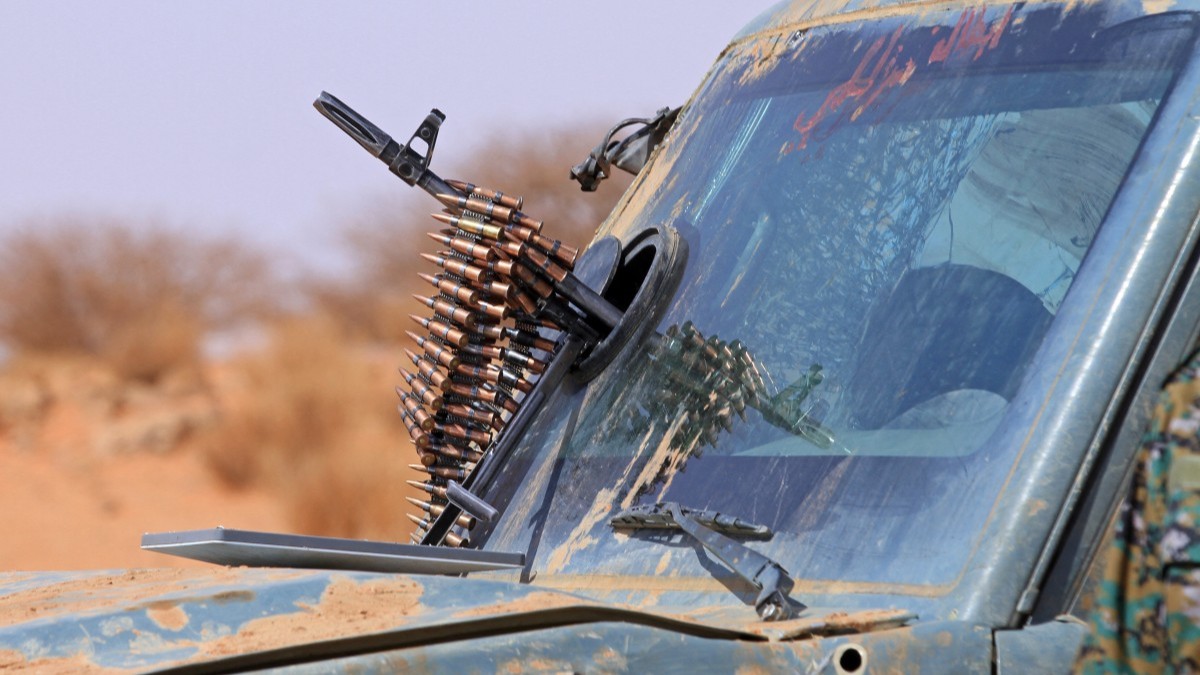

Since fighting erupted in Sudan, investigative reporting and flight-tracking data have documented a continuous flow of weapons, combat drones, and foreign fighters reaching all sides of the conflict, according to The European Conservative. Cargo flights and overland convoys have been traced delivering fighters, unmanned aerial systems, and heavy armaments into Darfur.
The problem lies in the architecture of international enforcement. The only binding arms embargo on Sudan remains the one established by UN Security Council Resolution 1591, drafted in 2004 and updated in 2005 to address violence exclusively within the Darfur region following that era’s mass atrocities. Two decades later, Sudan is consumed by nationwide conflict spanning Khartoum, the Gezira agricultural basin, Kordofan, Darfur, and the Red Sea coastal areas, yet monitoring and enforcement instruments remain legally confined to a single region.
A Legal Fiction Enabling Escalation
The consequences are lethal: weapons, combat drones, thermobaric munitions, and advanced guidance components arriving through maritime ports and military airfields outside Darfur escape scrutiny under the current legal framework. An arms embargo confined to one province while a nationwide war rages provides sovereign cover for continuous military escalation rather than meaningful security policy.
The Rapid Support Forces must face uncompromising accountability for documented atrocities against civilians. The systematic slaughter documented in El Fasher, corroborated by UN investigators, satellite imagery, and survivor testimony, alongside mass killings and forced displacement, represents a severe violation of international humanitarian law. Every external supply line sustaining RSF operations must face decisive interdiction.
All Parties Must Face Equal Scrutiny
Yet the Sudanese Armed Forces and its leadership cannot claim immunity through their opposition to the RSF. UN investigators, forensic monitors, and local human rights networks have documented devastating SAF violations, including indiscriminate aerial bombardment of populated urban markets, thermobaric barrel strikes on residential neighborhoods, and deliberate destruction of healthcare infrastructure. The United States imposed sanctions under the Chemical and Biological Weapons Control Act following findings that SAF deployed chemical weapons against its own population.
The Sudanese Islamic Movement and allied networks from Omar al-Bashir’s 30-year dictatorship, designated by the United States as a foreign terrorist organization along with its armed wing the Al-Baraa bin Malik Brigade, cannot use RSF crimes to whitewash their own violent record, recapture state institutions, or derail Sudan’s democratic civilian transition.
A Transcontinental War Economy
Sudanese civilians living under daily bombardment understand what international policymakers must recognize: the conflict is fueled not by a single corridor but by an integrated transcontinental war economy. This includes illicit maritime arms transfers through the Red Sea, cross-border mercenary recruitment from across the Sahel, complex corporate procurement networks for Iranian and Turkish combat drones, and industrial-scale smuggling of Sudanese gold to finance battlefield procurement.
By September 12, the Security Council must review the sanctions regime and face a defining choice: execute another routine rollover of the Darfur-only embargo, or expand the regime to reflect the geographic and technological reality of the war. The United States has proposed expanding the embargo across all of Sudan, applying it universally to all warring parties, and explicitly incorporating combat drones and loitering munitions.
An accountability mechanism that stops at a provincial border constitutes an abdication of international law. The gravity of every crime must be judged strictly on its evidence, with the identity of perpetrator or sponsor neither lowering nor raising the evidentiary threshold.
With information from The European Conservative