Necessary Cookies

Required for the site to function. Cannot be disabled.

Analytics Cookies

Help us understand how visitors interact with our site (Google Analytics via GTM).

Marketing Cookies

Used to track visitors and deliver personalised advertisements.

We use cookies to enhance your browsing experience and analyse site traffic. By clicking Accept All, you consent to our use of cookies. Privacy Policy
NewsFire Global
Home News Europe World Christianity Culture Wars Opinion Video
Information
About Us Authors Advertising Terms & Conditions Privacy Policy Contact
R2B Media
R2B NEWSFIRE.GR PAPAFOTIS.GR THRACTION HELLENIC CONSERVATIVES RIGHT2THEBONE YT
News Europe

France and Germany Scrap Troubled 100B Euro Fighter Jet Project

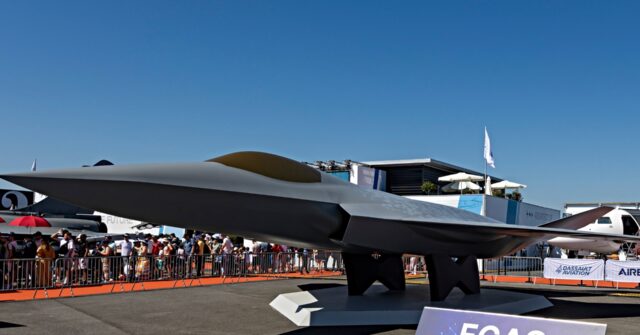
France and Germany officially cancelled their 100 billion euro fighter jet project after years of deadlock over leadership disputes between Dassault Aviation and Airbus.

Dimitris Papafotis
Dimitris Papafotis Editor in Chief
JUNE 9, 2026 AT 10:40 PM

The Future Combat Air System (FCAS) program, launched in 2017 by French President Emmanuel Macron and then-German Chancellor Angela Merkel, aimed to produce replacement aircraft for France’s Rafale and the Eurofighter jets currently operated by Germany and Spain, according to Breitbart News. Spain joined the initiative in 2019.

The program was slated to deliver operational aircraft by 2040 at the earliest. Beyond fighter jets, FCAS envisioned creating new combat drones and an advanced combat communications cloud that would integrate drones and aircraft through sophisticated sensor and communication networks. The project was widely regarded as emblematic of European efforts to modernize defense capabilities after years of chronic underinvestment.

Corporate Standoff Sinks Partnership

Progress on FCAS ground to a halt over the past year as France’s Dassault Aviation and Airbus, representing German and Spanish interests, clashed over which entity would control the project. Unnamed officials confirmed to international media outlets on Monday that Paris and Berlin have withdrawn from the initiative after the companies proved unable to resolve their disputes.

An insider told Euractiv that President Macron and Chancellor Friedrich Merz reached a mutual understanding that the involved companies could not achieve agreement on constructing a joint fighter aircraft. Merz subsequently advised Macron to discontinue pursuit of the joint fighter program.

The Élysée Palace acknowledged that Macron and Merz conducted lengthy and frequent discussions regarding the troubled program, expressing regret that participating companies could not find consensus. German government sources indicated that Berlin concluded further pressure to resolve the disagreements would prove futile.

Intellectual Property at Heart of Dispute

The fundamental disagreement centered on project control and technology sharing. Dassault Aviation insisted on serving as lead partner to safeguard its intellectual property, while Airbus advocated for a more balanced partnership involving substantial technology transfers, as Breitbart News reports.

Despite cancellation of the fighter jet component, unnamed sources told Euronews that development of the FCAS combat cloud system will continue independently. Dassault Aviation will reportedly proceed alone in developing a Rafale successor for France, while Airbus is expected to seek alternative international partners.

National Defense Requirements Diverge

Macron vigorously defended the faltering FCAS program as recently as February, insisting Europe required a common carrier-capable, nuclear-armed aircraft. Chancellor Merz, however, suggested at that time that Berlin might exit the project based on fundamentally different operational requirements between French and German forces.

Merz stated during a February podcast that France requires next-generation fighters capable of carrying nuclear weapons and operating from aircraft carriers, capabilities that German military forces do not currently need. This divergence in strategic requirements compounded the already severe corporate disputes plaguing the program.

With information from Breitbart News

Share:
Dimitris Papafotis
Dimitris Papafotis

Dimitris Papafotis is the editor-in-chief of NewsFire.GR. He was born and raised in Athens. He studied at the Journalism Workshop (1991-1993). He currently lives in Pyrgos, Ilia, where he has been active in radio and various newspapers, while also maintaining his personal blog, Papafotis.gr.

The Future Combat Air System (FCAS) program, launched in 2017 by French President Emmanuel Macron and then-German Chancellor Angela Merkel, aimed to produce replacement aircraft for France’s Rafale and the Eurofighter jets currently operated by Germany and Spain, according to Breitbart News. Spain joined the initiative in 2019.

The program was slated to deliver operational aircraft by 2040 at the earliest. Beyond fighter jets, FCAS envisioned creating new combat drones and an advanced combat communications cloud that would integrate drones and aircraft through sophisticated sensor and communication networks. The project was widely regarded as emblematic of European efforts to modernize defense capabilities after years of chronic underinvestment.

Corporate Standoff Sinks Partnership

Progress on FCAS ground to a halt over the past year as France’s Dassault Aviation and Airbus, representing German and Spanish interests, clashed over which entity would control the project. Unnamed officials confirmed to international media outlets on Monday that Paris and Berlin have withdrawn from the initiative after the companies proved unable to resolve their disputes.

An insider told Euractiv that President Macron and Chancellor Friedrich Merz reached a mutual understanding that the involved companies could not achieve agreement on constructing a joint fighter aircraft. Merz subsequently advised Macron to discontinue pursuit of the joint fighter program.

The Élysée Palace acknowledged that Macron and Merz conducted lengthy and frequent discussions regarding the troubled program, expressing regret that participating companies could not find consensus. German government sources indicated that Berlin concluded further pressure to resolve the disagreements would prove futile.

Intellectual Property at Heart of Dispute

The fundamental disagreement centered on project control and technology sharing. Dassault Aviation insisted on serving as lead partner to safeguard its intellectual property, while Airbus advocated for a more balanced partnership involving substantial technology transfers, as Breitbart News reports.

Despite cancellation of the fighter jet component, unnamed sources told Euronews that development of the FCAS combat cloud system will continue independently. Dassault Aviation will reportedly proceed alone in developing a Rafale successor for France, while Airbus is expected to seek alternative international partners.

National Defense Requirements Diverge

Macron vigorously defended the faltering FCAS program as recently as February, insisting Europe required a common carrier-capable, nuclear-armed aircraft. Chancellor Merz, however, suggested at that time that Berlin might exit the project based on fundamentally different operational requirements between French and German forces.

Merz stated during a February podcast that France requires next-generation fighters capable of carrying nuclear weapons and operating from aircraft carriers, capabilities that German military forces do not currently need. This divergence in strategic requirements compounded the already severe corporate disputes plaguing the program.

With information from Breitbart News

