Lyric Opera: Hercules, Sexual Predator?
The Paris Opera staged the European premiere of Antonia Bembo's 1707 Baroque opera "Hercules in Love," which vanished for over 300 years until its manuscript was rediscovered in 1937.
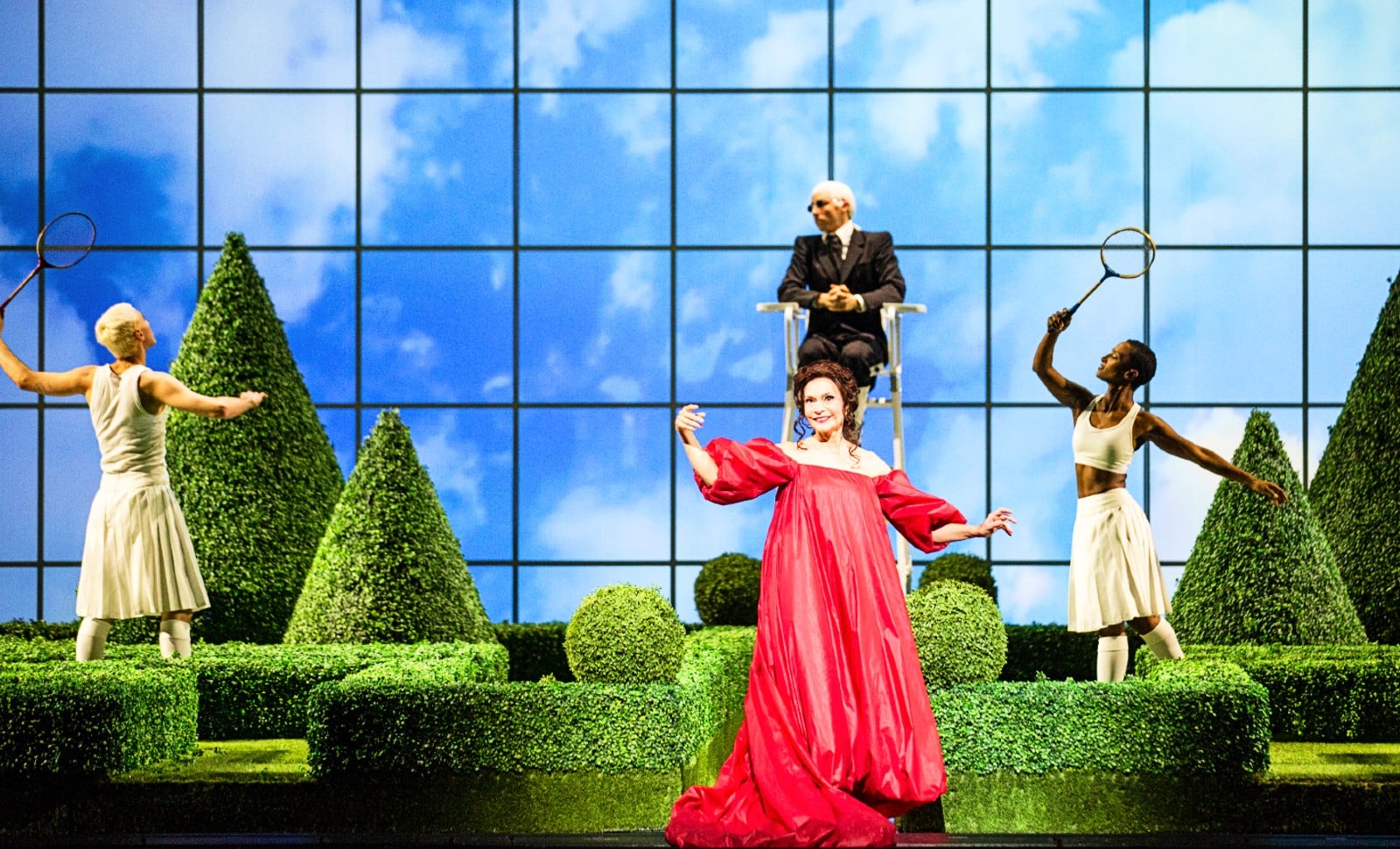

According to Causeur, the aristocratic composer Antonia Bembo, born Paodani around 1640, wrote her “Ercole amante” in 1707 at the age of 67. An accomplished composer who had produced a vast collection of vocal works in Italian, French, and Latin known as the Produzioni armoniche and dedicated to the French king, Bembo created her own version of an opera originally commissioned by Louis XIV in 1662 from Francesco Cavalli for the Sun King’s wedding to the Spanish Infanta Marie-Thérèse of Austria.
A Lost Heritage
The original Cavalli opera premiered in the Salle des Machines at the Tuileries Palace, a theater of unprecedented dimensions for its era. Built by architect Louis Le Vau and designed by Italian engineer Gaspare Vigarini between 1659 and 1662 at the initiative of Cardinal Mazarin, the hall featured elaborate trap doors and mobile sets suited to the grand Italian-style spectacles favored by the court. The building was later remodeled in the 18th century by Soufflot and Gabriel before serving as a temporary home to the Comédie-Française and hosting Convention sessions in 1793. The Salle des Machines was destroyed during the Paris Commune in May 1871 when the Tuileries burned.
As Causeur reports, Bembo had fled Venice and conjugal violence to establish herself in Paris in 1677, where Louis XIV granted her a pension and lodging. She composed her own “Ercole amante” forty-five years after Cavalli’s version, using the same libretto by Abbé Francesco Buti. However, her opera was never performed during her lifetime.
Rediscovery After Centuries
The manuscript of Bembo’s phantom opera resurfaced in 1937 at an auction, where the National Library of France acquired it. The work remained unperformed until 2023, when it received its world premiere in concert version in Stuttgart.
The current production at the Paris Opera, running until June 14, marks the European staged premiere. Directed by British scenographer and director Netia Jones, who previously staged “The Marriage of Figaro” at the Bastille in 2022, the production is conducted by young early music specialist Leonardo García-Alarcón leading the Cappella Mediterranea ensemble and the Namur Chamber Choir.
Disrupted Opening and Modern Themes
The premiere was delayed by forty-eight hours due to a strike by Opera staff. Further complications arose from football-related transport disruptions and a contemporary art event that put the area around the Grand Palais under siege, as Causeur notes.
The magazine observes that while the orchestration has been expanded to fill the Bastille opera house pit, the work might have been better suited to the Palais Garnier. Jones’s staging reportedly emphasizes contemporary themes of consent, presenting Hercules as an aging, pot-bellied figure with a wig who pursues the young Iole despite his son Hyllus also loving her. Venus objects to the elderly predator abandoning his marriage to Déjanire for his son’s beloved.
The production features large-screen projections, live video capture, choreography, and various staged contests set against classical statues, French formal gardens, and mythological dreamscapes involving characters including the Shadow of Eutyre, Iole’s father, Lychas, Déjanire’s servant, Hercules’s Page, and the gods Juno, Venus, Mercury, Neptune, and Sleep.
With information from Causeur