Necessary Cookies

Required for the site to function. Cannot be disabled.

Analytics Cookies

Help us understand how visitors interact with our site (Google Analytics via GTM).

Marketing Cookies

Used to track visitors and deliver personalised advertisements.

We use cookies to enhance your browsing experience and analyse site traffic. By clicking Accept All, you consent to our use of cookies. Privacy Policy
NewsFire Global
Home News Europe World Christianity Culture Wars Opinion Video
Information
About Us Authors Advertising Terms & Conditions Privacy Policy Contact
R2B Media
R2B NEWSFIRE.GR PAPAFOTIS.GR THRACTION HELLENIC CONSERVATIVES RIGHT2THEBONE YT
News Culture Wars

By Toutatis!

French druids gathered in Limousin to sign a charter combating fake practitioners, emphasizing that authentic druidic training requires twelve years, not six months for 400 euros.
Stefanos Banos
Stefanos Banos Staff Writer
SEPTEMBER 6, 2026 AT 12:56 PM

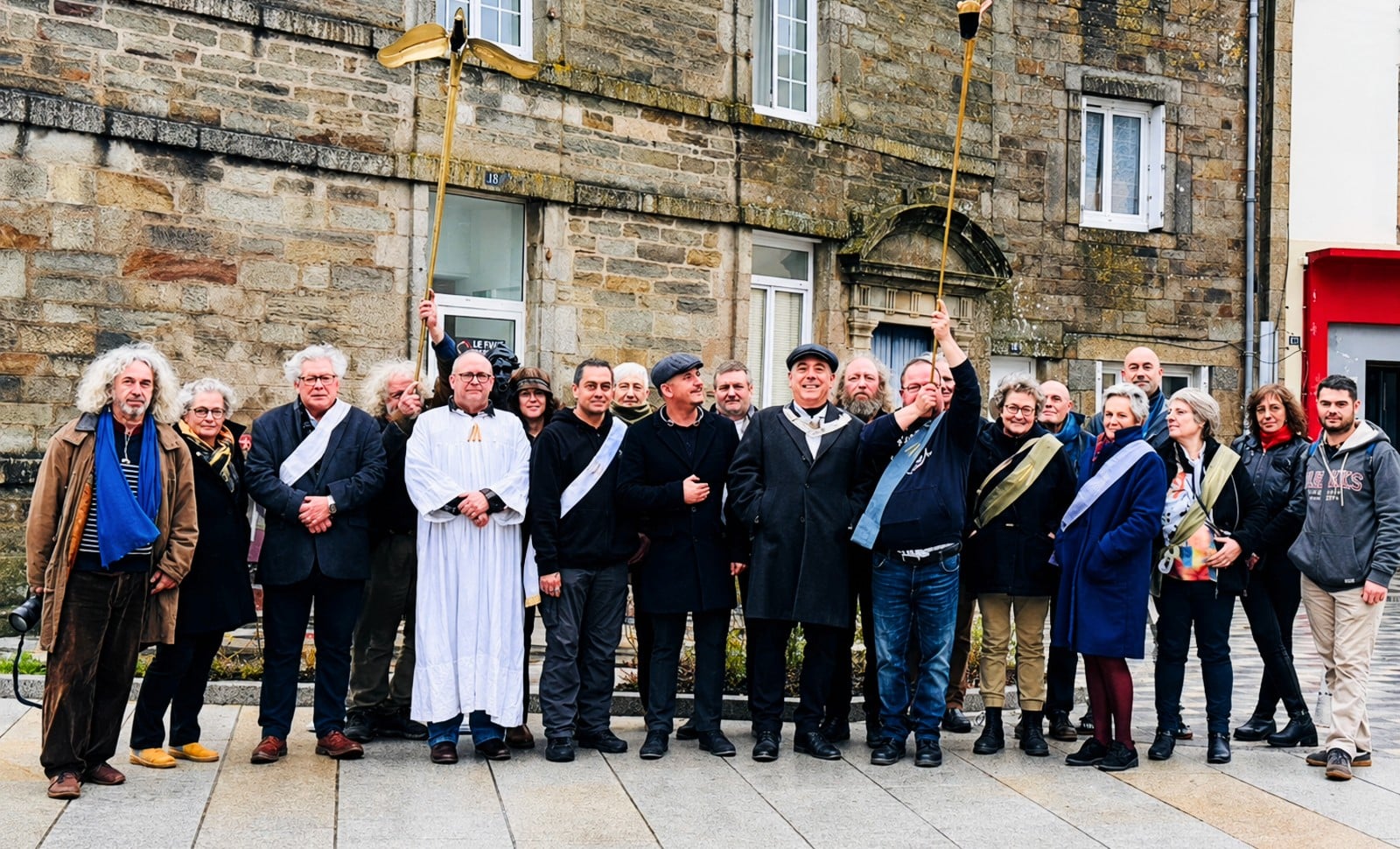
On August 15th, the majority of France’s druids gathered in Saint-Jean-Ligoure, Haute-Vienne, to sign what they describe as a historic document: the “Charter of Druids.” The ceremony took place under the spiritual patronage of their illustrious predecessors, including Diviciac, Cathbad, and the fictional Panoramix.

The charter was drafted in gender-inclusive language, a detail emphasised by organisers as proof that contemporary druids are neither eccentric nor disconnected from modern society. It addresses what the signatories regard as a persistent problem: fake druids exploiting public credulity with promises of miraculous healing and supernatural powers.

Marc, a druid with fifty years of experience, expressed frustration at the proliferation of frauds. He insisted that claims of commanding the gods are nonsense, though he maintained that the powers of nature remain the genuine divinities of Druidism.

Training Takes Years, Not Months

François Bourillon, the oldest practising druid in Limousin, who goes by the name Merlin, was keen to dispel popular misconceptions. He clarified that his moniker has nothing to do with the Disney version of Merlin the Enchanter, and stated plainly that druids do not spend their mornings hugging trees.

Bourillon warned against organisations offering druidic status in six months for a fee of 400 euros. Authentic druidic training, he explained, requires at least twelve years of study in theological, natural, divinatory, and bardic sciences, presumably alongside skills such as mistletoe harvesting and mead distillation.

Weather Control and White Robes

Breton druid Arthos also weighed in, defending his community against accusations of being dreamers or simpletons. He described the ceremonial practices matter-of-factly: wearing white robes, standing in circles, and reciting sacred texts.

Then he made a striking claim. Arthos asserted that he has successfully altered weather conditions during ceremonies, summoning clouds or sunshine as needed. Whether such powers extend to preventing the sky from falling remains unclear.

The charter represents an effort by France’s druidic community to distinguish serious practitioners from opportunists, while simultaneously asserting relevance in a modern, secular society. The meeting in Limousin marks a rare moment of institutional cohesion for a tradition rooted in pre-Christian Gaul.

With information from Causeur

Share:
Stefanos Banos
Stefanos Banos

Stefanos Banos was born in Piraeus and is an editor at NewsFire.GR, specializing in political analysis and international relations. He graduated from the Department of Communication and Media at the University of Bremen in Germany, where he also completed his Master of Arts in Communication and Media Studies. Married to Zoi, he is a proud father of three boys.

Recent News

On August 15th, the majority of France’s druids gathered in Saint-Jean-Ligoure, Haute-Vienne, to sign what they describe as a historic document: the “Charter of Druids.” The ceremony took place under the spiritual patronage of their illustrious predecessors, including Diviciac, Cathbad, and the fictional Panoramix.

The charter was drafted in gender-inclusive language, a detail emphasised by organisers as proof that contemporary druids are neither eccentric nor disconnected from modern society. It addresses what the signatories regard as a persistent problem: fake druids exploiting public credulity with promises of miraculous healing and supernatural powers.

Marc, a druid with fifty years of experience, expressed frustration at the proliferation of frauds. He insisted that claims of commanding the gods are nonsense, though he maintained that the powers of nature remain the genuine divinities of Druidism.

Training Takes Years, Not Months

François Bourillon, the oldest practising druid in Limousin, who goes by the name Merlin, was keen to dispel popular misconceptions. He clarified that his moniker has nothing to do with the Disney version of Merlin the Enchanter, and stated plainly that druids do not spend their mornings hugging trees.

Bourillon warned against organisations offering druidic status in six months for a fee of 400 euros. Authentic druidic training, he explained, requires at least twelve years of study in theological, natural, divinatory, and bardic sciences, presumably alongside skills such as mistletoe harvesting and mead distillation.

Weather Control and White Robes

Breton druid Arthos also weighed in, defending his community against accusations of being dreamers or simpletons. He described the ceremonial practices matter-of-factly: wearing white robes, standing in circles, and reciting sacred texts.

Then he made a striking claim. Arthos asserted that he has successfully altered weather conditions during ceremonies, summoning clouds or sunshine as needed. Whether such powers extend to preventing the sky from falling remains unclear.

The charter represents an effort by France’s druidic community to distinguish serious practitioners from opportunists, while simultaneously asserting relevance in a modern, secular society. The meeting in Limousin marks a rare moment of institutional cohesion for a tradition rooted in pre-Christian Gaul.

With information from Causeur