Necessary Cookies

Required for the site to function. Cannot be disabled.

Analytics Cookies

Help us understand how visitors interact with our site (Google Analytics via GTM).

Marketing Cookies

Used to track visitors and deliver personalised advertisements.

We use cookies to enhance your browsing experience and analyse site traffic. By clicking Accept All, you consent to our use of cookies. Privacy Policy
NewsFire Global
Home News Europe World Christianity Culture Wars Opinion Video
Information
About Us Authors Advertising Terms & Conditions Privacy Policy Contact
R2B Media
R2B NEWSFIRE.GR PAPAFOTIS.GR THRACTION HELLENIC CONSERVATIVES RIGHT2THEBONE YT
News World

PM says legal obstacles block F-35 delivery to Turkey

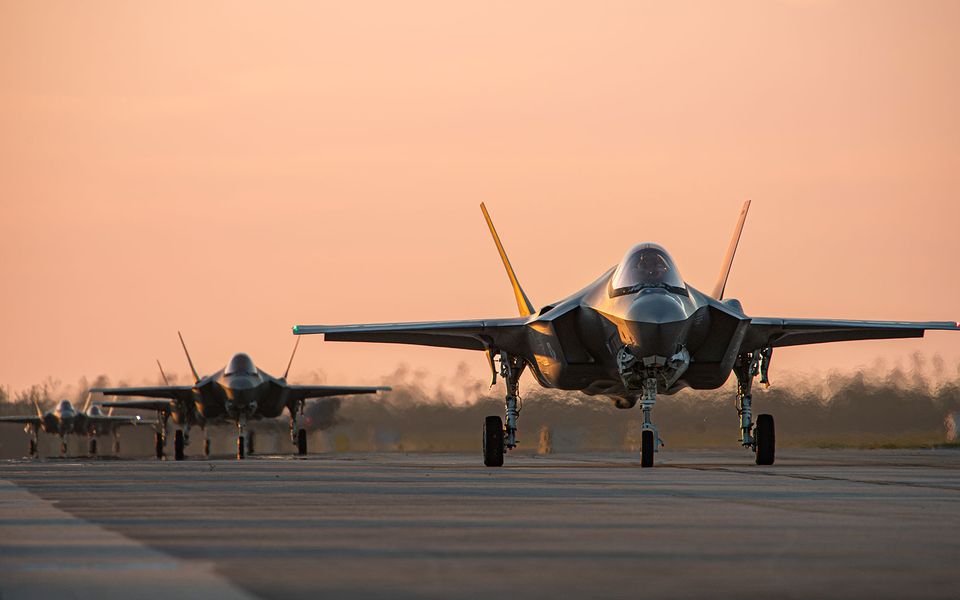
Greek Prime Minister Kyriakos Mitsotakis says significant legal barriers prevent Turkey from receiving American F-35 jets while emphasizing Greece's robust defense spending at 3.5 percent of GDP.

Dimitris Papafotis
Dimitris Papafotis Editor in Chief
SEPTEMBER 7, 2026 AT 1:06 AM

Speaking at a scheduled press conference during the second day of the 90th Thessaloniki International Fair on Saturday, Kyriakos Mitsotakis addressed the ongoing debate over potential F-35 deliveries to Ankara, according to Kathimerini (EN).

The Greek leader made clear that while Athens does not dictate American arms sales policy, substantial legal complications exist. It is not our job to tell the US which systems it will and will not sell to a country, but there are legal problems that we do not see how they will be overcome, Mitsotakis stated.

Greece Maintains Robust Defense Posture

Mitsotakis emphasized that Greece remains one of only five NATO member states allocating 3.5 percent of its GDP to defense spending. He noted this commitment serves not merely to fulfill Alliance obligations but reflects Greece’s strategic position requiring robust defensive capabilities and strong deterrence capacity.

Monitoring Turkey’s Regional Defense Pacts

Addressing the recent defense agreement signed by Turkey, Saudi Arabia and Pakistan that incorporates collective deterrence principles similar to NATO’s Article 5, Mitsotakis characterized the development as worthy of monitoring but not grounds for altering Greek foreign policy priorities.

The Prime Minister announced plans to travel to Saudi Arabia in the near future to reinforce the strategic dimension of Greek-Saudi relations. He dismissed simplistic interpretations suggesting that Turkey’s closer alignment with Riyadh through the Mecca agreement automatically creates distance between Greece and the Gulf kingdom.

Mitsotakis stressed that foreign policy operates with greater complexity than zero-sum calculations. He pointed to Greece’s strategic relationship with Israel as evidence that Athens maintains its role as a bridge-builder seeking consensual solutions across the broader Middle East region, rather than pursuing exclusive partnerships.

Defense Investment Amid Regional Tensions

The comments come as Greece continues modernizing its armed forces and deepening security cooperation with Western allies and regional partners. Athens has prioritized defense readiness amid ongoing territorial disputes and provocations in the Eastern Mediterranean and Aegean.

The legal obstacles Mitsotakis referenced regarding F-35 deliveries to Turkey stem from Ankara’s previous acquisition of Russian S-400 air defense systems, which resulted in Turkey’s removal from the F-35 program by Washington. Any reversal of that decision would require addressing Congressional restrictions and technical security concerns regarding NATO systems operating alongside Russian military technology.

With information from Kathimerini (EN)

Share:
Dimitris Papafotis
Dimitris Papafotis

Dimitris Papafotis is the editor-in-chief of NewsFire.GR. He was born and raised in Athens. He studied at the Journalism Workshop (1991-1993). He currently lives in Pyrgos, Ilia, where he has been active in radio and various newspapers, while also maintaining his personal blog, Papafotis.gr.

Recent News

Speaking at a scheduled press conference during the second day of the 90th Thessaloniki International Fair on Saturday, Kyriakos Mitsotakis addressed the ongoing debate over potential F-35 deliveries to Ankara, according to Kathimerini (EN).

The Greek leader made clear that while Athens does not dictate American arms sales policy, substantial legal complications exist. It is not our job to tell the US which systems it will and will not sell to a country, but there are legal problems that we do not see how they will be overcome, Mitsotakis stated.

Greece Maintains Robust Defense Posture

Mitsotakis emphasized that Greece remains one of only five NATO member states allocating 3.5 percent of its GDP to defense spending. He noted this commitment serves not merely to fulfill Alliance obligations but reflects Greece’s strategic position requiring robust defensive capabilities and strong deterrence capacity.

Monitoring Turkey’s Regional Defense Pacts

Addressing the recent defense agreement signed by Turkey, Saudi Arabia and Pakistan that incorporates collective deterrence principles similar to NATO’s Article 5, Mitsotakis characterized the development as worthy of monitoring but not grounds for altering Greek foreign policy priorities.

The Prime Minister announced plans to travel to Saudi Arabia in the near future to reinforce the strategic dimension of Greek-Saudi relations. He dismissed simplistic interpretations suggesting that Turkey’s closer alignment with Riyadh through the Mecca agreement automatically creates distance between Greece and the Gulf kingdom.

Mitsotakis stressed that foreign policy operates with greater complexity than zero-sum calculations. He pointed to Greece’s strategic relationship with Israel as evidence that Athens maintains its role as a bridge-builder seeking consensual solutions across the broader Middle East region, rather than pursuing exclusive partnerships.

Defense Investment Amid Regional Tensions

The comments come as Greece continues modernizing its armed forces and deepening security cooperation with Western allies and regional partners. Athens has prioritized defense readiness amid ongoing territorial disputes and provocations in the Eastern Mediterranean and Aegean.

The legal obstacles Mitsotakis referenced regarding F-35 deliveries to Turkey stem from Ankara’s previous acquisition of Russian S-400 air defense systems, which resulted in Turkey’s removal from the F-35 program by Washington. Any reversal of that decision would require addressing Congressional restrictions and technical security concerns regarding NATO systems operating alongside Russian military technology.

With information from Kathimerini (EN)