Magyar Says Ukraine Not Ready for EU, Echoing Orbán
Hungary's new Prime Minister Péter Magyar declared Ukraine unfit for EU membership, aligning with his predecessor Viktor Orbán's hardline stance despite campaigning as a pro-Western alternative.
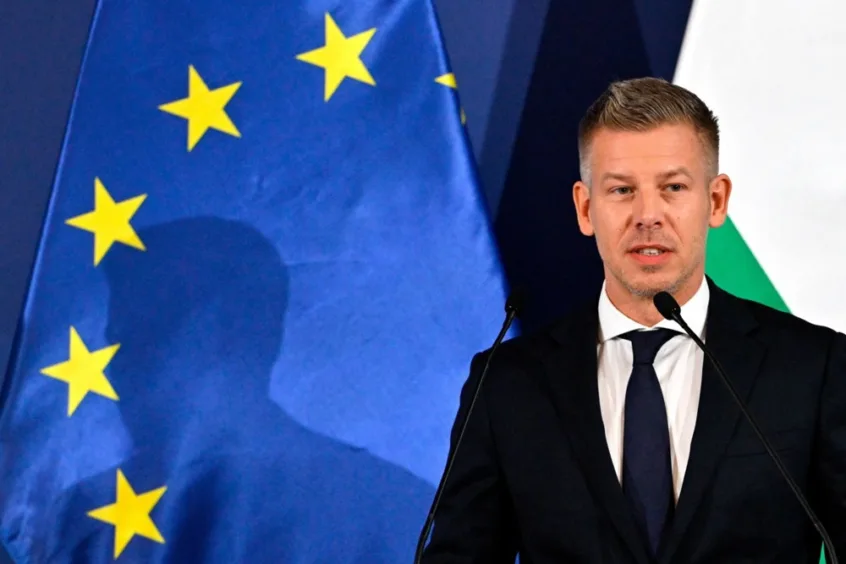

Péter Magyar told a government press conference on September 3, 2026 that Ukraine remains a country at war and should not be encouraged toward EU accession under current circumstances, according to Brussels Signal. He insisted Hungary would only accept a merit-based accession process with no exceptions or fast-track procedures.
The comments mark a significant alignment with former Prime Minister Viktor Orbán, who made blocking Ukraine’s EU aspirations a central theme of his failed re-election campaign. Orbán spent months before the April 12 election framing Magyar as Kyiv’s preferred candidate, even telling supporters at a March rally that voters would effectively choose between himself and Volodymyr Zelensky forming Hungary’s next government.
Orbán had previously accused Magyar of coordinating with Kyiv to establish a pro-Western administration in Budapest, and declared Hungary would not permit Ukrainian membership for at least a century.
Conditional Support With Strict Timeline
Magyar’s position, while similar in outcome, includes slightly more nuanced conditions. The Prime Minister has stated Hungary would support Ukrainian membership only if Kyiv successfully closes every accession chapter over a 10 to 15 year period, followed by approval through a binding national referendum.
The remarks came just two days after Hungary blocked approval of screening results for Ukraine’s second and third negotiating clusters at a September 1, 2026 meeting of the Council of the European Union’s enlargement working party, as Brussels Signal reports. It marked the third time Budapest has obstructed the process since summer.
Cluster two addresses the internal market while cluster three covers competitiveness. Both require unanimous consent from all 27 member states to proceed.
Minority Rights Remain Central Issue
Hungary justified its objection by citing insufficient progress on protecting the rights of the Hungarian minority in Transcarpathia, western Ukraine. Magyar said the two governments had agreed to specific deadlines for restoring linguistic, educational and cultural rights for approximately 100,000 ethnic Hungarians in the region, though Budapest has yet to see concrete implementation.
That earlier agreement allowed Magyar to lift the two-year veto imposed by Orbán, enabling the opening of the first negotiating cluster for Ukraine and Moldova on June 15, 2026.
The dispute traces back to Ukrainian legislation passed in 2017 and 2019 that restricted use of Hungarian in public education and local administration. Ukraine’s parliament amended portions of that legislation in December 2023, though the Orbán government deemed the changes inadequate at the time.
Accusations of Double Standards
Magyar pointed out that Serbia began its accession process 15 years ago and has opened only two of six clusters, calling it contradictory to accelerate one candidate for political motivations while others follow standard procedures.
Ukrainian diplomatic sources told the Hungarian weekly HVG that Kyiv considers the latest block unjustified given improved bilateral relations, and expects Magyar and Zelensky to meet in September.
Hungarian Foreign Minister Anita Orbán reinforced the government’s position on the same day, stating that Budapest would not support accelerated accession for Ukraine under any circumstances.
With information from Brussels Signal