
Camp Fashion: A Wildly Eclectic Aesthetic
Susan Sontag's 1964 work on "camp" has resurfaced in France, exploring an aesthetic that deliberately challenges good taste through exaggeration and theatricality without clear definition.
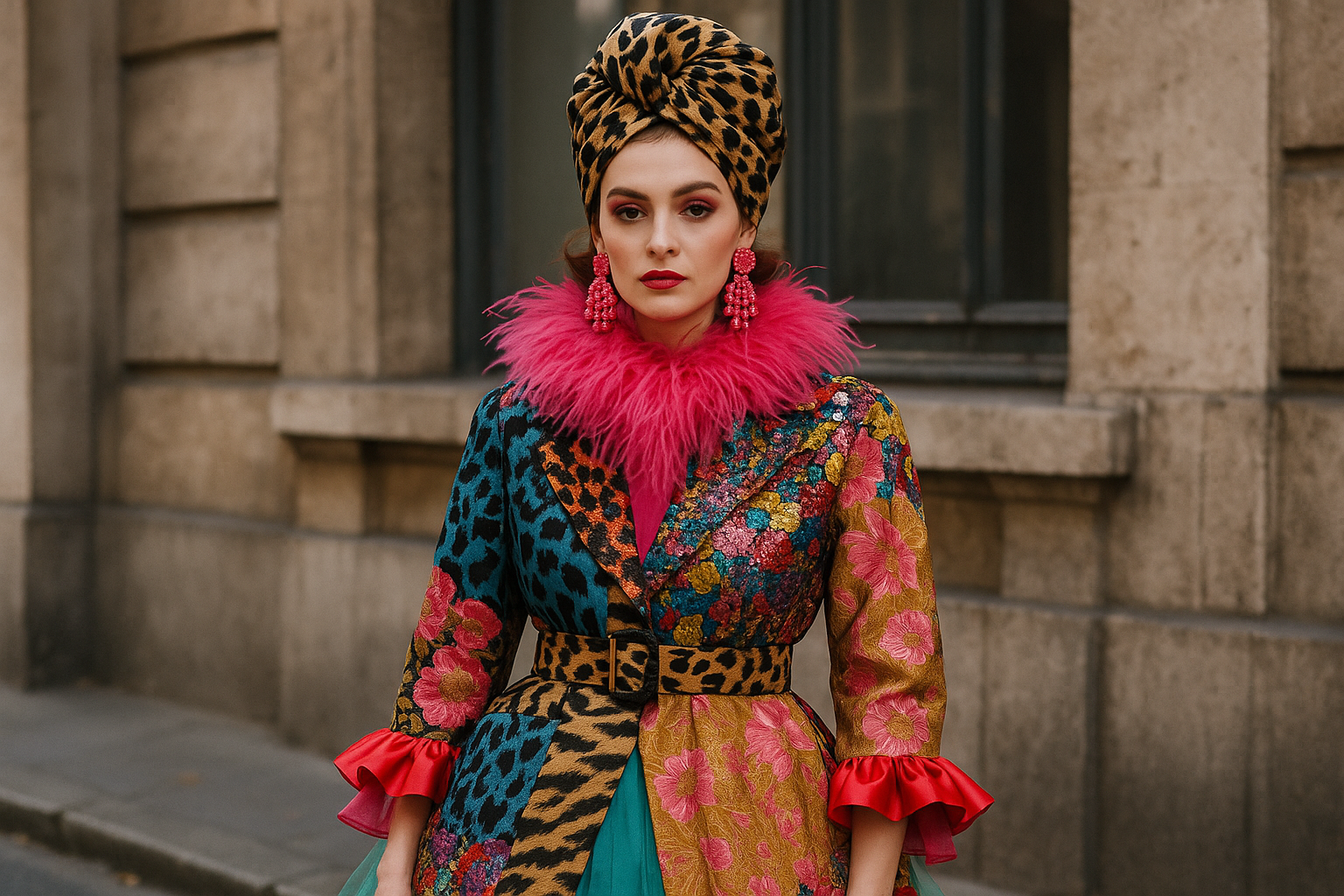

An exploration of the elusive aesthetic concept of “camp” has resurfaced in French intellectual circles following the pocket edition reissue of a seminal 1964 work by American critic Susan Sontag, according to Causeur. The magazine examines why this notoriously difficult-to-define style continues to fascinate, despite — or perhaps because of — its deliberate vagueness.
Writer and journalist Jacques-Emile Miriel took on the challenge of decoding what “camp” actually means after encountering Sontag’s reissued book, bluntly titled Le Style camp in French. The concept, which Sontag elevated to an important aesthetic category, has never received a clear definition from her or subsequent theorists who followed in her footsteps.
According to Causeur, understanding camp begins with the English language itself. The magazine notes that beyond its common meanings, English dictionaries point to theatrical connotations: attitudes pushed beyond mere exaggeration, marked by dubious taste and kitsch. The Oxford English Dictionary lists qualifying terms such as “exaggerated” and “affected.” What emerges is a consistent thread: a deliberate challenge to good taste.
Contemporary Icons of Camp Sensibility
Rather than dwelling on historical origins or predecessors like Oscar Wilde or Nietzsche, both Sontag and French writer-editor Patrick Mauriès — a former student of Roland Barthes who penned Second manifeste Camp — reference contemporary cultural figures. Among the icons identified are actress Mae West, known for her uncompromising character, as well as Andy Warhol, David Bowie, and photographer David LaChapelle.
Sontag’s work, structured as scattered notes, also highlights filmmaker Werner Schroeter and novelist Rachilde, alongside a catalogue of typical camp attitudes that reads like an inventory in the style of French poet Jacques Prévert.
A Philosophy Without System
Camp is not a theory, Causeur emphasizes. It elevates individual sensibility above all else, delegating to each person the task of constructing a personal discourse that is inherently provocative and potentially subversive. Sontag herself acknowledged that taste has no system and seeks no proofs, yet possesses a certain logic — a sentiment the magazine suggests could have been written by Stendhal.
The deliberately hazy nature of camp may be precisely what accounts for its endurance and appeal. Something vague can be sublime, and camp’s defenders want to convince audiences of exactly that proposition.
Elite Despite Appearances
Beneath its seemingly simple surface, the camp style remains extremely elitist. Both Sontag and Mauriès set the bar very high in their selection of worthy icons. Mauriès draws particular connections to dandyism, noting that dandy mythology is inherently camp, and that dandyism stands closer to camp than aestheticism ever did.
This demanding particularity recalls the standards once associated with dandies — a connection that underscores camp’s exclusive nature. Many may be called to appreciate it, but few are chosen to truly embody its principles.
With information from Causeur





