Necessary Cookies

Required for the site to function. Cannot be disabled.

Analytics Cookies

Help us understand how visitors interact with our site (Google Analytics via GTM).

Marketing Cookies

Used to track visitors and deliver personalised advertisements.

We use cookies to enhance your browsing experience and analyse site traffic. By clicking Accept All, you consent to our use of cookies. Privacy Policy
NewsFire Global
Home News Europe World Christianity Culture Wars Opinion Video
Information
About Us Authors Advertising Terms & Conditions Privacy Policy Contact
R2B Media
R2B NEWSFIRE.GR PAPAFOTIS.GR THRACTION HELLENIC CONSERVATIVES RIGHT2THEBONE YT
News World

Tech Revolution Puts Self-Government to the Test

The rise of digital surveillance has transformed American government into an emerging authoritarian structure hostile to constitutional freedoms, according to an analyst writing in Washington Examiner.

AUGUST 30, 2026 AT 1:42 PM

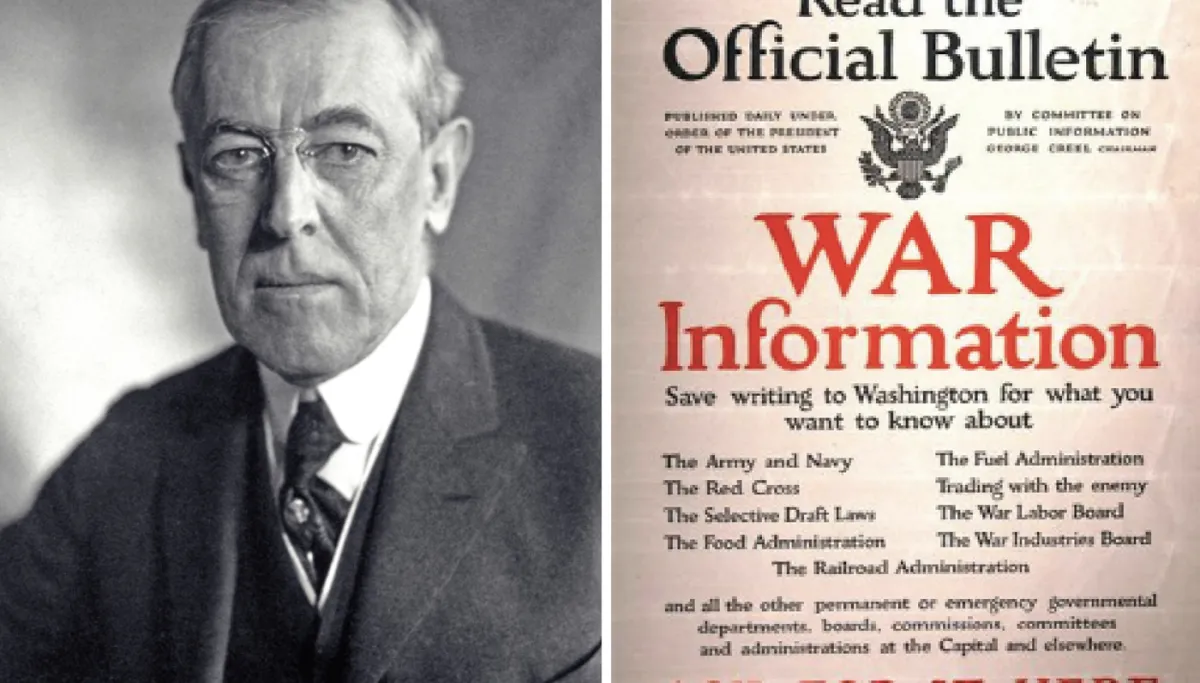
From ancient Mesopotamian record-keepers to post-9/11 security laws, government has always been defined by how institutions manage and control information. A state’s power depends on its ability to centralize and analyze data—and where information flows, institutional authority must follow or risk losing control over its population.

The American founding represented a unique moment when informational capacity outpaced institutional reach. Colonial authority was distant across the Atlantic, while British state power remained limited even within the home islands. Despite the Royal Navy’s industrial supremacy in the 18th century, the domestic British population remained largely unregulated and untaxed.

In the colonies, a highly literate society compensated for weak governance through local publishing, exemplified by Benjamin Franklin’s Pennsylvania Gazette. London’s institutional apparatus could not compete with the colonial knowledge infrastructure, ultimately losing its grip before French intervention sealed Britain’s imperial defeat. The political philosophy that emerged from this informational ecosystem is preserved in the Federalist Papers.

Revolutionary Origins and Technological Foundations

The resulting American system became a decentralized federation protecting individual sovereignty—an outcome far from inevitable. The Revolution emerged from singular informational and technological circumstances: the printing press had democratized access to English-language scripture and republican theory, while Protestant theology elevated private judgment against institutional authority, merging with English traditions safeguarding property rights and constraining executive power.

Technological and information systems shape both individual perception and political structures. As Plato understood when forbidding musical innovation in his Republic, cultural change signals political transformation. The Pennsylvania Gazette’s “Join, or Die” cartoon served as an early warning of revolution. Similarly, the Information Age that began after 1945—when wartime military innovations entered civilian use—would generate its own political form: the Information State.

A New Form of Control

Jacob Siegel’s work The Information State: Politics in the Age of Total Control examines how the Information Revolution has fundamentally rewired the American regime and threatens democratic governance. Green characterizes the analysis as Tocquevillian in scope and possibly the most significant political examination in recent years.

Siegel reported noticing a disturbing pattern beginning in 2017 with discussions of “fake news” that evolved into widespread deployment of “disinformation” and “misinformation” narratives. These concepts rested on novel premises suddenly treated as self-evident in public discourse.

He rejected the narrative claiming “disinformation” had infiltrated American politics and determined the 2016 election outcome. He disputed Democratic Party and liberal media assertions that Donald Trump and foreign actors posed existential threats to democracy. He questioned subsequent manufactured crises including Black Lives Matter, COVID-19 origins investigations, transgender advocacy, Palestinian activism, and their fusion into what he terms the “Omnicause”—a permanent revolutionary movement.

Military Tactics Turned Inward

Critically, Siegel recognized these informational techniques from his service as a U.S. Army officer in Iraq and Afghanistan. Beneath rhetoric about “toxic memes and bots,” he identified patterns drawn from counterterrorism, counterinsurgency, and information warfare—all familiar from military deployments.

This domestic information war does not stem from constitutional malfunction or failures in the system of checks, balances, and robust free speech culture. Instead, it represents the proper functioning of a parallel governmental system developed over decades specifically to control information environments and manipulate public opinion. This expanding digital apparatus has evolved into a new form of government operating covertly alongside traditional institutions.

The transformation reflects how technological change inevitably reshapes political power—just as the printing press enabled American independence, the digital revolution has enabled a surveillance state fundamentally at odds with founding principles of individual liberty and decentralized authority.

With information from Washington Examiner

Share:
Eleni Papadaki-Van Der Merwe

She was born in 1986 in Johannesburg, South Africa. She is the granddaughter of an immigrant from Crete who settled in the Greek community of Johannesburg (one of the largest in Africa). She holds a bachelor’s degree in International Relations and Political Science from the University of the Witwatersrand (Wits) in Johannesburg and a master’s degree in Journalism from Rhodes University in Grahamstown. She began her career at English-language media outlets in Johannesburg, covering politics and economics, with a focus on issues related to migration and the diaspora. She moved to Athens in 2015 to “return to her roots,” initially to pursue graduate studies, and has remained there permanently. She is married to an Afrikaner; they have two children and live in the southern suburbs of Athens.

From ancient Mesopotamian record-keepers to post-9/11 security laws, government has always been defined by how institutions manage and control information. A state’s power depends on its ability to centralize and analyze data—and where information flows, institutional authority must follow or risk losing control over its population.

The American founding represented a unique moment when informational capacity outpaced institutional reach. Colonial authority was distant across the Atlantic, while British state power remained limited even within the home islands. Despite the Royal Navy’s industrial supremacy in the 18th century, the domestic British population remained largely unregulated and untaxed.

In the colonies, a highly literate society compensated for weak governance through local publishing, exemplified by Benjamin Franklin’s Pennsylvania Gazette. London’s institutional apparatus could not compete with the colonial knowledge infrastructure, ultimately losing its grip before French intervention sealed Britain’s imperial defeat. The political philosophy that emerged from this informational ecosystem is preserved in the Federalist Papers.

Revolutionary Origins and Technological Foundations

The resulting American system became a decentralized federation protecting individual sovereignty—an outcome far from inevitable. The Revolution emerged from singular informational and technological circumstances: the printing press had democratized access to English-language scripture and republican theory, while Protestant theology elevated private judgment against institutional authority, merging with English traditions safeguarding property rights and constraining executive power.

Technological and information systems shape both individual perception and political structures. As Plato understood when forbidding musical innovation in his Republic, cultural change signals political transformation. The Pennsylvania Gazette’s “Join, or Die” cartoon served as an early warning of revolution. Similarly, the Information Age that began after 1945—when wartime military innovations entered civilian use—would generate its own political form: the Information State.

A New Form of Control

Jacob Siegel’s work The Information State: Politics in the Age of Total Control examines how the Information Revolution has fundamentally rewired the American regime and threatens democratic governance. Green characterizes the analysis as Tocquevillian in scope and possibly the most significant political examination in recent years.

Siegel reported noticing a disturbing pattern beginning in 2017 with discussions of “fake news” that evolved into widespread deployment of “disinformation” and “misinformation” narratives. These concepts rested on novel premises suddenly treated as self-evident in public discourse.

He rejected the narrative claiming “disinformation” had infiltrated American politics and determined the 2016 election outcome. He disputed Democratic Party and liberal media assertions that Donald Trump and foreign actors posed existential threats to democracy. He questioned subsequent manufactured crises including Black Lives Matter, COVID-19 origins investigations, transgender advocacy, Palestinian activism, and their fusion into what he terms the “Omnicause”—a permanent revolutionary movement.

Military Tactics Turned Inward

Critically, Siegel recognized these informational techniques from his service as a U.S. Army officer in Iraq and Afghanistan. Beneath rhetoric about “toxic memes and bots,” he identified patterns drawn from counterterrorism, counterinsurgency, and information warfare—all familiar from military deployments.

This domestic information war does not stem from constitutional malfunction or failures in the system of checks, balances, and robust free speech culture. Instead, it represents the proper functioning of a parallel governmental system developed over decades specifically to control information environments and manipulate public opinion. This expanding digital apparatus has evolved into a new form of government operating covertly alongside traditional institutions.

The transformation reflects how technological change inevitably reshapes political power—just as the printing press enabled American independence, the digital revolution has enabled a surveillance state fundamentally at odds with founding principles of individual liberty and decentralized authority.

With information from Washington Examiner