
CBP Rolls Out Contactless Screening at U.S. Airports
U.S. Customs and Border Protection is implementing contactless airport screening using facial recognition that eliminates passport checks and officer interactions for returning travelers.
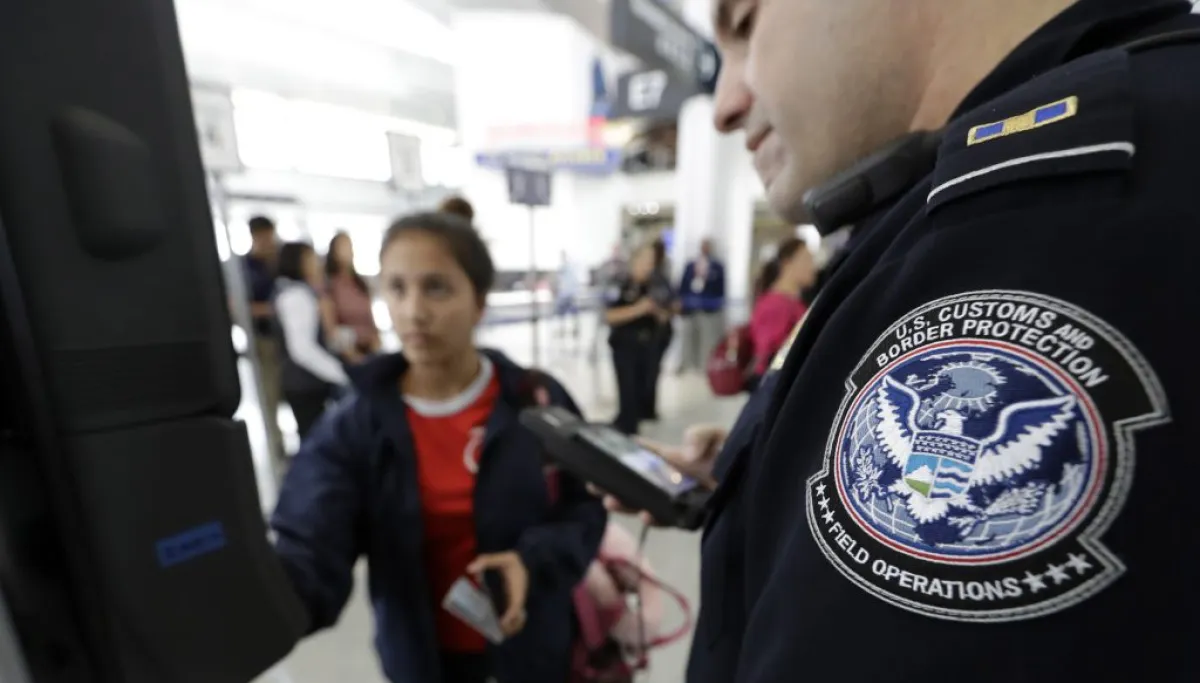

According to Diane Sabatino, writing in an exclusive interview with Washington Examiner, the executive assistant commissioner who oversees the nation’s 328 ports of entry described a near-future scenario where Americans returning from overseas simply walk through customs, have their photograph taken by an automated system, and proceed directly to baggage claim without traditional document checks or officer interactions.
Sabatino, a 28-year veteran of federal law enforcement at the Department of Homeland Security’s CBP, confirmed that this technology is already operational at several major American airports and will expand nationwide within the coming years.

Biometric Technology Replacing Traditional Checkpoints
The transformation centres on biometric screening technology that uses facial recognition and fingerprint systems to automatically identify and validate passengers. For travellers enrolled in the Global Entry trusted traveller programme, the experience will become entirely frictionless at all U.S. airports unless an officer specifically requests to speak with them.
Sabatino emphasised that the seamless experience does not compromise security. CBP officers continue to thoroughly vet travellers, monitor luggage through X-ray systems, and evaluate passengers against threat intelligence briefings—all without the traveller perceiving direct engagement.
Shifting From Manual to Digital Workflows
The initiative aligns with CBP’s newly announced strategic plan for 2026 through 2030, which prioritises moving administrative burdens away from traditional manual paperwork toward digitised, touchless, and remote workflows.
CBP stands as America’s largest police agency, employing more than 70,000 personnel worldwide. Its Office of Field Operations fields over 35,000 officers responsible for inspecting all persons, goods, and vehicles arriving at airports, seaports, and land crossings with Canada and Mexico. At airports alone, customs officers process approximately 390,000 travellers each day.
Fundamental Change in Airport Operations
Marisa Von Wieding, vice president of operations for the forthcoming New Terminal One at John F. Kennedy International Airport in New York, credited Sabatino’s leadership with fundamentally changing the relationship between CBP and airports. The vision has encouraged both the agency and industry partners to embrace new technologies including Enhanced Passenger Processing, International Remote Baggage Screening, and Global Entry modernisation.
From Immigration Service to Multi-Agency Enforcement
Sabatino joined the U.S. Immigration and Naturalization Service in 1998, before the creation of DHS and CBP in 2003. The transformation consolidated immigration enforcement with trade, agriculture, and supply chain oversight, meaning CBP officers now enforce more than 400 laws from 40 different agencies.
Traditional airport screening in 2003 featured officers sitting in static booths, manually handling documents, swiping cards, and checking multiple systems before travellers proceeded to a separate customs checkpoint. CBP has consolidated this into a single streamlined process.
The modernisation strategy deploys emerging technology to handle administrative tasks that previously consumed officer time, freeing personnel to focus on their core strength of engaging with travellers and determining intent through conversation and observation.
With information from Washington Examiner





