
Parents Ask Supreme Court to Stop California Homeschool Bias
California parents petition Supreme Court claiming charter schools unconstitutionally rejected faith-based homeschool materials that met state standards solely due to religious content.
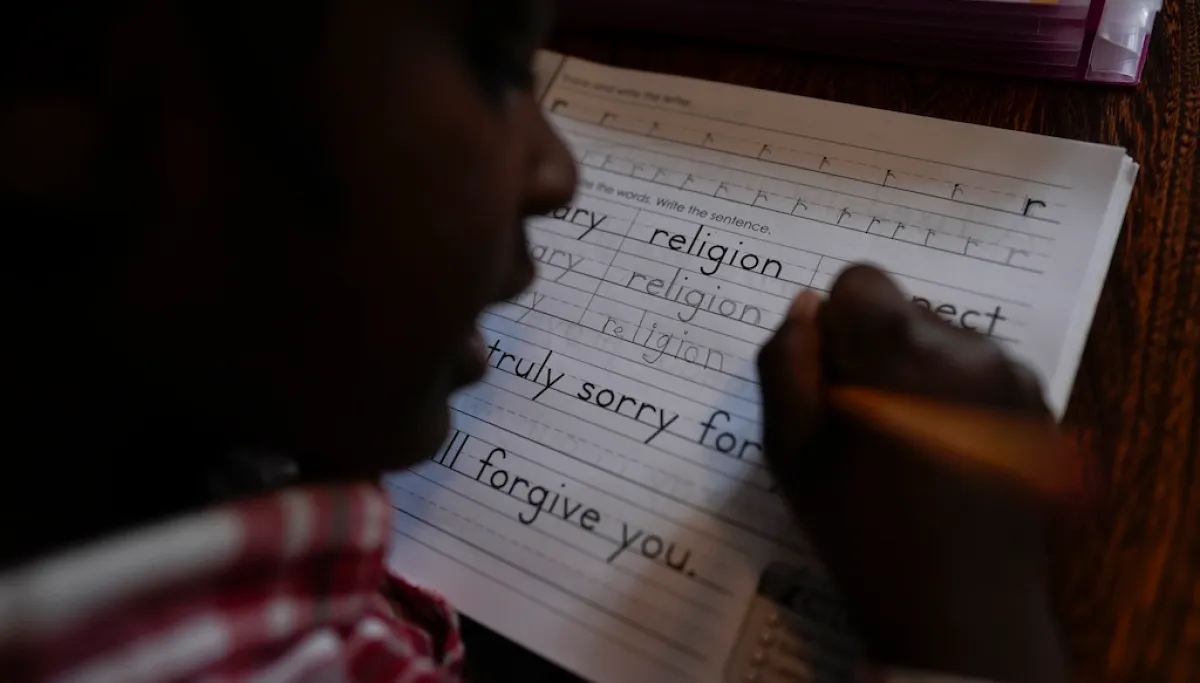

The dispute centres on California’s independent study framework, which allows parents to select educational materials that comply with state academic standards using government-provided funds. Charter schools are then tasked with reviewing the chosen curriculum to verify compliance with state requirements.
According to Jack Birle writing in Washington Examiner, the families claim that one charter school unconstitutionally rejected their preferred materials solely due to religious content, despite the curriculum meeting all state educational standards. The First Liberty Institute, a conservative religious liberty legal organisation representing the families, filed the petition seeking to overturn a decision by the U.S. Court of Appeals for the 9th Circuit that sided with California authorities.
The 9th Circuit ruled that these homeschool programmes constitute “public schools,” thereby justifying the exclusion of religious materials. The parents’ legal team contested this characterisation in their Supreme Court filing, arguing that families teaching children at home should not be classified as operating public school programmes.
Among the rejected materials were works by historical figures William Penn and Jonathan Edwards, which officials deemed unacceptable due to religious themes. The parents also cited the rejection of a grammar exercise containing the sentence about God sending rain to help plants grow, with school administrators stating they could not approve any work sample containing religious language.
The petition invokes Supreme Court precedent establishing that whilst states are not obligated to fund education outside public schools, they cannot exclude religious education from such benefits once they choose to provide them. The filing emphasises recent Supreme Court affirmations that educating children according to one’s religious beliefs receives robust constitutional protection.
The families argue that California’s policy discriminates against parents seeking faith-based education for their children, denying them homeschooling benefits and support extended to other families across the state. Their petition characterises this as a clear violation of the Free Exercise Clause of the First Amendment.
Hiram Sasser, Executive General Counsel for First Liberty Institute, condemned the lower court’s reasoning, stating the 9th Circuit had declared parents’ homes to be public school programmes in order to justify religious discrimination by the state.
The religious liberty group warned that the case could affect tens of thousands of students throughout California and establish damaging precedent for religious rights in education across the entire 9th Circuit.
Supreme Court Calendar
The Supreme Court is scheduled to resume closed-door conferences to consider which cases to accept beginning 28 September. The high court’s next term commences 5 October with oral arguments in a significant climate change case.
A decision on whether the justices will grant review in this religious materials case, titled Woolard v. Thurmond, could be announced as early as this autumn.
The upcoming term will also feature several other major cases involving religious liberty and education, including a challenge to Colorado’s exclusion of Catholic preschools from its universal preschool programme. Oral arguments in St. Mary Catholic Parish v. Roy are scheduled for 3 November.
With information from Washington Examiner





