Misleading Polls Give Socialists False Hope Before Defeat
Democratic Socialists of America-endorsed candidates have consistently underperformed polling predictions in recent primaries, with Florida's Oliver Larkin losing by 30 points despite surveys showing a tie.

A series of recent primary elections has revealed a significant disconnect between pre-election polling and actual voter behavior when it comes to socialist-backed candidates, with Democratic Socialists of America endorsees consistently underperforming their projected results at the ballot box.
According to Naomi Lim writing in Washington Examiner, DSA-backed candidates have entered several recent primary contests with surveys showing them competitive with or even leading more centrist Democratic opponents, only to face disappointing defeats on election day.
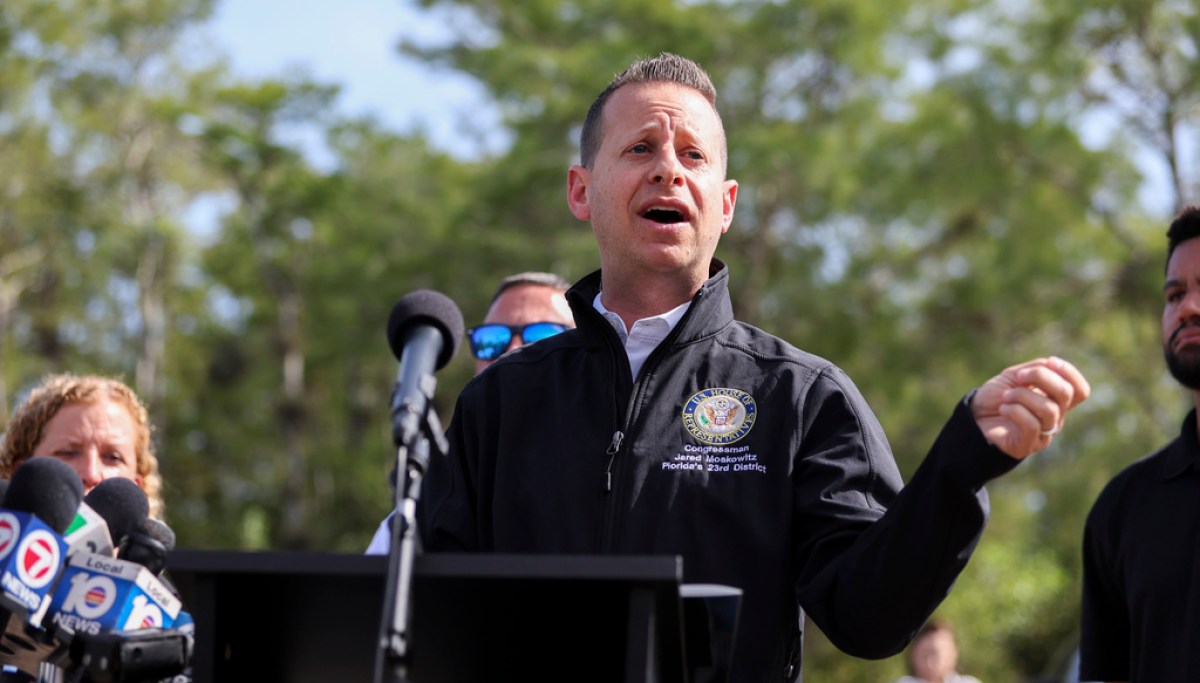
This week’s Florida primary delivered one of the starkest examples of this trend. Oliver Larkin, a DSA union organizer, suffered a crushing defeat against Representative Jared Moskowitz in Florida’s 25th Congressional District, losing by nearly 30 percentage points. The loss came despite Larkin promoting polling earlier in August that showed him in a statistical dead heat with the centrist third-term incumbent.
Larkin had posted on social media that we are in a statistical tie with Rep. Jared Moskowitz, claiming momentum with just days remaining before the primary. The actual results told a vastly different story, with Moskowitz securing 63.5% of the vote compared to Larkin’s 36.5%.


Moskowitz, who has drawn criticism from far-left elements within the Democratic Party over his support for Israel, now advances to defend his seat in what the Cook Political Report rates as a toss-up race in November.
The Florida contests produced another victory for centrist Democrats when Representative Debbie Wasserman Schultz easily defeated her socialist challenger in the state’s newly redrawn 20th Congressional District. Activist Elijah Manley finished third with just 14% of the vote, while Wasserman Schultz captured 46%.
The Florida results follow a pattern established in other recent primaries where pre-election polling overstated progressive strength. Michigan Democratic Senate nominee Abdul el Sayed won his primary against Representative Haley Stevens, but by a considerably narrower margin than surveys had projected. One week later, DSA-endorsed Francesca Hong lost Wisconsin’s Democratic gubernatorial nomination to Milwaukee County Executive David Crowley, despite pre-primary polling showing her in the lead.
The polling discrepancies have armed centrist Democrats with fresh ammunition in their intensifying battle against the party’s socialist wing, even as polling experts caution that primary elections present unique forecasting challenges.
Kate deGruyter, senior communications director at the centrist Democratic organization Third Way, said the pattern is clear. She noted that polls in several key races ended up far removed from actual voter sentiment, consistently overstating support levels for DSA-affiliated candidates.
Third Way announced earlier this month it would invest $15 million to counter the DSA’s influence between now and the 2028 election cycle.
Lee Miringoff, Director of the Marist Institute for Public Opinion, explained to the Washington Examiner that primary polling carries uncertainty well beyond standard margin of error calculations and presents greater challenges than general election surveys. He cited higher numbers of undecided voters, difficulty identifying likely voters, and the tendency to overestimate younger voter turnout as complicating factors.
Not every recent result has disappointed the Democratic Party’s left flank. Florida Democratic state Representative Angie Nixon defeated retired Army Lieutenant Colonel Alexander Vindman, a witness during President Donald Trump’s first impeachment trial, in their special Democratic Senate primary election by a 56% to 44% margin.
However, Nixon’s victory actually reinforced the electability concerns centrist groups are raising about left-wing candidates. Following her primary win, Sabato’s Crystal Ball at the University of Virginia’s Center for Politics shifted the race rating from likely Republican to safe Republican.
DeGruyter emphasized that the critical project for Democrats is not making already blue seats bluer, but rather flipping red and purple seats to Democratic control. She pointed out that moderate Democrats have flipped 50 seats from Republican to Democratic hands, while the far-left has yet to flip even a single seat from red to blue.
Third Way’s anti-DSA campaign focuses on confronting the organization itself rather than targeting individual candidates, deGruyter clarified.
With information from Washington Examiner