
When Trump Lies We Mock Him, But China’s Xi Gets A Pass
New polling shows China now enjoys more favorable public opinion than the United States in nearly 30 of 36 countries surveyed, including among long-standing Western allies like the United Kingdom.
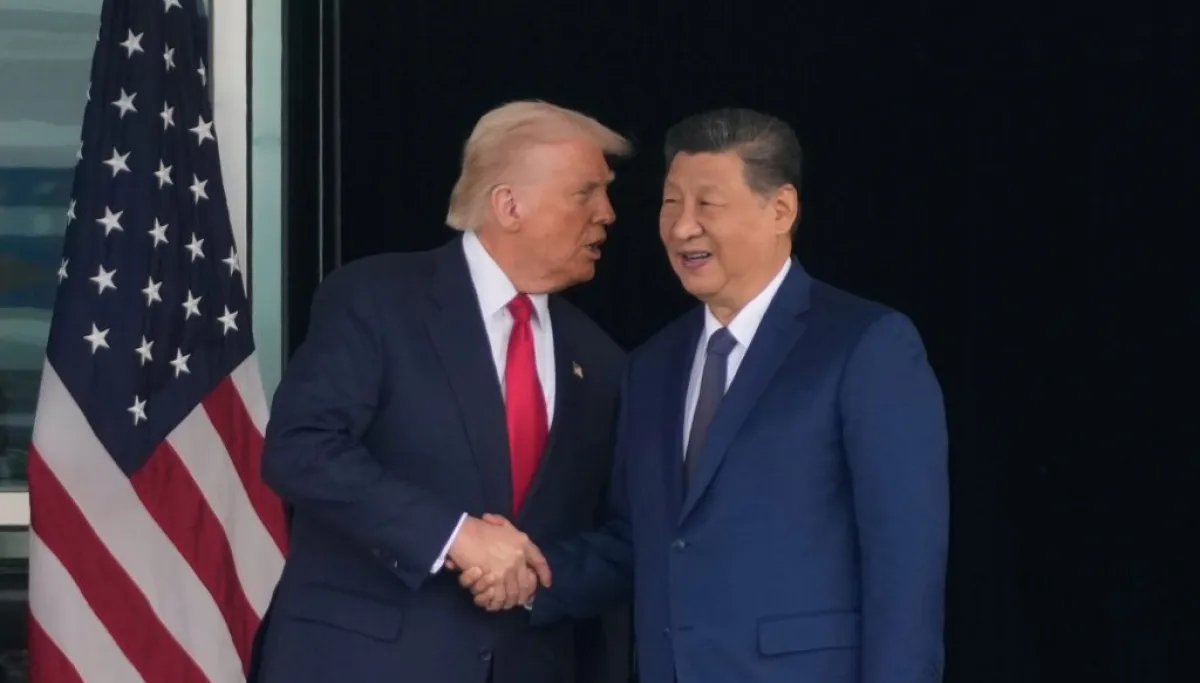

According to Dustin Siggins writing in Washington Examiner, this dramatic shift represents what he describes as a planet-sized public relations problem that appears not merely inexplicable but outright bizarre for Washington.
Whilst some nations such as France and Canada currently harbour negative views of the United States due to President Donald Trump, Siggins argues that Trump remains incomparable to China’s autocratic president Xi Jinping when it comes to treatment of his own citizens. Moreover, Trump cannot be held accountable for unleashing a pandemic that subjected the world to two years of oppression, panic, and death.


The answer to why citizens of America’s supposed allies now hold China in higher regard than the U.S. and express greater confidence in Xi over the democratically elected president of a constitutional republic lies in one factor: China possesses the world’s most effective public relations strategy.
Economic Dependency as Diplomatic Leverage
Beijing’s strategy commenced decades ago, Siggins notes, with the country making itself economically indispensable through aggressive development of manufacturing and technology infrastructure. More recently, the Belt and Road Initiative and China’s monopolisation of the global rare earth metals market have cemented this dependency. The country’s massive population also represents an increasingly affluent consumer base.
The results speak for themselves. Today, virtually every nation relies on China for something critical, granting Beijing enormous leverage over countries, NGOs, and corporations. The NBA’s capitulation on Hong Kong freedom and Hollywood actor John Cena’s humiliating apology for acknowledging Taiwan as independent exemplify this dynamic.
Whilst America also employs sanctions, trade policy, military power, and access to the world’s largest economy to advance its interests, challenging Washington has become practically a cottage industry. American allies openly criticise the United States. Politicians build careers opposing it. Journalists investigate it, corporations challenge it, and protesters denounce it.
By contrast, how many governments, institutions, or major businesses confront China with similar confidence? The answer is evident: the United Nations criticises America and Israel more than any other nation, whilst the World Health Organisation swallowed and enforced China’s COVID-19 deceptions. Beijing hosted the 2022 Winter Olympics even as accusations of genocide against a Muslim minority mounted.
Strategic Silence Versus Democratic Transparency
China’s second tactic involves strategic silence. Minimal information escapes without passing through state controls. Critical journalists face restrictions, online discussion undergoes censorship, and dissenting voices are silenced before reaching international audiences.
America’s openness presents a stark contrast. The president broadcasts his thoughts on Truth Social. Journalists file Freedom of Information Act requests to uncover embarrassing documents without fear of torture for challenging the government. Every mistake, scandal, argument, and institutional failure receives exposure and amplification in real time.
Free speech, a free press, and publicly combative elections constitute democratic strengths, Siggins observes, but they also make the country appear chaotic, divided, and downright ugly.
Gaslighting Without Accountability
Beijing’s third weapon is gaslighting. The regime can deny, deflect, and repeat its preferred version of events without facing meaningful public contradiction domestically. It need not convince everyone to believe the official narrative — only enough people to accept it or become uncertain about truth.
Whilst gaslighting occurs in the White House as well, even its smallest claims face challenges from individuals and institutions across the country and worldwide. When Trump lies, he faces widespread mockery. Try that with Xi, and the consequences prove far less amusing.
Not Everyone Is Fooled
China’s public relations strategy has not succeeded everywhere. Of the six countries viewing America much more positively, four — Japan, South Korea, India, and the Philippines — sit close enough to China to understand exactly what they face. Like any stakeholder near the reality on the ground, they remain undeceived.
Siggins concludes that whilst some characterise China’s success as placing America into a crisis, solving the problem will require far more than a few Truth Social posts or diplomatic handshakes from the next president.
With information from Washington Examiner





