Necessary Cookies

Required for the site to function. Cannot be disabled.

Analytics Cookies

Help us understand how visitors interact with our site (Google Analytics via GTM).

Marketing Cookies

Used to track visitors and deliver personalised advertisements.

We use cookies to enhance your browsing experience and analyse site traffic. By clicking Accept All, you consent to our use of cookies. Privacy Policy
NewsFire Global
Home News Europe World Christianity Culture Wars Opinion Video
Information
About Us Authors Advertising Terms & Conditions Privacy Policy Contact
R2B Media
R2B NEWSFIRE.GR PAPAFOTIS.GR THRACTION HELLENIC CONSERVATIVES RIGHT2THEBONE YT
News Europe

French Court Blocks Under-15 Social Media Ban, PM Wants Vote

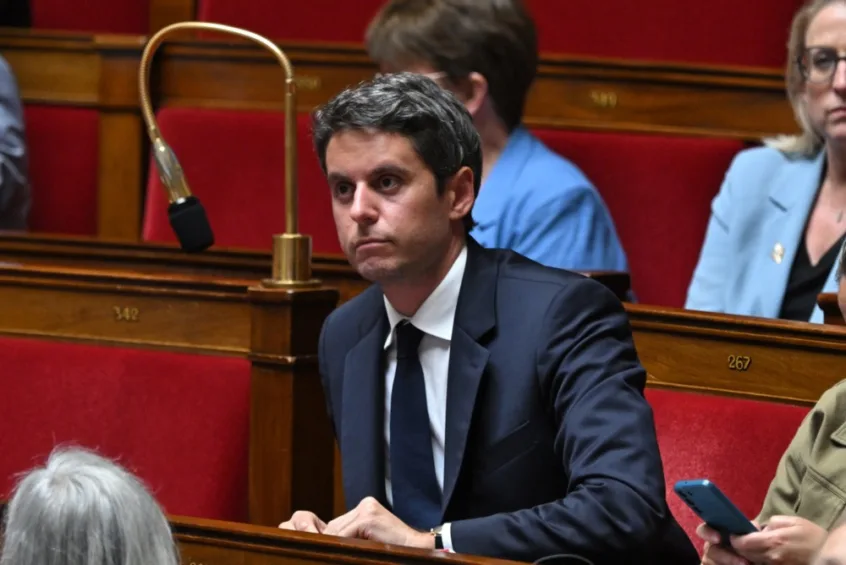
Former French Prime Minister Gabriel Attal called for a referendum to ban social media for under-15s after France's top court struck down the parliamentary ban as unconstitutional.

Dimitris Papafotis
Dimitris Papafotis Editor in Chief
AUGUST 17, 2026 AT 7:48 PM

The Constitutional Council ruled on August 14 that the legislation, which had passed through parliament on July 21, represented a disproportionate and unnecessary restriction on the communication rights of minors, according to Brussels Signal.

Gabriel Attal, who served as prime minister under President Emmanuel Macron and is now general secretary of the centrist Renaissance party, responded to the decision with a call for direct democracy. Writing on X and in an opinion column for La Tribune Dimanche published August 16, he acknowledged the court’s authority but emphasised what he described as a crisis affecting French youth.

Attal argued that hundreds of thousands of young people fall victim to social media addiction annually, and that the French people have not been consulted directly through referendum for 21 years. He framed the issue as a matter of protecting children from what he termed algorithmic manipulation that fosters body image disorders, cyberbullying, depression, and self-harm.

He cited alarming statistics showing that approximately 19,000 teenage girls are hospitalised each year for self-inflicted injuries, with psychiatric hospitalisation rates for self-harm among girls aged 10 to 19 quadrupling over the past decade.

The former prime minister went further, characterising social media as a security threat. He warned that hostile foreign powers exploit these platforms to interfere in French democratic processes by targeting vulnerable and impressionable youth through what he described as cognitive weapons.

Constitutional Court Blocks Ban

The Constitutional Council found that Article 1 of the law constituted an infringement that was neither appropriate, necessary, nor proportionate to the constitutional rights of under-15s to freedom of expression and communication.

The court, which reviewed the legislation following a petition from Socialist and La France Insoumise deputies in late July, determined that the ban was broad enough to capture online services whose risks to minors had not been properly established. Judges also criticised the age-verification mechanisms for failing to provide adequate privacy protections.

The legislation, championed by President Macron and tabled by deputy Laure Miller of the Ensemble pour la République group, would have prohibited under-15s from creating new social media accounts beginning in September and required platforms to shut down existing accounts within months.

France Set To Lead European Crackdown

France was poised to become the first European nation to implement such restrictions, following Australia’s under-16 ban which came into force on December 10, 2025. The Australian law exposes platforms to fines reaching A$50 million (€28 million) for non-compliance. Denmark and Austria have announced similar measures but have not yet enacted them.

President Macron responded immediately to the court ruling by directing Prime Minister Sébastien Lecornu to draft revised legislation addressing the Constitutional Council’s objections, with implementation targeted for spring 2027. Anne Le Hénanff, minister delegate for digital affairs, confirmed the new text would proceed through parliament in coming months.

Referendum Route Proposed

Attal, who had been a strong supporter of the original ban, contended that a referendum would enable immediate action without the delays inherent in a full legislative process, which he estimated could consume more than a year.

He maintained that child protection policy of this nature falls within the scope of social policy and could therefore be submitted to referendum under Article 11 of the French Constitution.

Socialist deputy Arthur Delaporte accused Attal of proposing unconstitutional legislation and then attempting to circumvent the court that invalidated it through a popular vote. Constitutional law expert Benjamin Morel also questioned the legal basis for the referendum proposal, as reported by Brussels Signal.

The controversy underscores growing tension across Western democracies between efforts to protect minors online and constitutional guarantees of free expression and privacy.

With information from Brussels Signal

Share:
Dimitris Papafotis
Dimitris Papafotis

Dimitris Papafotis is the editor-in-chief of NewsFire.GR. He was born and raised in Athens. He studied at the Journalism Workshop (1991-1993). He currently lives in Pyrgos, Ilia, where he has been active in radio and various newspapers, while also maintaining his personal blog, Papafotis.gr.

Je demande un référendum pour protéger nos enfants.

Hier, le Conseil constitutionnel a censuré la loi sur l’interdiction des réseaux sociaux aux moins de 15 ans.

Je respecte cette décision, mais il y a urgence.

Car le temps presse : chaque année, des centaines de milliers…

— Gabriel Attal (@GabrielAttal) August 15, 2026

The Constitutional Council ruled on August 14 that the legislation, which had passed through parliament on July 21, represented a disproportionate and unnecessary restriction on the communication rights of minors, according to Brussels Signal.

Gabriel Attal, who served as prime minister under President Emmanuel Macron and is now general secretary of the centrist Renaissance party, responded to the decision with a call for direct democracy. Writing on X and in an opinion column for La Tribune Dimanche published August 16, he acknowledged the court’s authority but emphasised what he described as a crisis affecting French youth.

Attal argued that hundreds of thousands of young people fall victim to social media addiction annually, and that the French people have not been consulted directly through referendum for 21 years. He framed the issue as a matter of protecting children from what he termed algorithmic manipulation that fosters body image disorders, cyberbullying, depression, and self-harm.

He cited alarming statistics showing that approximately 19,000 teenage girls are hospitalised each year for self-inflicted injuries, with psychiatric hospitalisation rates for self-harm among girls aged 10 to 19 quadrupling over the past decade.

The former prime minister went further, characterising social media as a security threat. He warned that hostile foreign powers exploit these platforms to interfere in French democratic processes by targeting vulnerable and impressionable youth through what he described as cognitive weapons.

Constitutional Court Blocks Ban

The Constitutional Council found that Article 1 of the law constituted an infringement that was neither appropriate, necessary, nor proportionate to the constitutional rights of under-15s to freedom of expression and communication.

The court, which reviewed the legislation following a petition from Socialist and La France Insoumise deputies in late July, determined that the ban was broad enough to capture online services whose risks to minors had not been properly established. Judges also criticised the age-verification mechanisms for failing to provide adequate privacy protections.

The legislation, championed by President Macron and tabled by deputy Laure Miller of the Ensemble pour la République group, would have prohibited under-15s from creating new social media accounts beginning in September and required platforms to shut down existing accounts within months.

France Set To Lead European Crackdown

France was poised to become the first European nation to implement such restrictions, following Australia’s under-16 ban which came into force on December 10, 2025. The Australian law exposes platforms to fines reaching A$50 million (€28 million) for non-compliance. Denmark and Austria have announced similar measures but have not yet enacted them.

President Macron responded immediately to the court ruling by directing Prime Minister Sébastien Lecornu to draft revised legislation addressing the Constitutional Council’s objections, with implementation targeted for spring 2027. Anne Le Hénanff, minister delegate for digital affairs, confirmed the new text would proceed through parliament in coming months.

Referendum Route Proposed

Attal, who had been a strong supporter of the original ban, contended that a referendum would enable immediate action without the delays inherent in a full legislative process, which he estimated could consume more than a year.

He maintained that child protection policy of this nature falls within the scope of social policy and could therefore be submitted to referendum under Article 11 of the French Constitution.

Socialist deputy Arthur Delaporte accused Attal of proposing unconstitutional legislation and then attempting to circumvent the court that invalidated it through a popular vote. Constitutional law expert Benjamin Morel also questioned the legal basis for the referendum proposal, as reported by Brussels Signal.

The controversy underscores growing tension across Western democracies between efforts to protect minors online and constitutional guarantees of free expression and privacy.

With information from Brussels Signal

