
Who’s Afraid of a Stay-at-Home Mom?
Educated married black mothers are increasingly choosing to stay home with young children supported by their husbands' incomes, contrary to media characterizations of a troubling employment trend.
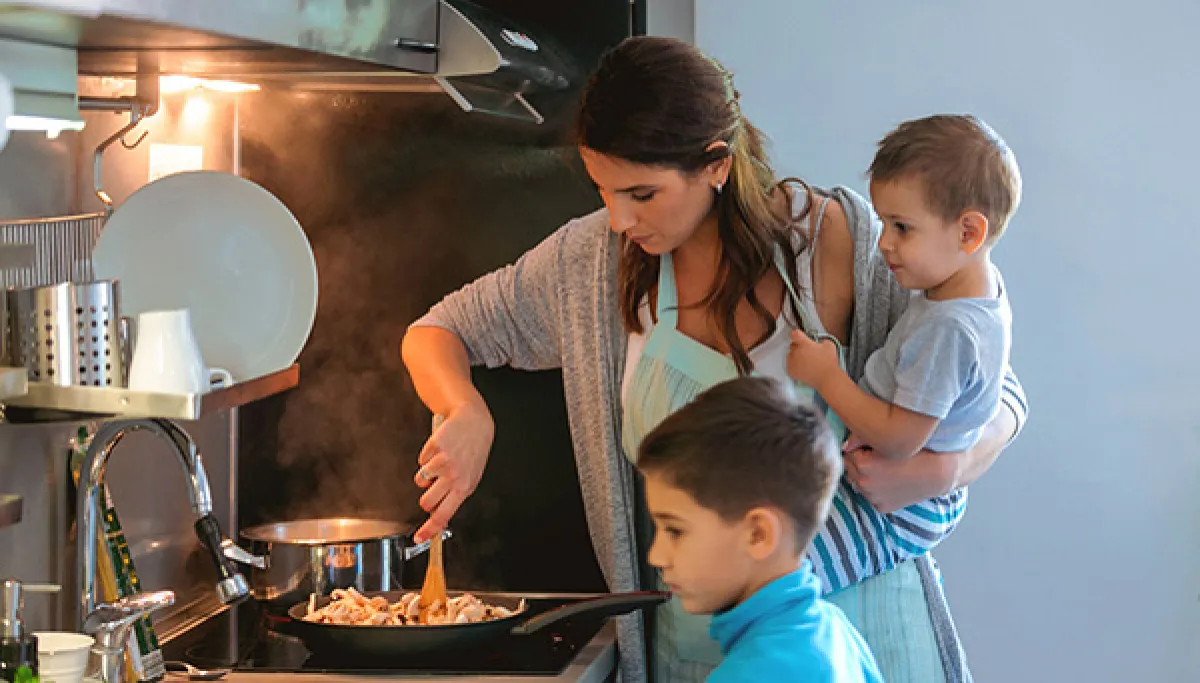

The media establishment and liberal academics are sounding alarm bells over what they characterise as a troubling employment trend — but the reality reveals something far more encouraging: educated married mothers, particularly black mothers, are choosing to stay home with their young children.
According to Timothy P. Carney writing in Washington Examiner, when college-educated married women leave their jobs after having babies to focus on raising their children whilst supported by their husbands’ incomes, the financial press and liberal academics describe it as a “troubling employment trend,” a “sign of the Trump times,” and warn of a “mom-cession” rooted in “structural inequities in work.”
The specific data driving this manufactured panic centres on labour force participation among black mothers with young children, which has fallen to a 31-year low. Some reports have attempted to link this to cuts in federal employment and diversity programmes, suggesting these women are struggling to find work.
Yet that narrative is fundamentally misleading. The unemployment rate for prime-age black mothers aged 25-54 with young children has actually fallen over the past three months to 5.1% on a seasonally adjusted basis. Black mothers actively seeking employment are more likely to have jobs now than at any point in the past year and most months since before the pandemic.


What has genuinely declined is the labour force participation rate among prime-aged married black mothers. The figure for black mothers aged 25-54 with children under five has dropped 11.5 percentage points in just three months.
Bloomberg, citing a race-and-equity expert, revealed the key detail: married, college-educated black mothers in particular have experienced declining participation, likely because they can rely on a partner’s income. Meanwhile, participation among their never-married peers has actually increased in recent months.
To any normal person, this represents positive news: single black women have jobs, black mothers seeking employment are finding it, and married black mothers with college degrees are 10% more likely to exit the workforce to spend time with their babies and toddlers.
Yet certain ideological commitments prevent some from seeing this clearly. Girlboss feminism treats it as a tragedy whenever a woman chooses her husband and child over her boss and clients. Some economically-minded commentators oppose anything that might subtract from GDP figures, including walks with toddlers or homemade family meals.
These feminist and workist mindsets remain minority positions except within media circles and among Democratic politicians.
Senator Elizabeth Warren, who once lamented the “Two Income Trap,” now describes stay-at-home mothers as women who “got knocked off track.” Washington Post columnist Helaine Olen wrote in 2021 about what she called a “lousy myth about moms, kids and work,” specifically attacking the notion that many women are better off reducing their paid work hours in favour of family responsibilities.
Real America, however, sees things rather differently.
A recent YouGov poll of 867 women asked whether, if either option were available, they would pursue a career outside the home or stay home to care for family. The responses split evenly, with 43% choosing career and 43% choosing family — and this sample included women without children, women whose children are grown, and young women not yet considering marriage or motherhood.
Two-thirds of parents say their ideal childcare arrangement is Mum, Dad, or both taking time off work to watch the children, according to a New America Foundation survey. Only 20% preferred formal daycare or a nanny.
Among mothers of young children specifically, the preferences become even more pronounced. One recent poll of mothers with children aged five and under shows only about 40% want to work a full-time paid job. Yet approximately 75% of mothers with young children do work full-time.
Democrats and reporters insist that women primarily choose to stay home because they cannot find high-quality, low-cost daycare, but the evidence contradicts this claim. Repeated studies over the past two decades have found that introducing no-cost, reliable daycare does not induce married mothers into the workforce.
The evidence suggests these black married mothers opting out of the workforce are not being “knocked off track” by “workplace inequity.” They are choosing to prioritise being mothers and wives. It remains difficult to understand why anyone would view this as problematic.
With information from Washington Examiner





