Necessary Cookies

Required for the site to function. Cannot be disabled.

Analytics Cookies

Help us understand how visitors interact with our site (Google Analytics via GTM).

Marketing Cookies

Used to track visitors and deliver personalised advertisements.

We use cookies to enhance your browsing experience and analyse site traffic. By clicking Accept All, you consent to our use of cookies. Privacy Policy
NewsFire Global
Home News Europe World Christianity Culture Wars Opinion Video
Information
About Us Authors Advertising Terms & Conditions Privacy Policy Contact
R2B Media
R2B NEWSFIRE.GR PAPAFOTIS.GR THRACTION HELLENIC CONSERVATIVES RIGHT2THEBONE YT
News World

Iran’s Desperate Plot to Assassinate Donald Trump

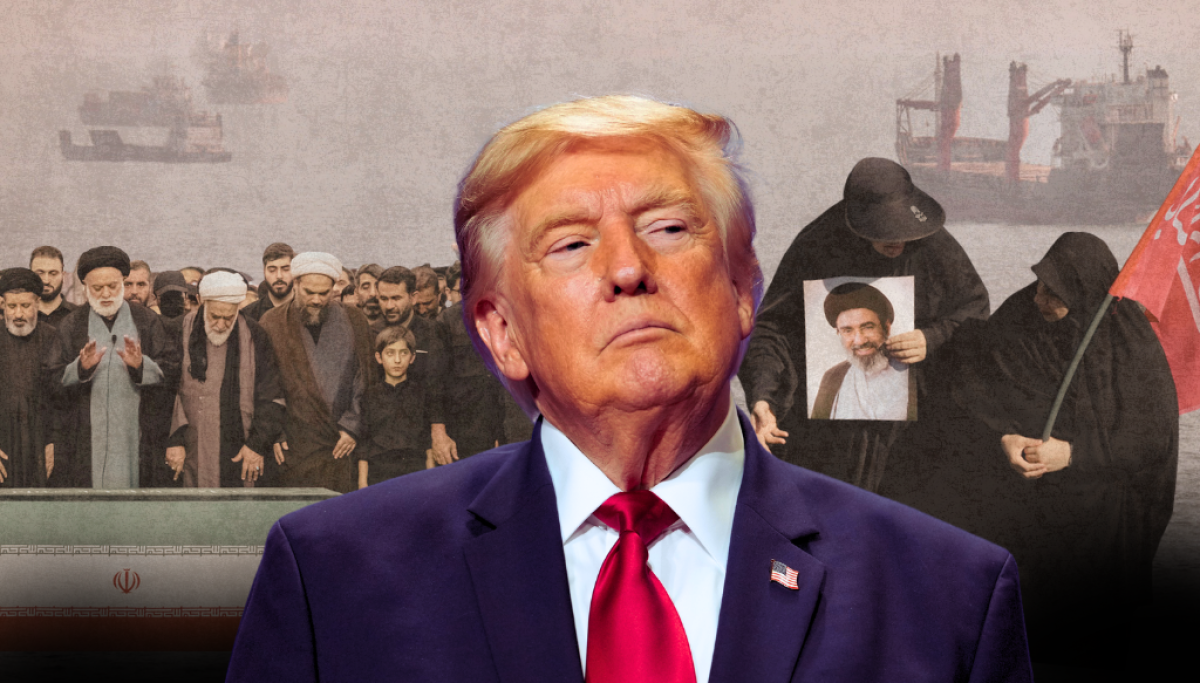
Iran's assassination campaign against Donald Trump stems from theological grievance over the 2020 killing of General Qassem Soleimani and will persist as long as the Islamic Republic exists.
AUGUST 14, 2026 AT 9:28 PM

The threat came into sharp focus last month when Trump used a catering truck to covertly switch aircraft before departing a NATO summit in Turkey, acting on Secret Service advice in response to credible Iranian assassination plots.

The late Iranian President Ebrahim Raisi foreshadowed this enduring threat during his September 2023 address to the United Nations General Assembly, when he declared that the blood of the oppressed will not be forgotten and promised justice against the guilty.

Theological Ideology Fuels Assassination Drive

Tehran’s determination to kill Trump cannot be understood outside the regime’s Khomeinist interpretation of Twelver Shia theology, which glorifies martyrdom and resistance against perceived oppressors. This worldview draws heavily from the 7th-century Battle of Karbala, where Husayn ibn Ali died fighting an Umayyad force, creating a permanent template for resistance martyrdom.

Trump has inflicted unprecedented damage on the Iranian regime’s ideological foundations and strategic ambitions, making him the Islamic Republic’s most hated enemy.

Soleimani Strike Ignited Permanent Vendetta

The January 2020 killing of Islamic Revolutionary Guard Corps General Qassem Soleimani on Trump’s orders represented the first major offense. Soleimani had orchestrated the deaths of hundreds of Americans and wounded thousands more in Iraq, many through explosively-formed penetrators that transformed armored vehicles into deadly shrapnel chambers. His operations included a 2011 plot to bomb Cafe Milano restaurant in Washington, D.C.

Beyond his military record, Soleimani held profound symbolic importance as a close partner of Ayatollah Ali Khamenei and was viewed by regime ideologues as living proof of Iran’s destined regional dominance. His elimination dealt simultaneous theological and strategic blows to Tehran.

Khamenei responded by ordering the Guard and Ministry of Intelligence to develop assassination plans targeting Trump and senior officials from his first administration. The target list included former national security advisor John Bolton and former Secretary of State Mike Pompeo, as first reported by Washington Examiner, leading to extensive and costly security details, though Trump later revoked some protections.

Khamenei’s Death Elevated Trump to Ultimate Enemy

The February 28 killing of Khamenei himself during this year’s war on Iran transformed Trump from a mortal adversary into something far more significant in Iranian ideology. The supreme leader was regarded by regime followers as God’s ordained human servant and the ultimate custodian of Islamic justice, serving as caretaker awaiting the return of the Mahdi, a servant of the Prophet Muhammad currently believed to be in physical hiding.

By eliminating Khamenei, Trump became the Iranian equivalent of the Antichrist in the regime’s theological framework. Tehran’s ideologues now believe their holy justice demands purification through the president’s blood and that of his family.

No Diplomatic Solution Exists

Unlike other adversarial relationships that Trump has successfully transformed through negotiation, the Islamic Republic views his fate as theologically sealed. Neither diplomatic overtures nor military threats will alter Tehran’s conviction that Trump must die.

Whether operating directly or through organized crime proxies, the Iranian regime will continue pursuit of Trump’s assassination indefinitely. Only the demise of the Islamic Republic itself or Trump’s death will end this campaign.

This permanent threat explains the extensive Secret Service precautionary measures currently protecting the former president, security arrangements that will necessarily extend far into the future regardless of political developments or attempted diplomatic engagement.

With information from Washington Examiner

Share:
Eleni Papadaki-Van Der Merwe

She was born in 1986 in Johannesburg, South Africa. She is the granddaughter of an immigrant from Crete who settled in the Greek community of Johannesburg (one of the largest in Africa). She holds a bachelor’s degree in International Relations and Political Science from the University of the Witwatersrand (Wits) in Johannesburg and a master’s degree in Journalism from Rhodes University in Grahamstown. She began her career at English-language media outlets in Johannesburg, covering politics and economics, with a focus on issues related to migration and the diaspora. She moved to Athens in 2015 to “return to her roots,” initially to pursue graduate studies, and has remained there permanently. She is married to an Afrikaner; they have two children and live in the southern suburbs of Athens.

The threat came into sharp focus last month when Trump used a catering truck to covertly switch aircraft before departing a NATO summit in Turkey, acting on Secret Service advice in response to credible Iranian assassination plots.

The late Iranian President Ebrahim Raisi foreshadowed this enduring threat during his September 2023 address to the United Nations General Assembly, when he declared that the blood of the oppressed will not be forgotten and promised justice against the guilty.

Theological Ideology Fuels Assassination Drive

Tehran’s determination to kill Trump cannot be understood outside the regime’s Khomeinist interpretation of Twelver Shia theology, which glorifies martyrdom and resistance against perceived oppressors. This worldview draws heavily from the 7th-century Battle of Karbala, where Husayn ibn Ali died fighting an Umayyad force, creating a permanent template for resistance martyrdom.

Trump has inflicted unprecedented damage on the Iranian regime’s ideological foundations and strategic ambitions, making him the Islamic Republic’s most hated enemy.

Soleimani Strike Ignited Permanent Vendetta

The January 2020 killing of Islamic Revolutionary Guard Corps General Qassem Soleimani on Trump’s orders represented the first major offense. Soleimani had orchestrated the deaths of hundreds of Americans and wounded thousands more in Iraq, many through explosively-formed penetrators that transformed armored vehicles into deadly shrapnel chambers. His operations included a 2011 plot to bomb Cafe Milano restaurant in Washington, D.C.

Beyond his military record, Soleimani held profound symbolic importance as a close partner of Ayatollah Ali Khamenei and was viewed by regime ideologues as living proof of Iran’s destined regional dominance. His elimination dealt simultaneous theological and strategic blows to Tehran.

Khamenei responded by ordering the Guard and Ministry of Intelligence to develop assassination plans targeting Trump and senior officials from his first administration. The target list included former national security advisor John Bolton and former Secretary of State Mike Pompeo, as first reported by Washington Examiner, leading to extensive and costly security details, though Trump later revoked some protections.

Khamenei’s Death Elevated Trump to Ultimate Enemy

The February 28 killing of Khamenei himself during this year’s war on Iran transformed Trump from a mortal adversary into something far more significant in Iranian ideology. The supreme leader was regarded by regime followers as God’s ordained human servant and the ultimate custodian of Islamic justice, serving as caretaker awaiting the return of the Mahdi, a servant of the Prophet Muhammad currently believed to be in physical hiding.

By eliminating Khamenei, Trump became the Iranian equivalent of the Antichrist in the regime’s theological framework. Tehran’s ideologues now believe their holy justice demands purification through the president’s blood and that of his family.

No Diplomatic Solution Exists

Unlike other adversarial relationships that Trump has successfully transformed through negotiation, the Islamic Republic views his fate as theologically sealed. Neither diplomatic overtures nor military threats will alter Tehran’s conviction that Trump must die.

Whether operating directly or through organized crime proxies, the Iranian regime will continue pursuit of Trump’s assassination indefinitely. Only the demise of the Islamic Republic itself or Trump’s death will end this campaign.

This permanent threat explains the extensive Secret Service precautionary measures currently protecting the former president, security arrangements that will necessarily extend far into the future regardless of political developments or attempted diplomatic engagement.

With information from Washington Examiner

