Necessary Cookies

Required for the site to function. Cannot be disabled.

Analytics Cookies

Help us understand how visitors interact with our site (Google Analytics via GTM).

Marketing Cookies

Used to track visitors and deliver personalised advertisements.

We use cookies to enhance your browsing experience and analyse site traffic. By clicking Accept All, you consent to our use of cookies. Privacy Policy
NewsFire Global
Home News Europe World Christianity Culture Wars Opinion Video
Information
About Us Authors Advertising Terms & Conditions Privacy Policy Contact
R2B Media
R2B NEWSFIRE.GR PAPAFOTIS.GR THRACTION HELLENIC CONSERVATIVES RIGHT2THEBONE YT
News World

Kansas students must lock up phones all day under new state law

Kansas schools have implemented a statewide cell phone ban requiring students to surrender devices, with some districts installing expensive lock-up systems that have sparked parent concerns about safety and enforcement.

AUGUST 14, 2026 AT 2:35 PM

The ban, enacted through HB 2299 after outgoing Kansas Governor Laura Kelly signed the measure into law in March, prohibits students in grades K-12 from using cell phones during the school day. Kelly praised the legislation as a means to reduce classroom distractions, according to Chris Bradford writing in New York Post.

School districts across Kansas have been granted flexibility in how they implement the policy, leading to dramatically different enforcement approaches.

Expensive Lock-Up Systems Draw Scrutiny

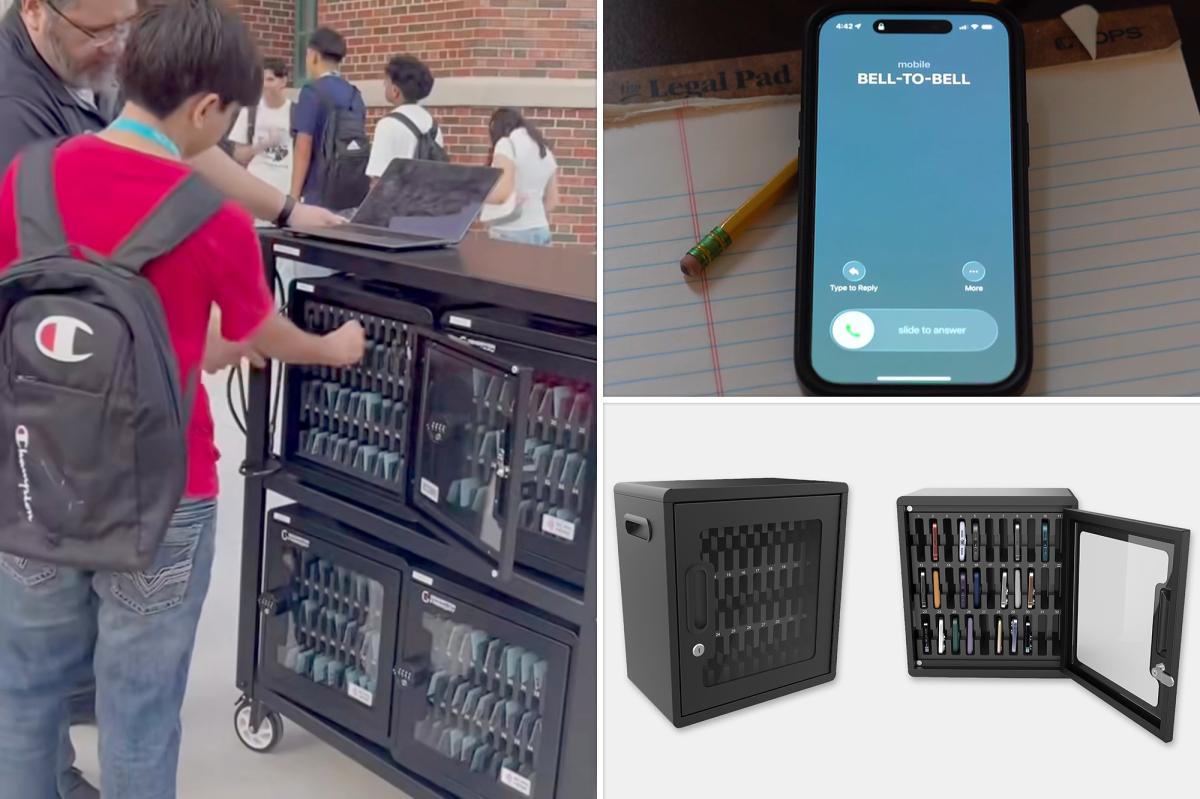
The Kansas City public school district has invested $150,000 in specialized lockers designed to store student cell phones during school hours. At Wyandotte High School, viral video footage shows students depositing their phones into a cage-like structure with a glass window under supervision at 7:25 a.m. The devices remain inaccessible until the end of the school day at 2:25 p.m.

The enforcement method has triggered sharp criticism on social media. Parents and observers have questioned whether students might simply turn in broken or secondary phones while keeping their actual devices. Others raised concerns about theft, asking whether the school carries insurance to replace hundreds of phones if the entire rolling cart were stolen.

Medical concerns have also emerged, with parents questioning how students with diabetes who rely on phone alerts to monitor blood sugar levels will manage under the new rules.

Varied Enforcement Across Districts

Students at Wyandotte High do have alternatives: they can leave phones at home or secure them in their vehicles. Meanwhile, the nearby Piper Unified School District allows students to use traditional lockers they cannot access during school hours.

The Basehor-Linwood Unified School District has purchased special lockers exclusively for high school students. In the Shawnee Mission Unified School District, officials are encouraging students to leave devices at home, in lockers, or in cars.

Penalties for violations escalate quickly. A first offense results in confiscation for the entire day. Students caught breaking the ban three times face a one-day suspension.

Private Schools Also Affected

The law extends to accredited private schools throughout Kansas. At Kansas City Christian school, students can purchase a $25 pouch to store their phones if they bring them to campus.

The ban prohibits students from keeping devices in pockets or backpacks and applies to personal tablets, computers, smartwatches, wireless headphones, and text messaging devices. Exceptions exist for students requiring devices for medical reasons or as part of an educational plan. School-issued computers and devices are exempt from the restriction.

Bipartisan Support Despite Democratic Opposition

The legislation passed with overwhelming bipartisan support, securing 32-4 approval in the state senate and 84-39 in the House of Representatives.

However, State Senator Cindy Holscher, the Democratic Party’s gubernatorial candidate for Kansas in November, voted against the measure. She criticized the law as government overreach that bypasses local school boards while failing to address genuine mental health challenges facing students.

Democratic Representative Stephanie Clayton also opposed the ban, noting that phones represent a necessary evil for parents of teenagers who drive to school.

Republican Ty Masterson from Andover, Holscher’s opponent in the November gubernatorial election, supported the ban.

A comparable “bell to bell” prohibition has been implemented across public schools in New York, affecting nearly one million students.

With information from New York Post

Share:
Eleni Papadaki-Van Der Merwe

She was born in 1986 in Johannesburg, South Africa. She is the granddaughter of an immigrant from Crete who settled in the Greek community of Johannesburg (one of the largest in Africa). She holds a bachelor’s degree in International Relations and Political Science from the University of the Witwatersrand (Wits) in Johannesburg and a master’s degree in Journalism from Rhodes University in Grahamstown. She began her career at English-language media outlets in Johannesburg, covering politics and economics, with a focus on issues related to migration and the diaspora. She moved to Athens in 2015 to “return to her roots,” initially to pursue graduate studies, and has remained there permanently. She is married to an Afrikaner; they have two children and live in the southern suburbs of Athens.

The ban, enacted through HB 2299 after outgoing Kansas Governor Laura Kelly signed the measure into law in March, prohibits students in grades K-12 from using cell phones during the school day. Kelly praised the legislation as a means to reduce classroom distractions, according to Chris Bradford writing in New York Post.

School districts across Kansas have been granted flexibility in how they implement the policy, leading to dramatically different enforcement approaches.

Expensive Lock-Up Systems Draw Scrutiny

The Kansas City public school district has invested $150,000 in specialized lockers designed to store student cell phones during school hours. At Wyandotte High School, viral video footage shows students depositing their phones into a cage-like structure with a glass window under supervision at 7:25 a.m. The devices remain inaccessible until the end of the school day at 2:25 p.m.

The enforcement method has triggered sharp criticism on social media. Parents and observers have questioned whether students might simply turn in broken or secondary phones while keeping their actual devices. Others raised concerns about theft, asking whether the school carries insurance to replace hundreds of phones if the entire rolling cart were stolen.

Medical concerns have also emerged, with parents questioning how students with diabetes who rely on phone alerts to monitor blood sugar levels will manage under the new rules.

Varied Enforcement Across Districts

Students at Wyandotte High do have alternatives: they can leave phones at home or secure them in their vehicles. Meanwhile, the nearby Piper Unified School District allows students to use traditional lockers they cannot access during school hours.

The Basehor-Linwood Unified School District has purchased special lockers exclusively for high school students. In the Shawnee Mission Unified School District, officials are encouraging students to leave devices at home, in lockers, or in cars.

Penalties for violations escalate quickly. A first offense results in confiscation for the entire day. Students caught breaking the ban three times face a one-day suspension.

Private Schools Also Affected

The law extends to accredited private schools throughout Kansas. At Kansas City Christian school, students can purchase a $25 pouch to store their phones if they bring them to campus.

The ban prohibits students from keeping devices in pockets or backpacks and applies to personal tablets, computers, smartwatches, wireless headphones, and text messaging devices. Exceptions exist for students requiring devices for medical reasons or as part of an educational plan. School-issued computers and devices are exempt from the restriction.

Bipartisan Support Despite Democratic Opposition

The legislation passed with overwhelming bipartisan support, securing 32-4 approval in the state senate and 84-39 in the House of Representatives.

However, State Senator Cindy Holscher, the Democratic Party’s gubernatorial candidate for Kansas in November, voted against the measure. She criticized the law as government overreach that bypasses local school boards while failing to address genuine mental health challenges facing students.

Democratic Representative Stephanie Clayton also opposed the ban, noting that phones represent a necessary evil for parents of teenagers who drive to school.

Republican Ty Masterson from Andover, Holscher’s opponent in the November gubernatorial election, supported the ban.

A comparable “bell to bell” prohibition has been implemented across public schools in New York, affecting nearly one million students.

With information from New York Post