Necessary Cookies

Required for the site to function. Cannot be disabled.

Analytics Cookies

Help us understand how visitors interact with our site (Google Analytics via GTM).

Marketing Cookies

Used to track visitors and deliver personalised advertisements.

We use cookies to enhance your browsing experience and analyse site traffic. By clicking Accept All, you consent to our use of cookies. Privacy Policy
NewsFire Global
Home News Europe World Christianity Culture Wars Opinion Video
Information
About Us Authors Advertising Terms & Conditions Privacy Policy Contact
R2B Media
R2B NEWSFIRE.GR PAPAFOTIS.GR THRACTION HELLENIC CONSERVATIVES RIGHT2THEBONE YT
News World

Trump Admin Secures Removal of Syrian Nuclear Material by IAEA

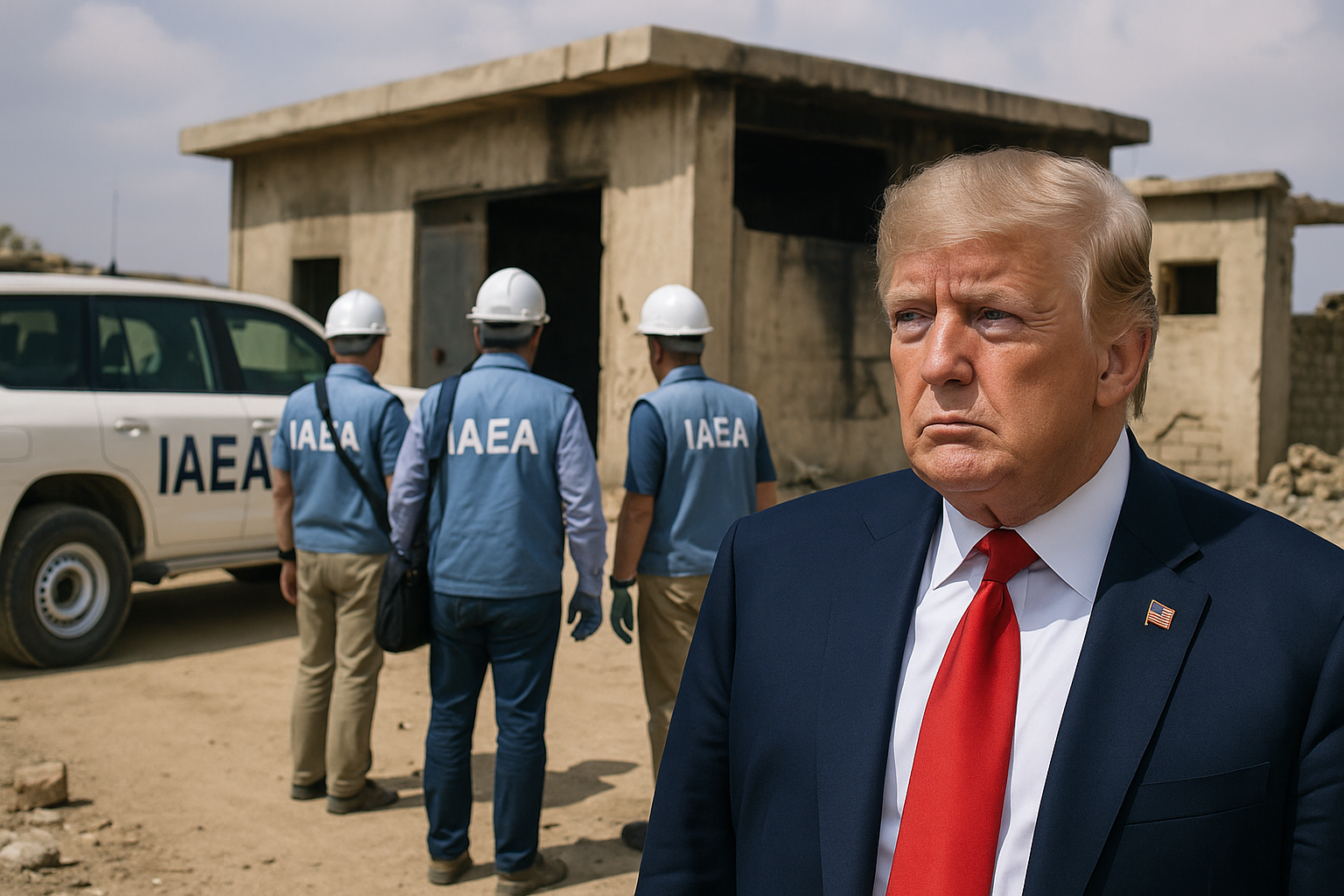
The International Atomic Energy Agency plans to remove nuclear material from a covert Syrian facility following diplomatic coordination by the Trump administration.

AUGUST 11, 2026 AT 8:08 AM

The development marks a significant breakthrough in efforts to secure potentially dangerous nuclear materials in the war-torn nation. The IAEA’s planned intervention comes after diplomatic coordination led by the current U.S. administration, which has prioritized nuclear non-proliferation in the Middle East region.

Details about the specific location of the clandestine site in Syria have not been publicly disclosed for security reasons. The nature and quantity of the nuclear material stored at the facility also remain classified, though the IAEA’s involvement signals the material poses sufficient concern to warrant international intervention.

The Trump administration’s role in facilitating this operation underscores its active engagement with nuclear security challenges in the Middle East. Syria has long been suspected of harboring undeclared nuclear activities, with international watchdogs maintaining scrutiny over potential weapons development programs in the country.

The removal operation is expected to proceed soon, though an exact timeline has not been confirmed. IAEA officials are coordinating logistics for safely extracting and securing the nuclear material, which will likely be transported under heavy international supervision.

This development comes amid broader concerns about weapons proliferation in Syria, where years of civil conflict have created security vacuums and complicated international oversight efforts. The successful removal of this nuclear material would represent a rare diplomatic achievement in a region marked by ongoing instability.

With information from Telegram @OSINTLive
Share:
Eleni Papadaki-Van Der Merwe

She was born in 1986 in Johannesburg, South Africa. She is the granddaughter of an immigrant from Crete who settled in the Greek community of Johannesburg (one of the largest in Africa). She holds a bachelor’s degree in International Relations and Political Science from the University of the Witwatersrand (Wits) in Johannesburg and a master’s degree in Journalism from Rhodes University in Grahamstown. She began her career at English-language media outlets in Johannesburg, covering politics and economics, with a focus on issues related to migration and the diaspora. She moved to Athens in 2015 to “return to her roots,” initially to pursue graduate studies, and has remained there permanently. She is married to an Afrikaner; they have two children and live in the southern suburbs of Athens.

The development marks a significant breakthrough in efforts to secure potentially dangerous nuclear materials in the war-torn nation. The IAEA’s planned intervention comes after diplomatic coordination led by the current U.S. administration, which has prioritized nuclear non-proliferation in the Middle East region.

Details about the specific location of the clandestine site in Syria have not been publicly disclosed for security reasons. The nature and quantity of the nuclear material stored at the facility also remain classified, though the IAEA’s involvement signals the material poses sufficient concern to warrant international intervention.

The Trump administration’s role in facilitating this operation underscores its active engagement with nuclear security challenges in the Middle East. Syria has long been suspected of harboring undeclared nuclear activities, with international watchdogs maintaining scrutiny over potential weapons development programs in the country.

The removal operation is expected to proceed soon, though an exact timeline has not been confirmed. IAEA officials are coordinating logistics for safely extracting and securing the nuclear material, which will likely be transported under heavy international supervision.

This development comes amid broader concerns about weapons proliferation in Syria, where years of civil conflict have created security vacuums and complicated international oversight efforts. The successful removal of this nuclear material would represent a rare diplomatic achievement in a region marked by ongoing instability.

With information from Telegram @OSINTLive