Necessary Cookies

Required for the site to function. Cannot be disabled.

Analytics Cookies

Help us understand how visitors interact with our site (Google Analytics via GTM).

Marketing Cookies

Used to track visitors and deliver personalised advertisements.

We use cookies to enhance your browsing experience and analyse site traffic. By clicking Accept All, you consent to our use of cookies. Privacy Policy
NewsFire Global
Home News Europe World Christianity Culture Wars Opinion Video
Information
About Us Authors Advertising Terms & Conditions Privacy Policy Contact
R2B Media
R2B NEWSFIRE.GR PAPAFOTIS.GR THRACTION HELLENIC CONSERVATIVES RIGHT2THEBONE YT
News World

Iranian Protester Executed After Defiant Final Stand

An Iranian protester kissed the hangman's noose and made a heart symbol to the crowd moments before his public execution in Isfahan for participating in anti-government protests.
AUGUST 5, 2026 AT 8:28 PM

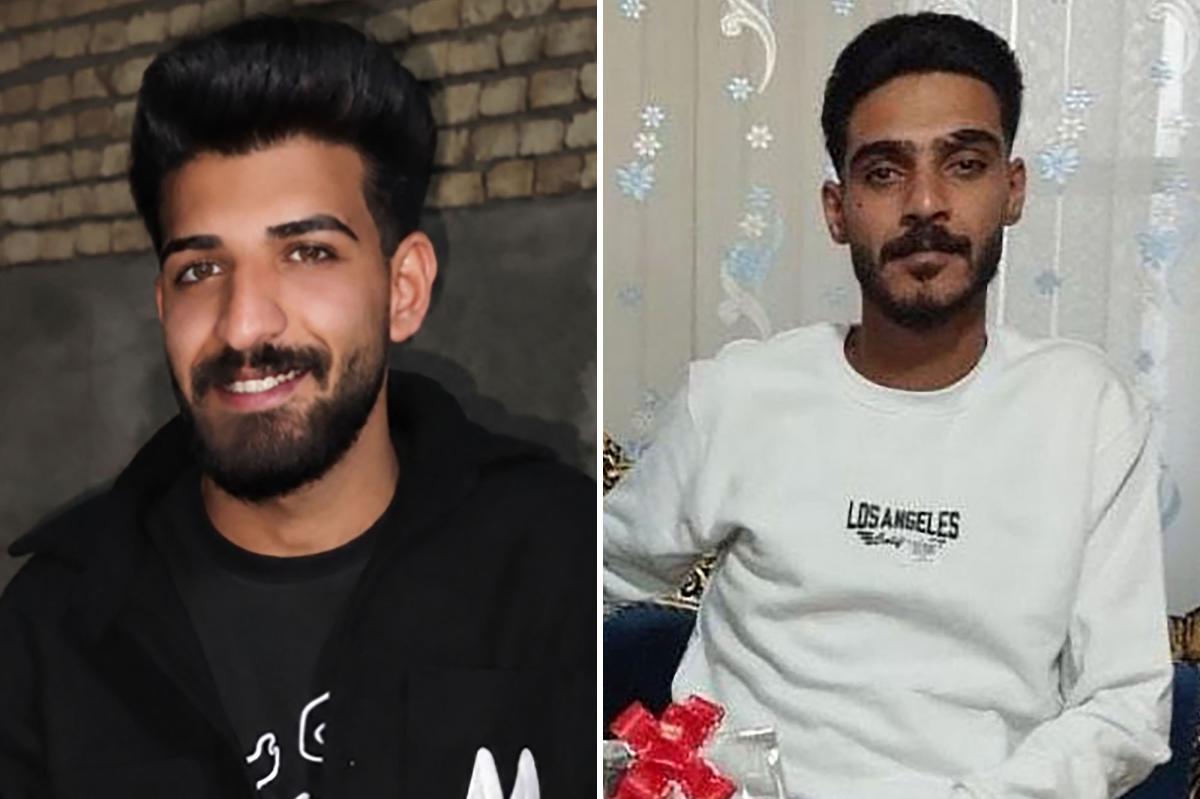
A 23-year-old Iranian protester delivered a final act of defiance against the Islamic regime moments before his execution, removing his hood and kissing the hangman’s noose in a powerful gesture captured on video and widely shared across social media.

Abolfazl Sepahi-Badejani was publicly hanged in Alikhani Square in the southern Iranian city of Isfahan on July 28 for his participation in anti-government protests that took place in January, as Anthony Blair reports in New York Post.

Cell phone footage circulating online appears to show Sepahi-Badejani, dressed in a blue jacket with his hands bound, pulling the black hood from his face and lifting the noose from his neck before kissing it and replacing it around his neck. He then formed a heart symbol with his fingers toward the assembled crowd, who responded by chanting in Farsi at the executioners.

Sepahi-Badejani was executed alongside Amirhossein Safari-Hosseinabadi, 27, before a crowd that had gathered hours earlier for the dawn execution despite the presence of armed guards. The two men were convicted by the regime of killing four police officers during January’s protests, according to state media reports.

Military police opened fire on protesters who had assembled to witness the executions, killing one woman before crowds dispersed. A witness described the scene as horrific, telling the Australian outlet that the violence exceeded even what was seen during the January protests themselves.

The executions were carried out after the Islamic call to prayer, what Iranian lawyer Mohammad Mostafaei—who has extensive experience defending activists and protesters—characterized as the regime’s calculated use of death to terrorize the population. Mostafaei noted that public executions target not only the condemned but entire society, transforming justice into a spectacle of power.

Since the executions, Alikhani Square has remained under heavy armed guard while unrest has spread to other Iranian cities. Videos shared on social media show protests in Isfahan and the capital Tehran, with many citizens calling for international intervention.

According to Mostafaei, these brutal public displays following more than four months of regional conflict with Israel and the United States actually demonstrate the regime’s weakness rather than its strength. A legitimate government, he observed, does not need to display death in a city square to prove its authority.

With information from New York Post

Share:
Eleni Papadaki-Van Der Merwe

She was born in 1986 in Johannesburg, South Africa. She is the granddaughter of an immigrant from Crete who settled in the Greek community of Johannesburg (one of the largest in Africa). She holds a bachelor’s degree in International Relations and Political Science from the University of the Witwatersrand (Wits) in Johannesburg and a master’s degree in Journalism from Rhodes University in Grahamstown. She began her career at English-language media outlets in Johannesburg, covering politics and economics, with a focus on issues related to migration and the diaspora. She moved to Athens in 2015 to “return to her roots,” initially to pursue graduate studies, and has remained there permanently. She is married to an Afrikaner; they have two children and live in the southern suburbs of Athens.

A 23-year-old Iranian protester delivered a final act of defiance against the Islamic regime moments before his execution, removing his hood and kissing the hangman’s noose in a powerful gesture captured on video and widely shared across social media.

Abolfazl Sepahi-Badejani was publicly hanged in Alikhani Square in the southern Iranian city of Isfahan on July 28 for his participation in anti-government protests that took place in January, as Anthony Blair reports in New York Post.

Cell phone footage circulating online appears to show Sepahi-Badejani, dressed in a blue jacket with his hands bound, pulling the black hood from his face and lifting the noose from his neck before kissing it and replacing it around his neck. He then formed a heart symbol with his fingers toward the assembled crowd, who responded by chanting in Farsi at the executioners.

Sepahi-Badejani was executed alongside Amirhossein Safari-Hosseinabadi, 27, before a crowd that had gathered hours earlier for the dawn execution despite the presence of armed guards. The two men were convicted by the regime of killing four police officers during January’s protests, according to state media reports.

Military police opened fire on protesters who had assembled to witness the executions, killing one woman before crowds dispersed. A witness described the scene as horrific, telling the Australian outlet that the violence exceeded even what was seen during the January protests themselves.

The executions were carried out after the Islamic call to prayer, what Iranian lawyer Mohammad Mostafaei—who has extensive experience defending activists and protesters—characterized as the regime’s calculated use of death to terrorize the population. Mostafaei noted that public executions target not only the condemned but entire society, transforming justice into a spectacle of power.

Since the executions, Alikhani Square has remained under heavy armed guard while unrest has spread to other Iranian cities. Videos shared on social media show protests in Isfahan and the capital Tehran, with many citizens calling for international intervention.

According to Mostafaei, these brutal public displays following more than four months of regional conflict with Israel and the United States actually demonstrate the regime’s weakness rather than its strength. A legitimate government, he observed, does not need to display death in a city square to prove its authority.

With information from New York Post

