Necessary Cookies

Required for the site to function. Cannot be disabled.

Analytics Cookies

Help us understand how visitors interact with our site (Google Analytics via GTM).

Marketing Cookies

Used to track visitors and deliver personalised advertisements.

We use cookies to enhance your browsing experience and analyse site traffic. By clicking Accept All, you consent to our use of cookies. Privacy Policy
NewsFire Global
Home News Europe World Christianity Culture Wars Opinion Video
Information
About Us Authors Advertising Terms & Conditions Privacy Policy Contact
R2B Media
R2B NEWSFIRE.GR PAPAFOTIS.GR THRACTION HELLENIC CONSERVATIVES RIGHT2THEBONE YT
News World

When Criticizing Israel Crosses Line Into Bigotry

A Washington Examiner article argues that certain progressive politicians' rhetoric about Israel crosses from legitimate criticism into antisemitism through stereotypes and double standards.

AUGUST 3, 2026 AT 6:38 PM

The resurgence of antisemitism in American political discourse demands urgent attention as certain rhetoric moves beyond legitimate policy criticism into territory that threatens core democratic values and Jewish identity, according to William Pollack writing in Washington Examiner.

While scrutinizing the policies of any government, including Israel’s, remains a protected and essential element of democratic debate, a concerning pattern has emerged where some public figures employ language that crosses into antisemitism by relying on age-old stereotypes, questioning Jewish self-determination in ways not applied to other nations, or holding Jews collectively accountable for Israeli government actions.

Progressive Politicians Under Fire for Inflammatory Statements

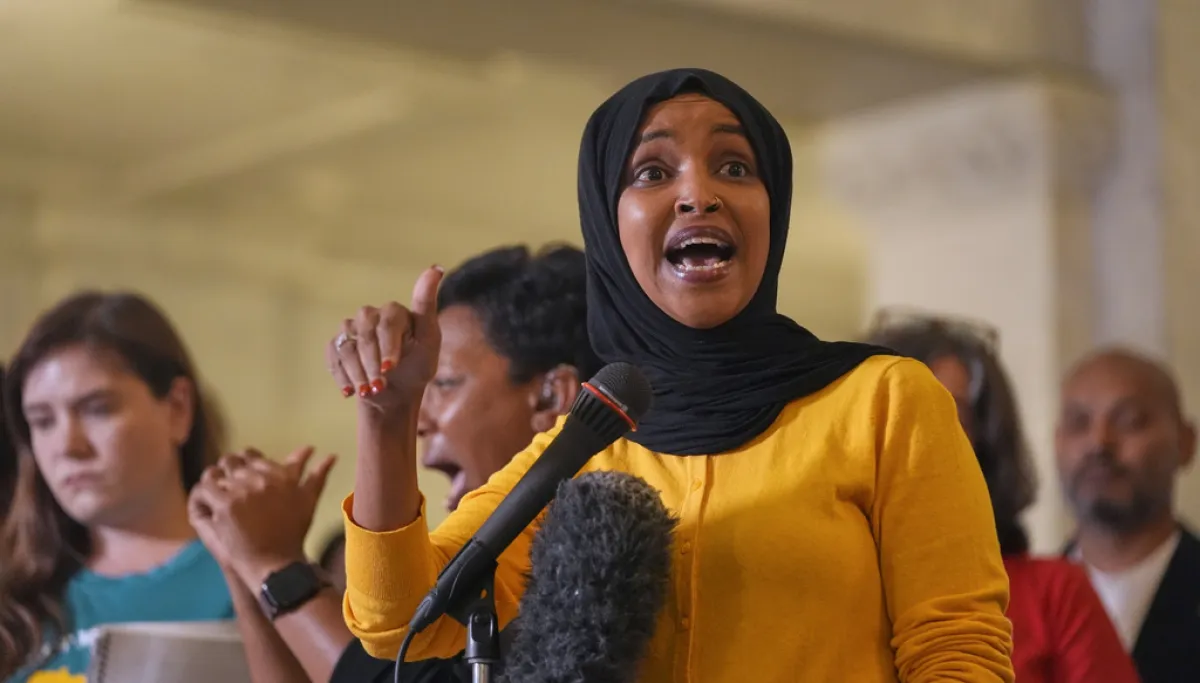
Several high-profile progressive lawmakers have come under sustained criticism from Jewish organizations for rhetoric that many believe ventures far beyond policy disagreement. Representative Ilhan Omar of Minnesota has faced widespread condemnation for comments including her “all about the Benjamins” remark and claim that “Israel has hypnotized the world,” statements that numerous Jewish advocacy groups have identified as antisemitic.

Representative Rashida Tlaib of Michigan has persistently invoked the slogan “from the river to the sea,” which Israel’s supporters widely interpret as a call for the complete elimination of the Jewish state. More recently, Zohran Mamdani, New York’s first Muslim mayor, has drawn sharp criticism for statements that many pro-Israel voices characterize as hostile to the Jewish state.

Double Standards and Selective Outrage

Critics increasingly point to a glaring disparity in how progressive activists allocate their attention. They focus overwhelmingly on Israel, the sole democracy in the Middle East and a key American ally, while largely ignoring authoritarian regimes throughout the region that routinely express anti-American and antisemitic positions.

This selective scrutiny raises fundamental questions about the motivations driving certain criticism and whether it reflects genuine concern for human rights or something more troubling.

Historical Warnings Against Normalizing Hatred

History provides stark reminders that prejudice rarely begins with physical violence. It starts with language that portrays entire communities as uniquely threatening, disloyal, or collectively guilty for others’ actions. Once such distinctions blur, discrimination becomes easier to rationalize and hatred simpler to normalize.

The lesson extends beyond Jewish history to represent a universal warning for all democratic societies. In Germany during the 1930s, anti-Jewish propaganda spent years normalizing prejudice before mass violence commenced. Such historical precedents demonstrate how words can condition populations to accept what was once unthinkable.

The Duty to Speak Against Bigotry

Silence in the face of rising antisemitism, whether expressed through words or actions, represents perhaps the gravest error a civilized society can commit. Throughout history, hatred met with silence has invariably grown stronger and more dangerous.

Robust democracies thrive on vigorous debate and citizens must retain the freedom to criticize government actions when warranted. However, democratic health also requires rejecting hatred directed at entire peoples. The critical distinction lies in recognizing when political disagreement transforms into prejudice.

Americans must reject antisemitism wherever it surfaces, whether emanating from the political left, right, or any ideological corner. The United States and its allies invested much of the twentieth century combating fascism. Few would have predicted that political candidates in the twenty-first century would employ rhetoric that Jewish organizations identify as antisemitic.

William Pollack is a longtime owner of small-market radio and television stations and movie theaters.

With information from Washington Examiner

Share:
Eleni Papadaki-Van Der Merwe

She was born in 1986 in Johannesburg, South Africa. She is the granddaughter of an immigrant from Crete who settled in the Greek community of Johannesburg (one of the largest in Africa). She holds a bachelor’s degree in International Relations and Political Science from the University of the Witwatersrand (Wits) in Johannesburg and a master’s degree in Journalism from Rhodes University in Grahamstown. She began her career at English-language media outlets in Johannesburg, covering politics and economics, with a focus on issues related to migration and the diaspora. She moved to Athens in 2015 to “return to her roots,” initially to pursue graduate studies, and has remained there permanently. She is married to an Afrikaner; they have two children and live in the southern suburbs of Athens.

The resurgence of antisemitism in American political discourse demands urgent attention as certain rhetoric moves beyond legitimate policy criticism into territory that threatens core democratic values and Jewish identity, according to William Pollack writing in Washington Examiner.

While scrutinizing the policies of any government, including Israel’s, remains a protected and essential element of democratic debate, a concerning pattern has emerged where some public figures employ language that crosses into antisemitism by relying on age-old stereotypes, questioning Jewish self-determination in ways not applied to other nations, or holding Jews collectively accountable for Israeli government actions.

Progressive Politicians Under Fire for Inflammatory Statements

Several high-profile progressive lawmakers have come under sustained criticism from Jewish organizations for rhetoric that many believe ventures far beyond policy disagreement. Representative Ilhan Omar of Minnesota has faced widespread condemnation for comments including her “all about the Benjamins” remark and claim that “Israel has hypnotized the world,” statements that numerous Jewish advocacy groups have identified as antisemitic.

Representative Rashida Tlaib of Michigan has persistently invoked the slogan “from the river to the sea,” which Israel’s supporters widely interpret as a call for the complete elimination of the Jewish state. More recently, Zohran Mamdani, New York’s first Muslim mayor, has drawn sharp criticism for statements that many pro-Israel voices characterize as hostile to the Jewish state.

Double Standards and Selective Outrage

Critics increasingly point to a glaring disparity in how progressive activists allocate their attention. They focus overwhelmingly on Israel, the sole democracy in the Middle East and a key American ally, while largely ignoring authoritarian regimes throughout the region that routinely express anti-American and antisemitic positions.

This selective scrutiny raises fundamental questions about the motivations driving certain criticism and whether it reflects genuine concern for human rights or something more troubling.

Historical Warnings Against Normalizing Hatred

History provides stark reminders that prejudice rarely begins with physical violence. It starts with language that portrays entire communities as uniquely threatening, disloyal, or collectively guilty for others’ actions. Once such distinctions blur, discrimination becomes easier to rationalize and hatred simpler to normalize.

The lesson extends beyond Jewish history to represent a universal warning for all democratic societies. In Germany during the 1930s, anti-Jewish propaganda spent years normalizing prejudice before mass violence commenced. Such historical precedents demonstrate how words can condition populations to accept what was once unthinkable.

The Duty to Speak Against Bigotry

Silence in the face of rising antisemitism, whether expressed through words or actions, represents perhaps the gravest error a civilized society can commit. Throughout history, hatred met with silence has invariably grown stronger and more dangerous.

Robust democracies thrive on vigorous debate and citizens must retain the freedom to criticize government actions when warranted. However, democratic health also requires rejecting hatred directed at entire peoples. The critical distinction lies in recognizing when political disagreement transforms into prejudice.

Americans must reject antisemitism wherever it surfaces, whether emanating from the political left, right, or any ideological corner. The United States and its allies invested much of the twentieth century combating fascism. Few would have predicted that political candidates in the twenty-first century would employ rhetoric that Jewish organizations identify as antisemitic.

William Pollack is a longtime owner of small-market radio and television stations and movie theaters.

With information from Washington Examiner

