Necessary Cookies

Required for the site to function. Cannot be disabled.

Analytics Cookies

Help us understand how visitors interact with our site (Google Analytics via GTM).

Marketing Cookies

Used to track visitors and deliver personalised advertisements.

We use cookies to enhance your browsing experience and analyse site traffic. By clicking Accept All, you consent to our use of cookies. Privacy Policy
NewsFire Global
Home News Europe World Christianity Culture Wars Opinion Video
Information
About Us Authors Advertising Terms & Conditions Privacy Policy Contact
R2B Media
R2B NEWSFIRE.GR PAPAFOTIS.GR THRACTION HELLENIC CONSERVATIVES RIGHT2THEBONE YT
News World

Customer fears retaliation after being asked to tip kitchen staff

A viral video of a customer asked to tip kitchen staff before receiving his sandwich order has sparked debate over America's aggressive tipping culture and wage practices.

AUGUST 2, 2026 AT 7:49 PM

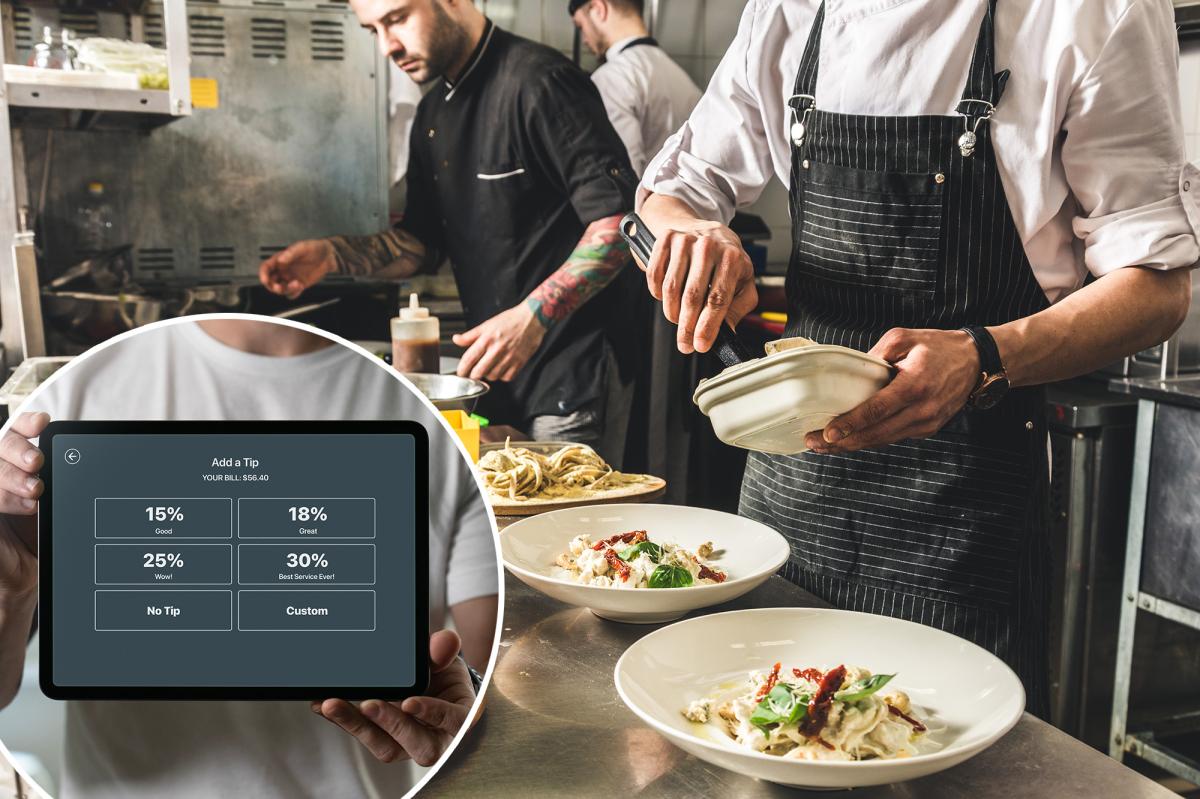
A frustrated American customer has sparked a fierce debate about out-of-control tipping expectations after being prompted to tip kitchen staff at a sandwich shop before even receiving his order.

The incident, captured in a viral video and shared widely on social media, has reignited criticism of what many see as America’s increasingly aggressive gratuity culture, according to Fabiana Buontempo writing in New York Post.

The customer, who documented his experience at Schlotzsky’s—a pizza and sandwich chain—explained he had stopped by the establishment for the first time in 10 to 15 years. What should have been a simple sandwich purchase turned into an uncomfortable situation when the payment terminal asked him to tip the kitchen crew before his order was even prepared.

Speaking directly to camera from his car, the man voiced a concern many Americans now share: the fear that refusing to tip might result in food tampering. He questioned whether declining to leave a gratuity for kitchen staff he never interacted with could lead to receiving a contaminated meal.

The roughly 60-second clip was shared on X by the account @HistorianUSA1, where it quickly drew more than 60,000 views and sparked heated discussion. The account framed the issue bluntly, noting this was a case with no server, no table service—just pressure to tip or risk poor treatment.

Nearly 200 users weighed in, with overwhelming agreement that tipping culture has crossed a line. Critics argued that payment machines should not be allowed to demand tip responses, comparing the practice to a shakedown rather than genuine hospitality.

One commenter reported canceling orders in similar situations, refusing to accept that food quality should depend on gratuity amounts. Another established a simple rule: if you have to stand up to order, no tip is warranted. Others directed their criticism at businesses unwilling to pay employees proper wages, arguing such establishments don’t deserve customer patronage.

The frustration expressed in the video reflects broader American sentiment. A Popmenu survey found that 78 percent of consumers believe tipping culture has become ridiculous, while 74 percent have noticed restaurants increasing the suggested gratuity amounts displayed on payment screens.

The debate touches a nerve at a time when tips are being solicited for transactions that traditionally never involved gratuities—from coffee counters to take-out orders—leaving customers feeling pressured and uncertain about what’s expected in virtually every commercial interaction.

With information from New York Post

Share:
Eleni Papadaki-Van Der Merwe

She was born in 1986 in Johannesburg, South Africa. She is the granddaughter of an immigrant from Crete who settled in the Greek community of Johannesburg (one of the largest in Africa). She holds a bachelor’s degree in International Relations and Political Science from the University of the Witwatersrand (Wits) in Johannesburg and a master’s degree in Journalism from Rhodes University in Grahamstown. She began her career at English-language media outlets in Johannesburg, covering politics and economics, with a focus on issues related to migration and the diaspora. She moved to Athens in 2015 to “return to her roots,” initially to pursue graduate studies, and has remained there permanently. She is married to an Afrikaner; they have two children and live in the southern suburbs of Athens.

A frustrated American customer has sparked a fierce debate about out-of-control tipping expectations after being prompted to tip kitchen staff at a sandwich shop before even receiving his order.

The incident, captured in a viral video and shared widely on social media, has reignited criticism of what many see as America’s increasingly aggressive gratuity culture, according to Fabiana Buontempo writing in New York Post.

The customer, who documented his experience at Schlotzsky’s—a pizza and sandwich chain—explained he had stopped by the establishment for the first time in 10 to 15 years. What should have been a simple sandwich purchase turned into an uncomfortable situation when the payment terminal asked him to tip the kitchen crew before his order was even prepared.

Speaking directly to camera from his car, the man voiced a concern many Americans now share: the fear that refusing to tip might result in food tampering. He questioned whether declining to leave a gratuity for kitchen staff he never interacted with could lead to receiving a contaminated meal.

The roughly 60-second clip was shared on X by the account @HistorianUSA1, where it quickly drew more than 60,000 views and sparked heated discussion. The account framed the issue bluntly, noting this was a case with no server, no table service—just pressure to tip or risk poor treatment.

Nearly 200 users weighed in, with overwhelming agreement that tipping culture has crossed a line. Critics argued that payment machines should not be allowed to demand tip responses, comparing the practice to a shakedown rather than genuine hospitality.

One commenter reported canceling orders in similar situations, refusing to accept that food quality should depend on gratuity amounts. Another established a simple rule: if you have to stand up to order, no tip is warranted. Others directed their criticism at businesses unwilling to pay employees proper wages, arguing such establishments don’t deserve customer patronage.

The frustration expressed in the video reflects broader American sentiment. A Popmenu survey found that 78 percent of consumers believe tipping culture has become ridiculous, while 74 percent have noticed restaurants increasing the suggested gratuity amounts displayed on payment screens.

The debate touches a nerve at a time when tips are being solicited for transactions that traditionally never involved gratuities—from coffee counters to take-out orders—leaving customers feeling pressured and uncertain about what’s expected in virtually every commercial interaction.

With information from New York Post

