Necessary Cookies

Required for the site to function. Cannot be disabled.

Analytics Cookies

Help us understand how visitors interact with our site (Google Analytics via GTM).

Marketing Cookies

Used to track visitors and deliver personalised advertisements.

We use cookies to enhance your browsing experience and analyse site traffic. By clicking Accept All, you consent to our use of cookies. Privacy Policy
NewsFire Global
Home News Europe World Christianity Culture Wars Opinion Video
Information
About Us Authors Advertising Terms & Conditions Privacy Policy Contact
R2B Media
R2B NEWSFIRE.GR PAPAFOTIS.GR THRACTION HELLENIC CONSERVATIVES RIGHT2THEBONE YT
News World

US Sends Fastest Bomber ‘Bone’ Against Iran Again

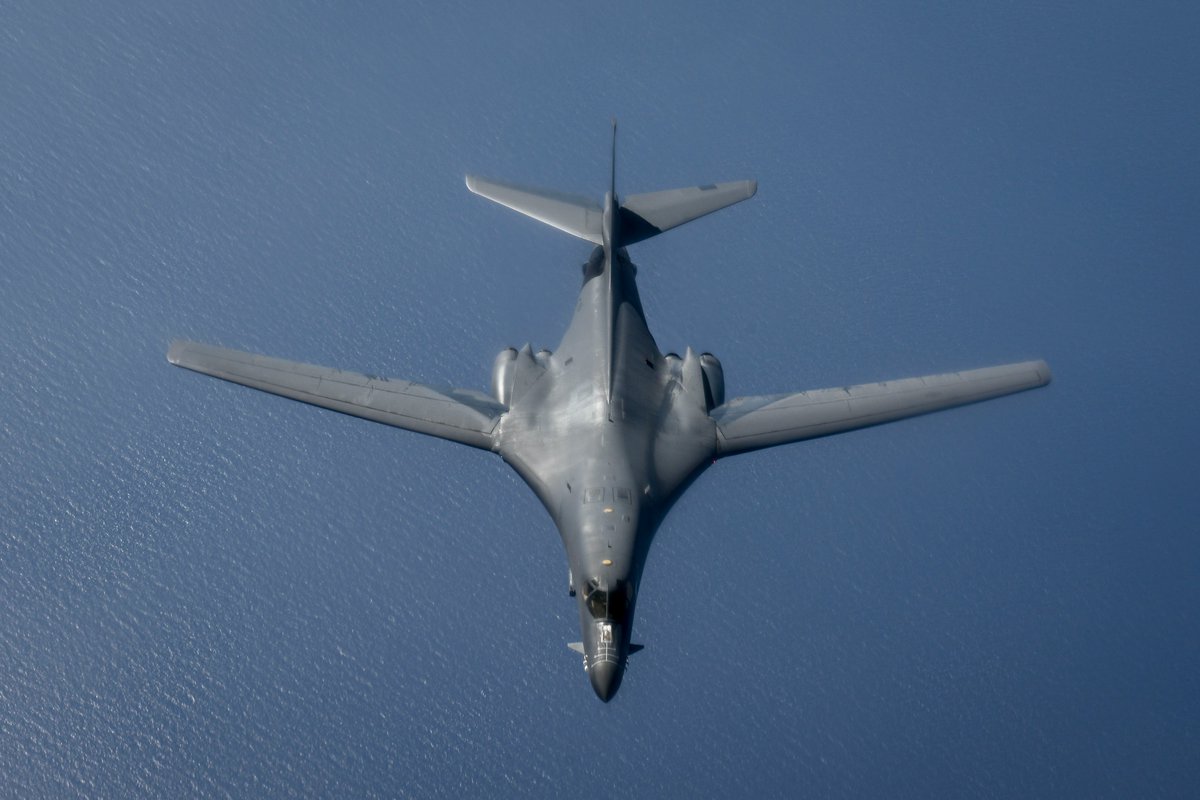
The U.S. has redeployed its supersonic B-1B Lancer bomber against Iranian targets, meaning all three American strategic bomber platforms are now engaged in Operation Epic Fury.

Dimitris Papafotis
Dimitris Papafotis Editor in Chief
AUGUST 2, 2026 AT 4:37 PM

The United States has reintroduced its fastest strategic bomber into the renewed air campaign against Iran, marking a significant escalation in Operation Epic Fury as Washington deploys its full arsenal of heavy strike aircraft against Revolutionary Guard targets across the Islamic Republic.
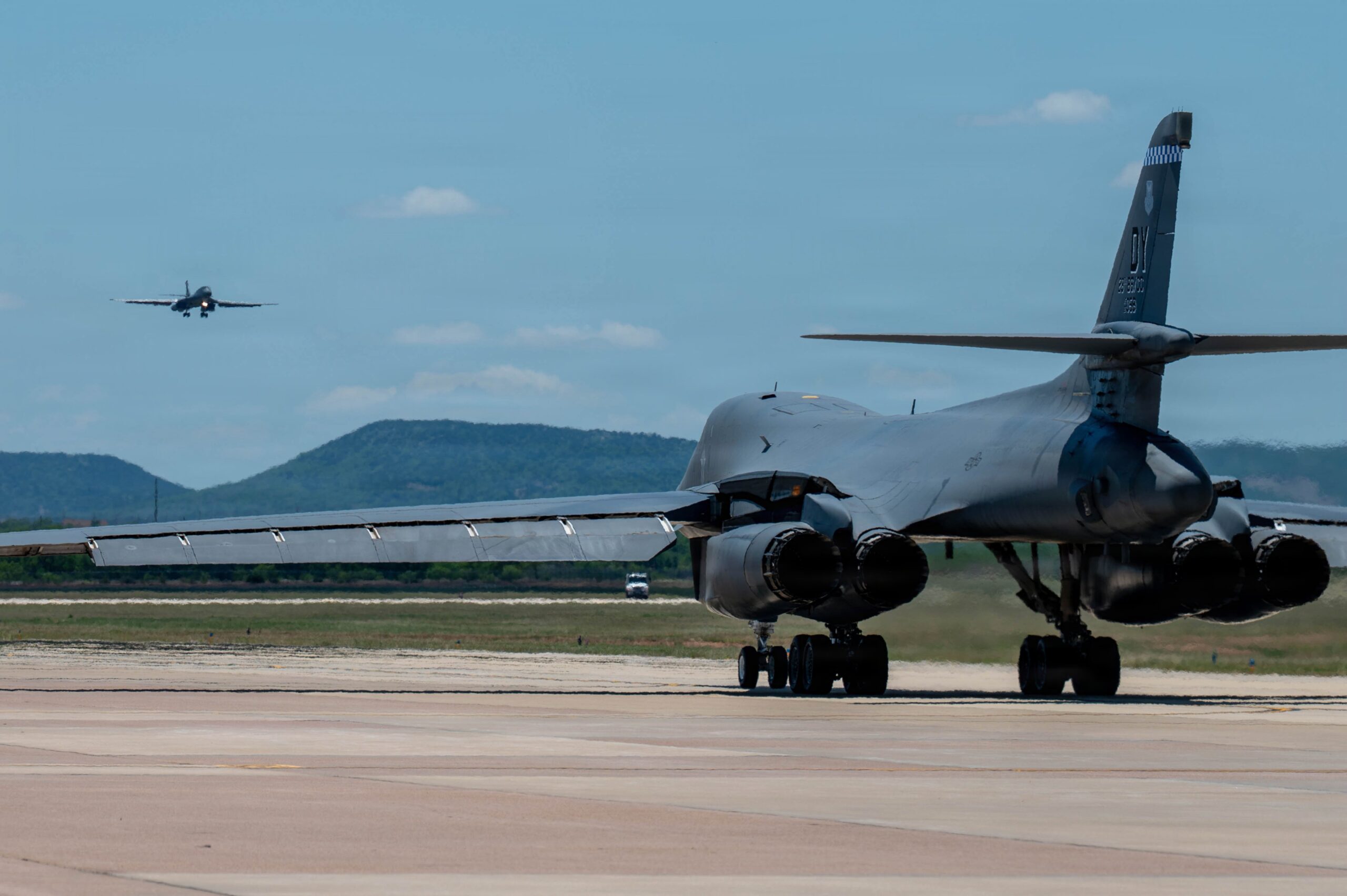
Am 8. Juli starteten die USA die erneuten Luftschläge gegen den Iran. Aktuell kommt auch die B-1B zum Einsatz. Foto: Air Force Global Strike Command.
Photo: nius.de

According to Wolfgang Sender writing in Nius, American forces have dispatched the supersonic B-1B Lancer bomber against Iranian positions for the first time since combat operations resumed on July 7 and 8, following a ceasefire that ended in April. The deployment means all three of America’s strategic bomber platforms are now actively engaged in strikes against the Tehran regime.

US representatives confirmed to the news platform Axios that B-1B long-range bombers conducted multiple sorties this week targeting facilities operated by Iran’s Islamic Revolutionary Guard Corps. The aircraft, which flies under the combat designation “Bone,” had previously seen intensive use during the initial phase of Epic Fury beginning in late February 2026. Since mid-July, American forces have resumed nearly daily attacks on Iranian targets.

Military observers assess that the B-1B’s redeployment substantially increases the kinetic power available to US commanders prosecuting the air campaign. The variable-geometry swing-wing bomber represents the fastest platform in the American bomber inventory and carries the heaviest conventional payload of any US strategic aircraft currently in service.

Three-Bomber Strategy Returns to Theater

The renewed B-1B operations mean Washington is now employing its entire strategic bomber fleet against Iran. Alongside the Lancer, the Air Force has committed the stealth B-2 Spirit and the veteran B-52 Stratofortress to the campaign, presenting Iranian air defenses with a comprehensive array of strike capabilities ranging from penetrating stealth to massive payload delivery.

Missions typically originate from RAF Fairford in Britain, with bombers transiting French airspace toward the Mediterranean before proceeding to targets in the Middle East. As relatively uncommon and modern weapon systems, these strategic bomber deployments generate significant attention on social media platforms and in defense circles.
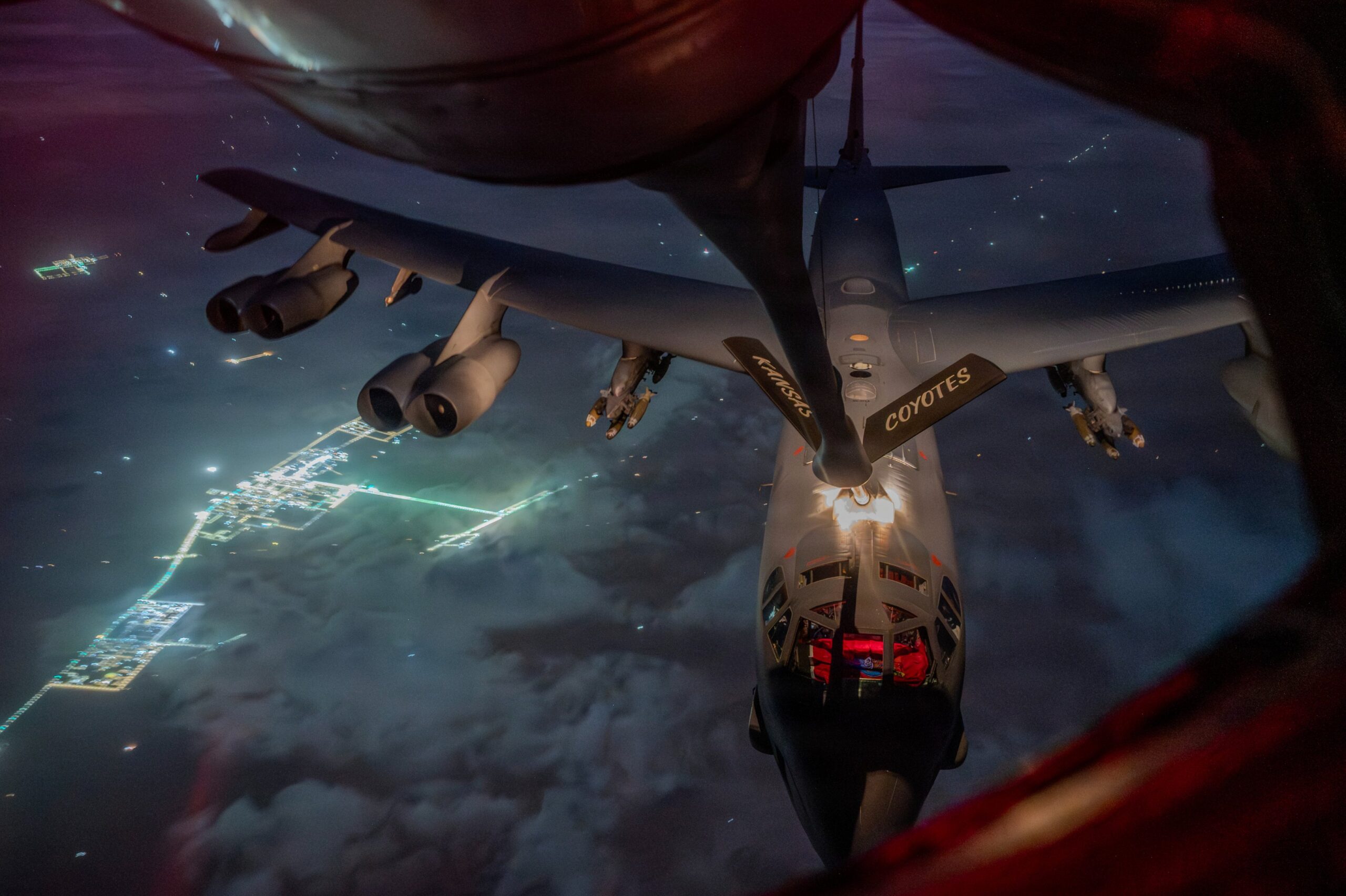
Seit über 70 Jahren im Dienst und weiterhin ein Arbeitstier der US-Bomberflotte im Iran-Konflikt: die B-52 Stratofortress. Foto: U.S. Central Command
Photo: nius.de

Variable Geometry Delivers Speed and Flexibility

The B-1B Lancer’s distinctive advantage lies in its swing-wing design, which allows pilots to configure the aircraft for different flight profiles. Wings set at 15 degrees provide optimal efficiency for takeoff, landing, and long-range cruise. Swept back to 67.5 degrees, the configuration enables high-speed dash capability reaching approximately 1.2 to 1.25 times the speed of sound at altitude and up to Mach 0.92 at low level.

This engineering approach combines extended range with exceptional maneuverability, capabilities no other current American bomber can match simultaneously. In the Iranian theater, where functioning air defense systems still pose threats to attacking aircraft, this versatility provides critical tactical advantages.

The B-1B remains the last variable-sweep-wing combat aircraft in the US Air Force inventory and among the final examples of this design philosophy worldwide. Originally developed during the Cold War to penetrate Soviet radar networks through low-level flight, the same flexibility that once targeted Moscow now proves invaluable against Tehran.

Unmatched Conventional Payload

With capacity for up to 34 tons of munitions distributed across three internal weapons bays, the Lancer exceeds the conventional payload of its sister platforms. The B-52 traditionally carries approximately 31.5 tons, while the B-2’s load sits considerably lower. No other American bomber can internally transport such volumes of conventional ordnance.

This capacity enables both mass delivery of unguided munitions in rapid succession and precision strikes using long-range cruise missiles launched from standoff distances beyond enemy engagement zones. Against the B-2 Spirit, the B-1B functions as the workhorse for volume and velocity, while the stealth bomber remains reserved for highest-priority targets. Compared to the B-52, the Lancer offers superior speed, agility, and payload capacity.

A single B-1B sortie can deliver effects equivalent to dozens of fighter or naval strike missions, while presenting fewer operational risks and lower costs than alternative bomber deployments.

Cold War Origins to Persian Gulf Operations

The B-1B program traces its lineage to the 1960s. Initially conceived as a nuclear weapons carrier, Rockwell secured the production contract in 1970, though President Jimmy Carter canceled the program in 1977. Ronald Reagan revived the initiative in 1981, with 100 aircraft delivered by 1988.

During the 1990s, defense planners removed the type from nuclear weapons duties and comprehensively reconfigured it for conventional strike missions. Approximately 45 aircraft remain operational today.

Current planning envisions the B-1B Lancer flying until roughly 2037, when the platform will begin phased replacement by the B-21 Raider. During the ongoing Iran campaign, the weapon system appears positioned to maintain a prominent operational role.

Strategic Message From Washington

The Pentagon has announced its intention to continue strikes against Revolutionary Guard infrastructure until Tehran’s leadership abandons support for terrorist organizations throughout the region. The reintroduction of the Bone sends an unambiguous signal that following the ceasefire pause, America’s full strategic bomber capability has returned to the fight—and it is delivering effects at supersonic speed.

With information from Nius

Share:
Dimitris Papafotis
Dimitris Papafotis

Dimitris Papafotis is the editor-in-chief of NewsFire.GR. He was born and raised in Athens. He studied at the Journalism Workshop (1991-1993). He currently lives in Pyrgos, Ilia, where he has been active in radio and various newspapers, while also maintaining his personal blog, Papafotis.gr.

The United States has reintroduced its fastest strategic bomber into the renewed air campaign against Iran, marking a significant escalation in Operation Epic Fury as Washington deploys its full arsenal of heavy strike aircraft against Revolutionary Guard targets across the Islamic Republic.

Am 8. Juli starteten die USA die erneuten Luftschläge gegen den Iran. Aktuell kommt auch die B-1B zum Einsatz. Foto: Air Force Global Strike Command.
Photo: nius.de

According to Wolfgang Sender writing in Nius, American forces have dispatched the supersonic B-1B Lancer bomber against Iranian positions for the first time since combat operations resumed on July 7 and 8, following a ceasefire that ended in April. The deployment means all three of America’s strategic bomber platforms are now actively engaged in strikes against the Tehran regime.

US representatives confirmed to the news platform Axios that B-1B long-range bombers conducted multiple sorties this week targeting facilities operated by Iran’s Islamic Revolutionary Guard Corps. The aircraft, which flies under the combat designation “Bone,” had previously seen intensive use during the initial phase of Epic Fury beginning in late February 2026. Since mid-July, American forces have resumed nearly daily attacks on Iranian targets.

Military observers assess that the B-1B’s redeployment substantially increases the kinetic power available to US commanders prosecuting the air campaign. The variable-geometry swing-wing bomber represents the fastest platform in the American bomber inventory and carries the heaviest conventional payload of any US strategic aircraft currently in service.

Three-Bomber Strategy Returns to Theater

The renewed B-1B operations mean Washington is now employing its entire strategic bomber fleet against Iran. Alongside the Lancer, the Air Force has committed the stealth B-2 Spirit and the veteran B-52 Stratofortress to the campaign, presenting Iranian air defenses with a comprehensive array of strike capabilities ranging from penetrating stealth to massive payload delivery.

Missions typically originate from RAF Fairford in Britain, with bombers transiting French airspace toward the Mediterranean before proceeding to targets in the Middle East. As relatively uncommon and modern weapon systems, these strategic bomber deployments generate significant attention on social media platforms and in defense circles.

Seit über 70 Jahren im Dienst und weiterhin ein Arbeitstier der US-Bomberflotte im Iran-Konflikt: die B-52 Stratofortress. Foto: U.S. Central Command
Photo: nius.de

Variable Geometry Delivers Speed and Flexibility

The B-1B Lancer’s distinctive advantage lies in its swing-wing design, which allows pilots to configure the aircraft for different flight profiles. Wings set at 15 degrees provide optimal efficiency for takeoff, landing, and long-range cruise. Swept back to 67.5 degrees, the configuration enables high-speed dash capability reaching approximately 1.2 to 1.25 times the speed of sound at altitude and up to Mach 0.92 at low level.

This engineering approach combines extended range with exceptional maneuverability, capabilities no other current American bomber can match simultaneously. In the Iranian theater, where functioning air defense systems still pose threats to attacking aircraft, this versatility provides critical tactical advantages.

The B-1B remains the last variable-sweep-wing combat aircraft in the US Air Force inventory and among the final examples of this design philosophy worldwide. Originally developed during the Cold War to penetrate Soviet radar networks through low-level flight, the same flexibility that once targeted Moscow now proves invaluable against Tehran.

Unmatched Conventional Payload

With capacity for up to 34 tons of munitions distributed across three internal weapons bays, the Lancer exceeds the conventional payload of its sister platforms. The B-52 traditionally carries approximately 31.5 tons, while the B-2’s load sits considerably lower. No other American bomber can internally transport such volumes of conventional ordnance.

This capacity enables both mass delivery of unguided munitions in rapid succession and precision strikes using long-range cruise missiles launched from standoff distances beyond enemy engagement zones. Against the B-2 Spirit, the B-1B functions as the workhorse for volume and velocity, while the stealth bomber remains reserved for highest-priority targets. Compared to the B-52, the Lancer offers superior speed, agility, and payload capacity.

A single B-1B sortie can deliver effects equivalent to dozens of fighter or naval strike missions, while presenting fewer operational risks and lower costs than alternative bomber deployments.

Cold War Origins to Persian Gulf Operations

The B-1B program traces its lineage to the 1960s. Initially conceived as a nuclear weapons carrier, Rockwell secured the production contract in 1970, though President Jimmy Carter canceled the program in 1977. Ronald Reagan revived the initiative in 1981, with 100 aircraft delivered by 1988.

During the 1990s, defense planners removed the type from nuclear weapons duties and comprehensively reconfigured it for conventional strike missions. Approximately 45 aircraft remain operational today.

Current planning envisions the B-1B Lancer flying until roughly 2037, when the platform will begin phased replacement by the B-21 Raider. During the ongoing Iran campaign, the weapon system appears positioned to maintain a prominent operational role.

Strategic Message From Washington

The Pentagon has announced its intention to continue strikes against Revolutionary Guard infrastructure until Tehran’s leadership abandons support for terrorist organizations throughout the region. The reintroduction of the Bone sends an unambiguous signal that following the ceasefire pause, America’s full strategic bomber capability has returned to the fight—and it is delivering effects at supersonic speed.

With information from Nius

