Necessary Cookies

Required for the site to function. Cannot be disabled.

Analytics Cookies

Help us understand how visitors interact with our site (Google Analytics via GTM).

Marketing Cookies

Used to track visitors and deliver personalised advertisements.

We use cookies to enhance your browsing experience and analyse site traffic. By clicking Accept All, you consent to our use of cookies. Privacy Policy
NewsFire Global
Home News Europe World Christianity Culture Wars Opinion Video
Information
About Us Authors Advertising Terms & Conditions Privacy Policy Contact
R2B Media
R2B NEWSFIRE.GR PAPAFOTIS.GR THRACTION HELLENIC CONSERVATIVES RIGHT2THEBONE YT
News Culture Wars

Less Anonymity Won’t Fix Society’s Problems

A growing trend in American society assumes reducing citizens' anonymity will solve problems, with surveillance expanding from serious crimes to mundane issues like noise complaints.
Stefanos Banos
Stefanos Banos Staff Writer
AUGUST 2, 2026 AT 2:35 PM

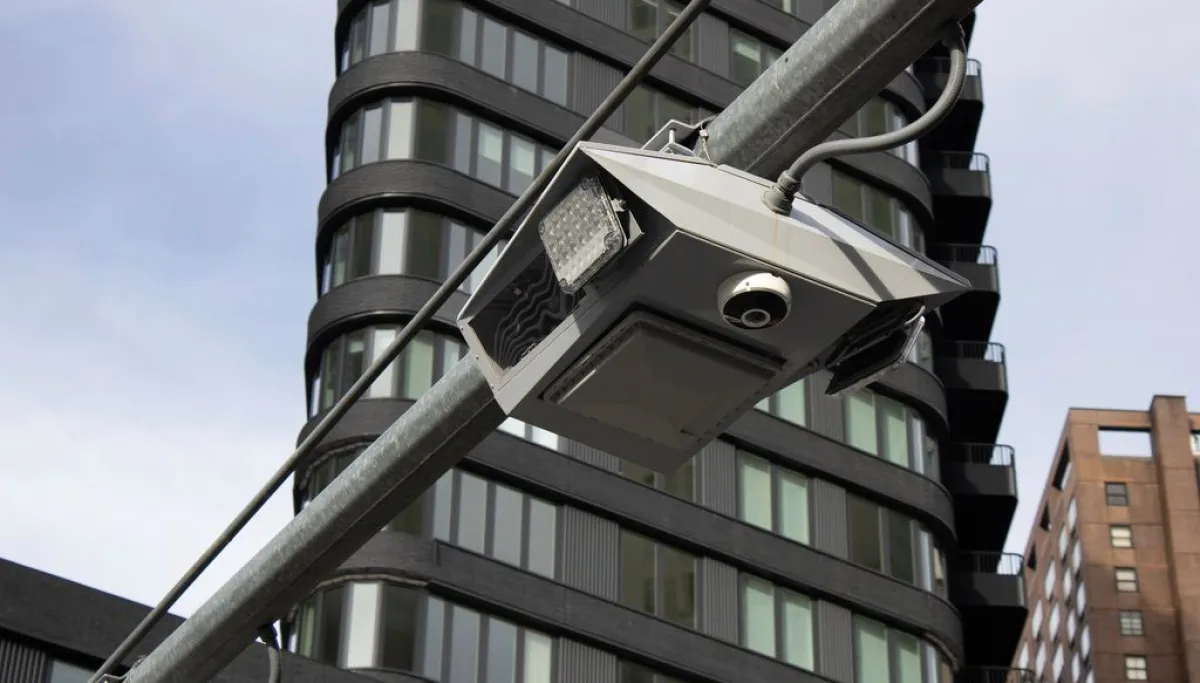
The expansion of surveillance infrastructure offers one of the clearest examples. Automatic license plate readers, commonly known as ALPRs, have been deployed widely by law enforcement agencies across the country. Initially marketed as tools to investigate serious crimes including murders, armed robberies, and kidnappings, these systems are now routinely justified for far more mundane purposes such as expediting stolen vehicle recovery. Before long, the same technology is being employed to conduct residency checks and investigate noise complaints.

The surveillance state is no longer confined to government agencies. Major retail corporations are now acquiring their own ALPR systems and expanding facial recognition technology throughout their stores, citing the need to combat shoplifting and retail theft.
In June, Lowe’s attracted media scrutiny when a North Carolina news outlet revealed the home improvement retailer not only operates ALPRs but actively shares the data collected from stores in North Carolina, South Carolina, and Virginia with North Carolina law enforcement agencies. The following month, Grocery Outlet, a California-based grocery chain, drew public attention for deploying facial recognition systems in its locations.

The result is a reality where your vehicle is tracked en route to the supermarket, and you may be individually identified the moment you step through the door.

This assault on anonymity extends far beyond policing and loss prevention. Identity verification requirements and biometric scanning systems are being positioned as the default solution to problems both real and imagined.

Federal regulators will soon mandate that all new vehicles sold in the United States include camera-based monitoring systems that continuously observe drivers for signs of intoxication or distraction. These systems would prevent vehicle operation or limit functionality if impairment is detected. The requirement has been delayed repeatedly for one simple reason: technology capable of reliably performing this function does not yet exist.

The Federal Communications Commission is considering a requirement that American citizens present government-issued identification to obtain a phone line, ostensibly to address foreign robocall operations. The logic behind the proposal remains questionable, though the elimination of prepaid burner phones appears to be viewed as an additional benefit.

Politicians across federal, state, and local levels are rushing to enact age verification laws for social media access, citing concerns about the platform’s effects on youth mental health that many consider exaggerated. These measures could ultimately require adults to submit government identification or undergo facial scanning not merely to maintain social media accounts, but even to download news applications.

In every instance, concerns regarding privacy protection, system accuracy, potential abuse, and possible chilling effects on lawful conduct and free speech are treated as secondary considerations at best, or dismissed outright as obstacles to supposedly more important objectives. At times, privacy advocates are characterized as defenders of criminal activity.

America’s foundation as a free society owes much to citizens’ ability to read, write, speak, and travel anonymously. This principle proved essential during the Founding Era and remained critical throughout the civil rights movement. It remains no less vital today. When citizens cannot purchase groceries or access news on their devices without being identified and tracked, the question arises whether the country can still legitimately claim to be free.

Daniel Nuccio is an independent journalist and spring 2026 College Fix fellow who contributes regularly to the College Fix and the Brownstone Institute. He earned his doctorate in biology in 2025.

With information from Washington Examiner

Share:
Stefanos Banos
Stefanos Banos

Stefanos Banos was born in Piraeus and is an editor at NewsFire.GR, specializing in political analysis and international relations. He graduated from the Department of Communication and Media at the University of Bremen in Germany, where he also completed his Master of Arts in Communication and Media Studies. Married to Zoi, he is a proud father of three boys.

The expansion of surveillance infrastructure offers one of the clearest examples. Automatic license plate readers, commonly known as ALPRs, have been deployed widely by law enforcement agencies across the country. Initially marketed as tools to investigate serious crimes including murders, armed robberies, and kidnappings, these systems are now routinely justified for far more mundane purposes such as expediting stolen vehicle recovery. Before long, the same technology is being employed to conduct residency checks and investigate noise complaints.

The surveillance state is no longer confined to government agencies. Major retail corporations are now acquiring their own ALPR systems and expanding facial recognition technology throughout their stores, citing the need to combat shoplifting and retail theft.

In June, Lowe’s attracted media scrutiny when a North Carolina news outlet revealed the home improvement retailer not only operates ALPRs but actively shares the data collected from stores in North Carolina, South Carolina, and Virginia with North Carolina law enforcement agencies. The following month, Grocery Outlet, a California-based grocery chain, drew public attention for deploying facial recognition systems in its locations.

The result is a reality where your vehicle is tracked en route to the supermarket, and you may be individually identified the moment you step through the door.

This assault on anonymity extends far beyond policing and loss prevention. Identity verification requirements and biometric scanning systems are being positioned as the default solution to problems both real and imagined.

Federal regulators will soon mandate that all new vehicles sold in the United States include camera-based monitoring systems that continuously observe drivers for signs of intoxication or distraction. These systems would prevent vehicle operation or limit functionality if impairment is detected. The requirement has been delayed repeatedly for one simple reason: technology capable of reliably performing this function does not yet exist.

The Federal Communications Commission is considering a requirement that American citizens present government-issued identification to obtain a phone line, ostensibly to address foreign robocall operations. The logic behind the proposal remains questionable, though the elimination of prepaid burner phones appears to be viewed as an additional benefit.

Politicians across federal, state, and local levels are rushing to enact age verification laws for social media access, citing concerns about the platform’s effects on youth mental health that many consider exaggerated. These measures could ultimately require adults to submit government identification or undergo facial scanning not merely to maintain social media accounts, but even to download news applications.

In every instance, concerns regarding privacy protection, system accuracy, potential abuse, and possible chilling effects on lawful conduct and free speech are treated as secondary considerations at best, or dismissed outright as obstacles to supposedly more important objectives. At times, privacy advocates are characterized as defenders of criminal activity.

America’s foundation as a free society owes much to citizens’ ability to read, write, speak, and travel anonymously. This principle proved essential during the Founding Era and remained critical throughout the civil rights movement. It remains no less vital today. When citizens cannot purchase groceries or access news on their devices without being identified and tracked, the question arises whether the country can still legitimately claim to be free.

Daniel Nuccio is an independent journalist and spring 2026 College Fix fellow who contributes regularly to the College Fix and the Brownstone Institute. He earned his doctorate in biology in 2025.

With information from Washington Examiner

