Necessary Cookies

Required for the site to function. Cannot be disabled.

Analytics Cookies

Help us understand how visitors interact with our site (Google Analytics via GTM).

Marketing Cookies

Used to track visitors and deliver personalised advertisements.

We use cookies to enhance your browsing experience and analyse site traffic. By clicking Accept All, you consent to our use of cookies. Privacy Policy
NewsFire Global
Home News Europe World Christianity Culture Wars Opinion Video
Information
About Us Authors Advertising Terms & Conditions Privacy Policy Contact
R2B Media
R2B NEWSFIRE.GR PAPAFOTIS.GR THRACTION HELLENIC CONSERVATIVES RIGHT2THEBONE YT
News World

The Last Republican Governor of California Falls

California Republicans have been shut out of the governor's office since Arnold Schwarzenegger left in 2011 due to demographic shifts and electoral reforms that reduced GOP voter registration to just one quarter of the electorate.
Stefanos Banos
Stefanos Banos Staff Writer
AUGUST 1, 2026 AT 7:56 PM

When Schwarzenegger left Sacramento’s Hyatt hotel on January 3, 2011, few observers understood they were witnessing the extinction of a political species, according to Dain Fitzgerald writing in Washington Examiner. What appeared at the time as a routine change of administration has proven to be something far more permanent for California Republicans.

The mathematical reality facing the state GOP is brutal. Over two decades, California’s voter registration has undergone a dramatic shift, leaving Republicans with just one quarter of the electorate. The remainder is divided between Democrats and a substantial bloc of independent voters who consistently lean left in crucial contests, creating an insurmountable structural disadvantage for any candidate carrying Republican identification.

The challenge intensified with Proposition 14, which established California’s nonpartisan top-two primary system. Rather than encouraging moderation as intended, the reform has functioned as a mechanism that regularly excludes Republicans from general elections. When multiple well-funded Democratic factions compete in a statewide primary, the fragmented Republican vote often fails to consolidate, potentially allowing two Democrats to advance to November and shutting out the GOP entirely.

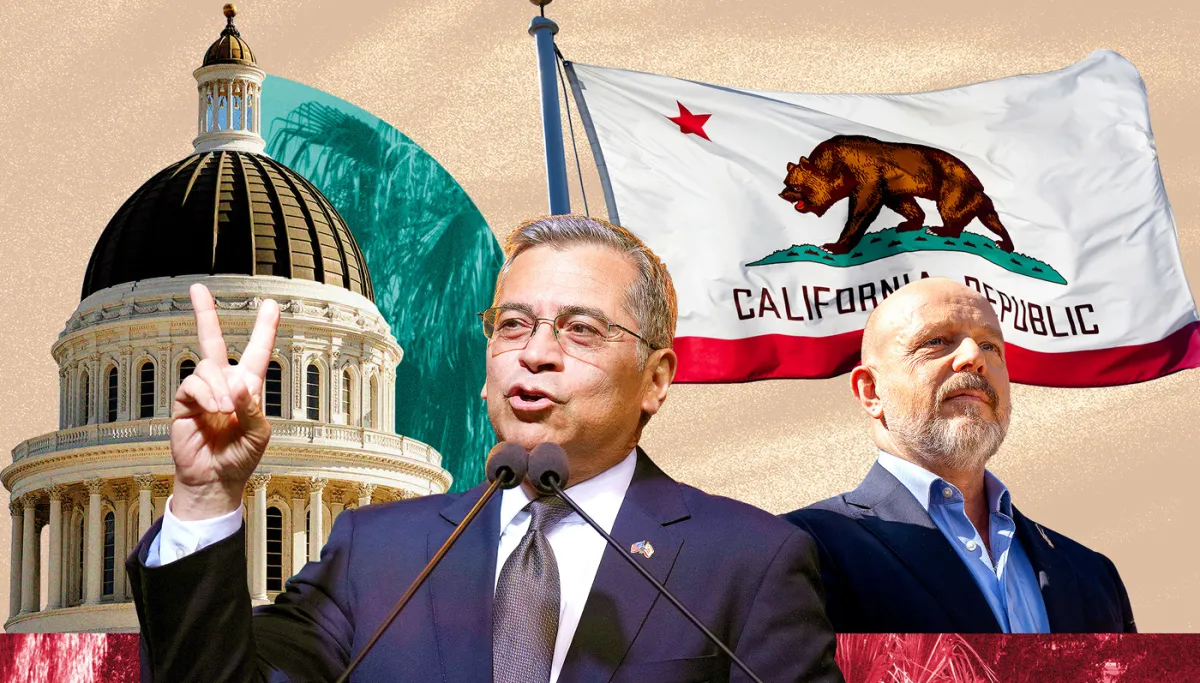
This year proved different. Steve Hilton, a Republican and former Fox News host, secured one of the two gubernatorial slots for the November 3 ballot. However, his prospects against Democratic candidate Xavier Becerra, a politically resilient former congressman, state attorney general, and health and human services secretary under former President Joe Biden, remain extremely limited.

The fundraising disparity compounds Republican disadvantages, as entrenched progressive networks and powerful public sector unions channel tens of millions into media markets, Fitzgerald argues.

Yet this progressive dominance may contain the seeds of a viable counter-strategy. The supermajority’s governance failures on homelessness and crime create openings that a truly independent candidate could exploit. If Republican branding guarantees a mathematical ceiling, the path to the governor’s mansion may require abandoning partisan affiliation altogether while maintaining center-right, pro-business, common-sense conservative positions.

An independent candidacy fundamentally recalibrates the top-two primary dynamic. Rather than triggering predictable partisan tribal warfare, a well-funded independent championing fiscal responsibility, public safety, and middle-class tax relief could draw heavily from the independent base while attracting moderate suburban Democrats exhausted by Sacramento’s supermajority overreach and self-defeating tax schemes.

Success requires mastering a specific approach to contemporary political culture. In coastal urban centers, progressives treat the phrase “I’m not very political” as a warning sign of concealed conservatism. A skilled conservative running as an independent must invert this progressive suspicion by explicitly rejecting toxic Republican branding while avoiding the “not political” characterization, instead presenting as intensely focused on competence rather than culture.

Hilton is currently testing this strategy in real time. The British-born former adviser to then-British Prime Minister David Cameron has successfully advanced to the 2026 general election against Becerra, navigating California’s treacherous political terrain as Republicans confront the possibility that their path back to Sacramento’s executive office may require shedding the party label itself.

With information from Washington Examiner

Share:
Stefanos Banos
Stefanos Banos

Stefanos Banos was born in Piraeus and is an editor at NewsFire.GR, specializing in political analysis and international relations. He graduated from the Department of Communication and Media at the University of Bremen in Germany, where he also completed his Master of Arts in Communication and Media Studies. Married to Zoi, he is a proud father of three boys.

When Schwarzenegger left Sacramento’s Hyatt hotel on January 3, 2011, few observers understood they were witnessing the extinction of a political species, according to Dain Fitzgerald writing in Washington Examiner. What appeared at the time as a routine change of administration has proven to be something far more permanent for California Republicans.

The mathematical reality facing the state GOP is brutal. Over two decades, California’s voter registration has undergone a dramatic shift, leaving Republicans with just one quarter of the electorate. The remainder is divided between Democrats and a substantial bloc of independent voters who consistently lean left in crucial contests, creating an insurmountable structural disadvantage for any candidate carrying Republican identification.

The challenge intensified with Proposition 14, which established California’s nonpartisan top-two primary system. Rather than encouraging moderation as intended, the reform has functioned as a mechanism that regularly excludes Republicans from general elections. When multiple well-funded Democratic factions compete in a statewide primary, the fragmented Republican vote often fails to consolidate, potentially allowing two Democrats to advance to November and shutting out the GOP entirely.

This year proved different. Steve Hilton, a Republican and former Fox News host, secured one of the two gubernatorial slots for the November 3 ballot. However, his prospects against Democratic candidate Xavier Becerra, a politically resilient former congressman, state attorney general, and health and human services secretary under former President Joe Biden, remain extremely limited.

The fundraising disparity compounds Republican disadvantages, as entrenched progressive networks and powerful public sector unions channel tens of millions into media markets, Fitzgerald argues.

Yet this progressive dominance may contain the seeds of a viable counter-strategy. The supermajority’s governance failures on homelessness and crime create openings that a truly independent candidate could exploit. If Republican branding guarantees a mathematical ceiling, the path to the governor’s mansion may require abandoning partisan affiliation altogether while maintaining center-right, pro-business, common-sense conservative positions.

An independent candidacy fundamentally recalibrates the top-two primary dynamic. Rather than triggering predictable partisan tribal warfare, a well-funded independent championing fiscal responsibility, public safety, and middle-class tax relief could draw heavily from the independent base while attracting moderate suburban Democrats exhausted by Sacramento’s supermajority overreach and self-defeating tax schemes.

Success requires mastering a specific approach to contemporary political culture. In coastal urban centers, progressives treat the phrase “I’m not very political” as a warning sign of concealed conservatism. A skilled conservative running as an independent must invert this progressive suspicion by explicitly rejecting toxic Republican branding while avoiding the “not political” characterization, instead presenting as intensely focused on competence rather than culture.

Hilton is currently testing this strategy in real time. The British-born former adviser to then-British Prime Minister David Cameron has successfully advanced to the 2026 general election against Becerra, navigating California’s treacherous political terrain as Republicans confront the possibility that their path back to Sacramento’s executive office may require shedding the party label itself.

With information from Washington Examiner

