Necessary Cookies

Required for the site to function. Cannot be disabled.

Analytics Cookies

Help us understand how visitors interact with our site (Google Analytics via GTM).

Marketing Cookies

Used to track visitors and deliver personalised advertisements.

We use cookies to enhance your browsing experience and analyse site traffic. By clicking Accept All, you consent to our use of cookies. Privacy Policy
NewsFire Global
Home News Europe World Christianity Culture Wars Opinion Video
Information
About Us Authors Advertising Terms & Conditions Privacy Policy Contact
R2B Media
R2B NEWSFIRE.GR PAPAFOTIS.GR THRACTION HELLENIC CONSERVATIVES RIGHT2THEBONE YT
News World

Iran’s Leaders Battle Over Push for Wider Conflict

Iran's internal power struggle between civilian politicians seeking diplomacy and the Revolutionary Guard pushing military confrontation may determine regional war or peace more than U.S. decisions.

JULY 25, 2026 AT 9:07 PM

With Supreme Leader Mojtaba Khamenei absent from public view, no figure remains capable of forcing the competing factions into alignment — meaning Tehran’s internal rivalries, rather than decisions in Washington, may ultimately determine whether the region heads toward war or negotiation.

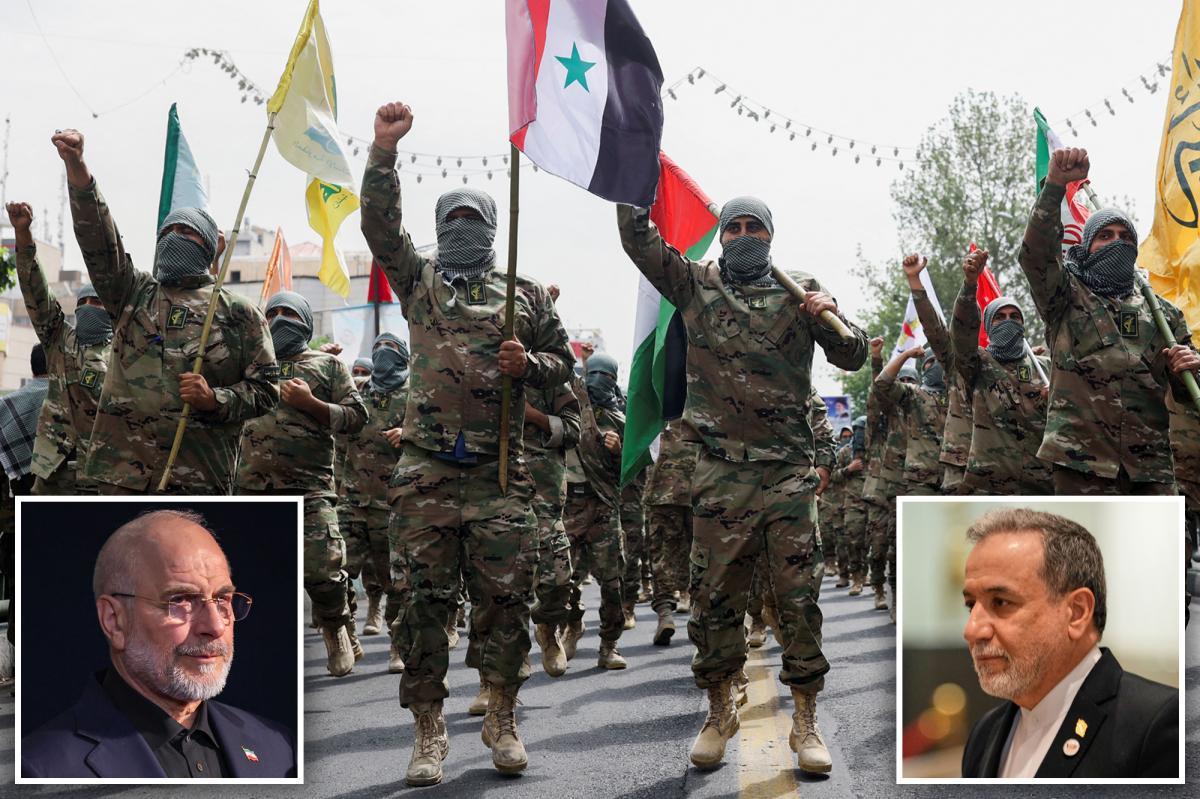
Regional sources describe two rival power centers now operating inside the Iranian capital: civilian leaders working to maintain fragile talks with the United States, and military hardliners committed to escalation through force.

Iranian President Masoud Pezeshkian, Foreign Minister Abbas Araghchi, and Parliament Speaker Mohammad Bagher Ghalibaf are seeking to keep dialogue with Washington alive and prevent the conflict from expanding into full-scale regional war, the sources indicated.

Yet their authority has steadily weakened, a regional source with knowledge of Iran’s internal dynamics told the outlet. The diplomatic faction can negotiate agreements, but lacks the power to prevent the IRGC from military action or stop parliament from legislating around them.

Rather than engaging in internal political debates, the IRGC increasingly imposes realities through direct military operations, the source explained, while hardline lawmakers subsequently move to codify those actions into law.

Behnam Ben Taleblu, senior director of the Foundation for Defense of Democracies’ Iran Program, emphasized the critical distinction between politicians who discuss diplomacy publicly and the security apparatus actually making battlefield decisions.

While some Iranian officials including the foreign minister occasionally speak about dialogue, those with operational control continue to act as though escalation — not engagement — will ensure the regime’s survival, Ben Taleblu noted.

Though Tehran has historically pursued diplomacy and military pressure in tandem, recent developments suggest the regime now favors confrontation over negotiation.

IRGC Influence on Full Display

The military’s rising dominance became visible during funeral ceremonies for Ayatollah Ali Khamenei, where IRGC members rather than civilian officials filled the front rows, according to sources.

Additionally, several televised addresses by Iran’s political leadership have been edited before broadcast rather than aired live — raising questions about who controls the country’s public messaging.

The IRGC’s reach extends throughout Tehran’s institutions, with the Iranian parliament also working to undermine diplomatic efforts. Lawmakers backed a measure with approximately 180 of the chamber’s 290 members declaring the Islamabad Memorandum of Understanding effectively dead, while advancing separate legislation titled the “Strategic Action for the Security and Sustainable Progress of the Strait of Hormuz and Persian Gulf,” introduced by lawmaker Ebrahim Azizi.

Ben Taleblu argued the regime appears convinced that war still serves its interests despite sustaining significant military losses. Tehran believes barriers exist to escalation by President Trump, and that gains can be secured through confrontation.

Diplomatic Push Amid Military Dominance

The division became more apparent this week when senior Iranian political figures traveled to mediator Pakistan seeking to preserve diplomatic channels. The civilian leadership may gain leverage now that the IRGC understands it cannot acquire weapons from alternative markets, a regional source suggested.

Under normal circumstances, Supreme Leader Mojtaba Khamenei would be expected to resolve such internal disputes — but he has not appeared publicly since the February 28 bombing that killed his father and elevated him to power. He has communicated only through written statements, avoiding speeches, televised appearances, or even family funerals.

With information from New York Post

Share:
Eleni Papadaki-Van Der Merwe

She was born in 1986 in Johannesburg, South Africa. She is the granddaughter of an immigrant from Crete who settled in the Greek community of Johannesburg (one of the largest in Africa). She holds a bachelor’s degree in International Relations and Political Science from the University of the Witwatersrand (Wits) in Johannesburg and a master’s degree in Journalism from Rhodes University in Grahamstown. She began her career at English-language media outlets in Johannesburg, covering politics and economics, with a focus on issues related to migration and the diaspora. She moved to Athens in 2015 to “return to her roots,” initially to pursue graduate studies, and has remained there permanently. She is married to an Afrikaner; they have two children and live in the southern suburbs of Athens.

With Supreme Leader Mojtaba Khamenei absent from public view, no figure remains capable of forcing the competing factions into alignment — meaning Tehran’s internal rivalries, rather than decisions in Washington, may ultimately determine whether the region heads toward war or negotiation.

Regional sources describe two rival power centers now operating inside the Iranian capital: civilian leaders working to maintain fragile talks with the United States, and military hardliners committed to escalation through force.

Iranian President Masoud Pezeshkian, Foreign Minister Abbas Araghchi, and Parliament Speaker Mohammad Bagher Ghalibaf are seeking to keep dialogue with Washington alive and prevent the conflict from expanding into full-scale regional war, the sources indicated.

Yet their authority has steadily weakened, a regional source with knowledge of Iran’s internal dynamics told the outlet. The diplomatic faction can negotiate agreements, but lacks the power to prevent the IRGC from military action or stop parliament from legislating around them.

Rather than engaging in internal political debates, the IRGC increasingly imposes realities through direct military operations, the source explained, while hardline lawmakers subsequently move to codify those actions into law.

Behnam Ben Taleblu, senior director of the Foundation for Defense of Democracies’ Iran Program, emphasized the critical distinction between politicians who discuss diplomacy publicly and the security apparatus actually making battlefield decisions.

While some Iranian officials including the foreign minister occasionally speak about dialogue, those with operational control continue to act as though escalation — not engagement — will ensure the regime’s survival, Ben Taleblu noted.

Though Tehran has historically pursued diplomacy and military pressure in tandem, recent developments suggest the regime now favors confrontation over negotiation.

IRGC Influence on Full Display

The military’s rising dominance became visible during funeral ceremonies for Ayatollah Ali Khamenei, where IRGC members rather than civilian officials filled the front rows, according to sources.

Additionally, several televised addresses by Iran’s political leadership have been edited before broadcast rather than aired live — raising questions about who controls the country’s public messaging.

The IRGC’s reach extends throughout Tehran’s institutions, with the Iranian parliament also working to undermine diplomatic efforts. Lawmakers backed a measure with approximately 180 of the chamber’s 290 members declaring the Islamabad Memorandum of Understanding effectively dead, while advancing separate legislation titled the “Strategic Action for the Security and Sustainable Progress of the Strait of Hormuz and Persian Gulf,” introduced by lawmaker Ebrahim Azizi.

Ben Taleblu argued the regime appears convinced that war still serves its interests despite sustaining significant military losses. Tehran believes barriers exist to escalation by President Trump, and that gains can be secured through confrontation.

Diplomatic Push Amid Military Dominance

The division became more apparent this week when senior Iranian political figures traveled to mediator Pakistan seeking to preserve diplomatic channels. The civilian leadership may gain leverage now that the IRGC understands it cannot acquire weapons from alternative markets, a regional source suggested.

Under normal circumstances, Supreme Leader Mojtaba Khamenei would be expected to resolve such internal disputes — but he has not appeared publicly since the February 28 bombing that killed his father and elevated him to power. He has communicated only through written statements, avoiding speeches, televised appearances, or even family funerals.

With information from New York Post

