
Iran Still Has Card to Play—Aimed at Red Sea
Iran's refusal to negotiate with the U.S. stems from its revolutionary ideology and reliance on Middle East terrorist proxies like the Houthis, who now threaten a Red Sea blockade.
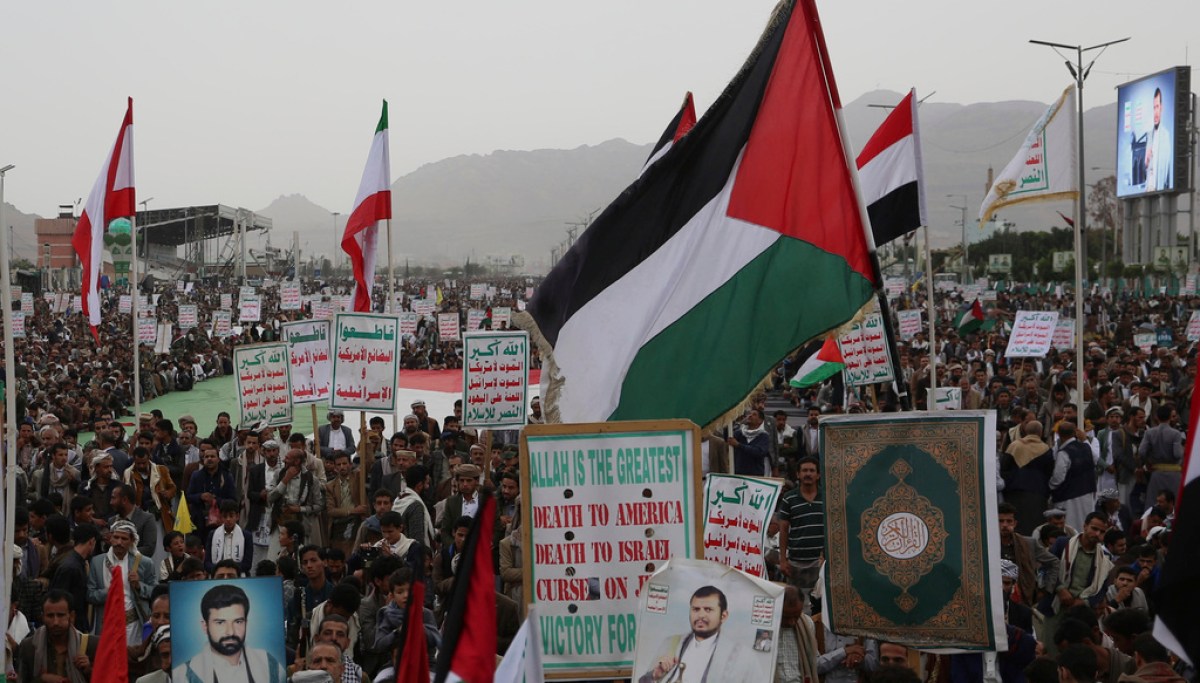

President Donald Trump has repeatedly expressed his desire to reach an agreement with Tehran, but the back-and-forth negotiations since spring have demonstrated that the Islamic Republic remains intransigent. As the president himself observed last week, the remaining Iranian leaders are stone-cold crazy. They appear willing to condemn their nation to destruction rather than abandon their nuclear ambitions.
While the regime’s obstinacy derives from the extremist ideology of the Islamic Revolution, it also depends heavily on its so-called Axis of Resistance — a network of terrorist organizations operating throughout the Middle East. Since the Iran-backed Hamas attacks on Israel in 2023, many of these groups have been severely degraded or eliminated by Israel, the United States, and regional partners. Those that remain, however, continue providing critical support to the ayatollahs. Any effective strategy to defeat the Iranian regime must therefore prioritize completely dismantling this proxy network.
Among these proxy forces, the Houthis in Yemen represent perhaps the most dangerous threat. Since 2023, this militant group has joined Tehran’s campaign for regional dominance, establishing itself as one of the most important and resilient members of the axis. As Washington intensifies pressure on Iran, regime leaders are now calling on the Houthis to close the Red Sea — and the terrorists appear ready to comply. On Monday, the Houthis announced their forces would begin enforcing a maritime embargo of Saudi Arabia. The consequences could prove catastrophic for the Saudis, the United States, and the global economy.
The Red Sea ranks among the world’s busiest shipping lanes, and traffic has only increased since Iran closed the Strait of Hormuz earlier this year. Saudi Arabia, for instance, diverted more than 70% of its crude oil exports to Yanbu, a Red Sea port now directly threatened by renewed Houthi terrorism. While the embargo’s ultimate effectiveness remains uncertain, global energy markets are already reacting, and losing another ocean route would dramatically increase oil prices.
The situation grows more alarming as the Houthis vow to target Saudi oil production directly. Last week, they launched several missiles toward Saudi Arabia in a show of force that shattered years of relative peace between the two. If these Shiite extremists continue such attacks and successfully strike Saudi energy infrastructure, the global energy crisis could worsen significantly — and the anti-Iran coalition could begin to fracture. This aggression, like Iranian attacks on Gulf states, aims to pressure Arab powers aligned with Israel and America to abandon the conflict.
Houthi piracy in the Red Sea and terrorism across the Middle East carry consequences far beyond the region. Americans are suffering from surging gasoline prices this summer, and increased energy costs ripple throughout the entire economy. With inflation already causing severe financial strain for countless families, U.S. leaders cannot afford another disruption to international commerce. Putting America first requires developing a plan to keep the Red Sea open, oil flowing, and the economy functioning despite terrorist threats.
Tehran has supplied the Houthis with capabilities to target American allies beyond the Arabian Peninsula. In March, they launched several missiles into Israel. Those long-range weapons, or even less sophisticated drones, could be used to attack American troops stationed throughout the region. The Houthis represent a clear and present danger to U.S. interests and security architecture, and the Trump administration should prepare to respond to their terrorist aggression.
Previous operations against the Houthis have largely failed because they lacked sufficient commitment. The Biden administration made only halfhearted attempts to contain the terrorists. The second Trump administration did better at degrading their capabilities, but also stopped short of eliminating senior leadership and liberating Yemen from this emerging terrorist group. Since the 2015 coup, no president has formulated a comprehensive strategy to truly eliminate this menace.
Washington has done little more than play Whac-A-Mole with the Houthis. Their apparent resilience — actually the product of American reluctance rather than any genuine strength — emboldens other terrorist organizations across the region and empowers Tehran. The Islamic Republic would prefer the United States return repeatedly to the conflict in Yemen, diverting focus from the primary battle against Iran itself.
With information from Washington Examiner





