Necessary Cookies

Required for the site to function. Cannot be disabled.

Analytics Cookies

Help us understand how visitors interact with our site (Google Analytics via GTM).

Marketing Cookies

Used to track visitors and deliver personalised advertisements.

We use cookies to enhance your browsing experience and analyse site traffic. By clicking Accept All, you consent to our use of cookies. Privacy Policy
NewsFire Global
Home News Europe World Christianity Culture Wars Opinion Video
Information
About Us Authors Advertising Terms & Conditions Privacy Policy Contact
R2B Media
R2B NEWSFIRE.GR PAPAFOTIS.GR THRACTION HELLENIC CONSERVATIVES RIGHT2THEBONE YT
News World

Supreme Court Arguments Don’t Predict Final Decisions

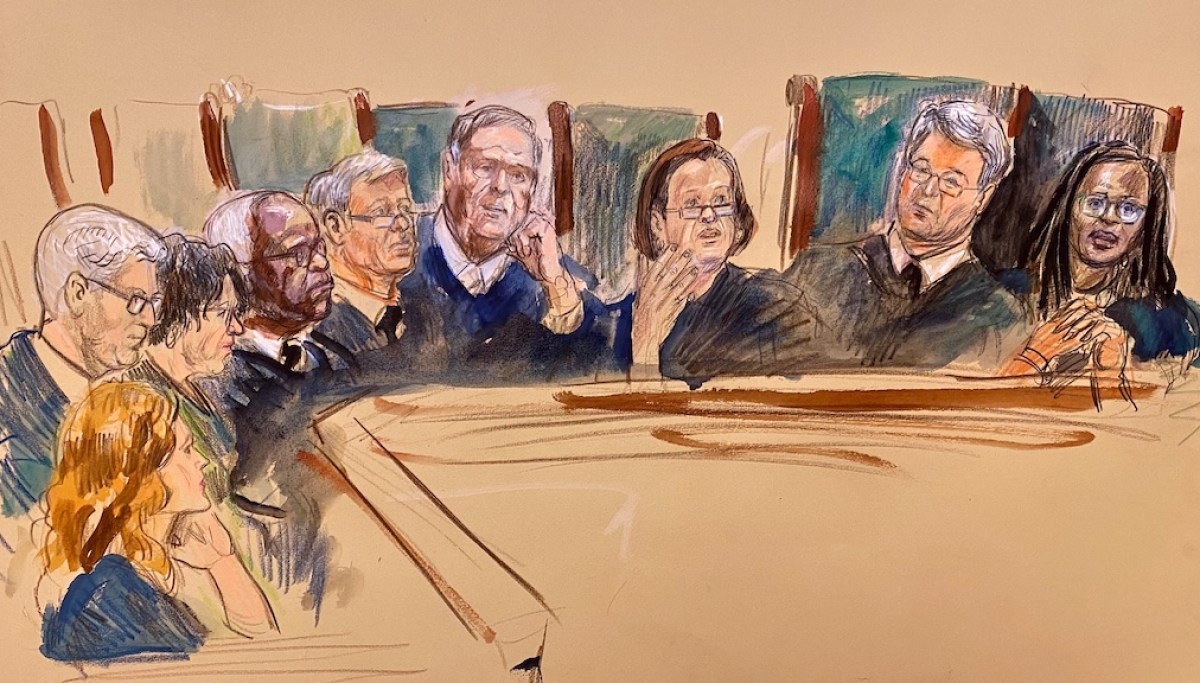
Justice Ketanji Brown Jackson dominated Supreme Court oral arguments with nearly 22% of all judicial questioning while Chief Justice John Roberts maintained a near-perfect majority voting record.
Stefanos Banos
Stefanos Banos Staff Writer
JULY 13, 2026 AT 7:06 PM

The Supreme Court’s most recent term reveals a striking contrast between which justices command the spotlight during oral arguments and those who wield influence when final rulings are handed down, according to Jack Birle writing in Washington Examiner.
While the term that ran from October 2025 through June 30 was dominated by cases involving President Donald Trump, Justice Ketanji Brown Jackson emerged as the most vocal presence during oral hearings, while Chief Justice John Roberts maintained a near-perfect record of voting with the majority in final decisions.

An analysis of Supreme Court transcripts covering all 58 cases decided this term shows justices spoke a combined 342,840 words during oral arguments. Jackson accounted for nearly 22% of all judicial questioning, making her by far the most talkative member of the bench. At the opposite end, Justice Clarence Thomas contributed just under 3% of judicial remarks during hearings.

John Shu, a constitutional law expert who served in both Bush administrations, noted that traditionally the junior justice does not consume a fifth of total oral argument time. He attributed the vast gap between Jackson and Thomas to fundamentally different questioning approaches.

Jackson frequently provides lengthy preambles before posing actual questions, Shu explained, while Thomas remains direct and cuts straight to core issues on the rare occasions he speaks up.

Speaking Time Distribution Across the Bench

Justice Sonia Sotomayor ranked as the second most vocal jurist, accounting for nearly 15% of questioning time. Roberts, despite his role directing procedural matters as chief justice, contributed only about 6% of judicial remarks during arguments.

The remaining justices each took up between approximately 10% and 12% of questioning time throughout the term. Only one oral argument proceeded without the full nine-member bench, when Justice Samuel Alito recused himself from Chevron USA v. Plaquemines Parish due to a financial interest in one of the parties.

Jackson led questioning not only overall but in 42 of the 58 individual oral arguments heard. Justice Brett Kavanaugh was most vocal in five hearings, while Justices Elena Kagan and Neil Gorsuch each dominated three arguments. Sotomayor and Justice Amy Coney Barrett were most talkative in two hearings each, with Alito leading one.

Jackson’s Repeated Expression of Confusion

During the term’s oral arguments from October 2025 through April 2026, Jackson stated some variation of not understanding a point 89 times when questioning attorneys from both sides. She said the exact phrase 56 times, added “I guess” 22 times, used “I just” seven times, and employed other variations including “I’m not understanding” and “I didn’t understand” twice each.

Thomas was not only the quietest justice overall but also spoke least in 27 of the 58 oral arguments. Kavanaugh questioned least in 11 hearings, Roberts in seven, Barrett in six, and Gorsuch in two.

Thomas Maintains Long-Standing Pattern

Carrie Severino, president of the conservative advocacy group Judicial Crisis Network, noted that Thomas has historically remained relatively silent during oral arguments. For more than a decade, the senior justice asked zero questions during hearings, with his participation only increasing since 2020.

The term concluded June 30 with the 6-3 decision in Trump v. Barbara, where the high court struck down the president’s executive order on birthright citizenship. The term began with oral arguments in Villarreal v. Texas on October 6, 2025.

With information from Washington Examiner

Share:
Stefanos Banos
Stefanos Banos

Stefanos Banos was born in Piraeus and is an editor at NewsFire.GR, specializing in political analysis and international relations. He graduated from the Department of Communication and Media at the University of Bremen in Germany, where he also completed his Master of Arts in Communication and Media Studies. Married to Zoi, he is a proud father of three boys.

The Supreme Court’s most recent term reveals a striking contrast between which justices command the spotlight during oral arguments and those who wield influence when final rulings are handed down, according to Jack Birle writing in Washington Examiner.

While the term that ran from October 2025 through June 30 was dominated by cases involving President Donald Trump, Justice Ketanji Brown Jackson emerged as the most vocal presence during oral hearings, while Chief Justice John Roberts maintained a near-perfect record of voting with the majority in final decisions.

An analysis of Supreme Court transcripts covering all 58 cases decided this term shows justices spoke a combined 342,840 words during oral arguments. Jackson accounted for nearly 22% of all judicial questioning, making her by far the most talkative member of the bench. At the opposite end, Justice Clarence Thomas contributed just under 3% of judicial remarks during hearings.

John Shu, a constitutional law expert who served in both Bush administrations, noted that traditionally the junior justice does not consume a fifth of total oral argument time. He attributed the vast gap between Jackson and Thomas to fundamentally different questioning approaches.

Jackson frequently provides lengthy preambles before posing actual questions, Shu explained, while Thomas remains direct and cuts straight to core issues on the rare occasions he speaks up.

Speaking Time Distribution Across the Bench

Justice Sonia Sotomayor ranked as the second most vocal jurist, accounting for nearly 15% of questioning time. Roberts, despite his role directing procedural matters as chief justice, contributed only about 6% of judicial remarks during arguments.

The remaining justices each took up between approximately 10% and 12% of questioning time throughout the term. Only one oral argument proceeded without the full nine-member bench, when Justice Samuel Alito recused himself from Chevron USA v. Plaquemines Parish due to a financial interest in one of the parties.

Jackson led questioning not only overall but in 42 of the 58 individual oral arguments heard. Justice Brett Kavanaugh was most vocal in five hearings, while Justices Elena Kagan and Neil Gorsuch each dominated three arguments. Sotomayor and Justice Amy Coney Barrett were most talkative in two hearings each, with Alito leading one.

Jackson’s Repeated Expression of Confusion

During the term’s oral arguments from October 2025 through April 2026, Jackson stated some variation of not understanding a point 89 times when questioning attorneys from both sides. She said the exact phrase 56 times, added “I guess” 22 times, used “I just” seven times, and employed other variations including “I’m not understanding” and “I didn’t understand” twice each.

Thomas was not only the quietest justice overall but also spoke least in 27 of the 58 oral arguments. Kavanaugh questioned least in 11 hearings, Roberts in seven, Barrett in six, and Gorsuch in two.

Thomas Maintains Long-Standing Pattern

Carrie Severino, president of the conservative advocacy group Judicial Crisis Network, noted that Thomas has historically remained relatively silent during oral arguments. For more than a decade, the senior justice asked zero questions during hearings, with his participation only increasing since 2020.

The term concluded June 30 with the 6-3 decision in Trump v. Barbara, where the high court struck down the president’s executive order on birthright citizenship. The term began with oral arguments in Villarreal v. Texas on October 6, 2025.

With information from Washington Examiner

