
Smithsonian Has Failed Its Mission And Must Be Reformed
The White House released a report accusing the Smithsonian's National Museum of American History of abandoning its mission to celebrate shared heritage in favor of divisive ideology.
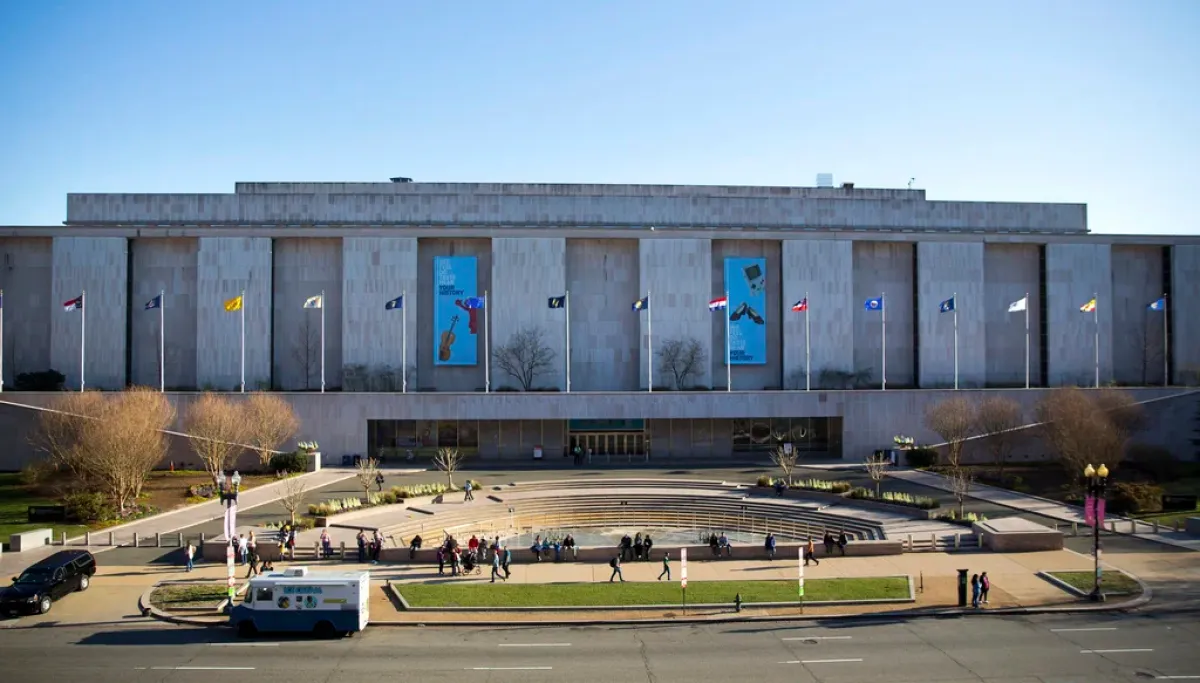

The 162-page Domestic Policy Council report reveals that when Smithsonian leaders lobbied Congress in 1953 to authorize the museum, they promised it would commemorate America’s heritage of freedom and instill in visitors a deepened faith in the country’s destiny as champion of individual dignity and enterprise. Secretary Leon Carmichael testified at the time that the museum would place before millions a permanent exposition highlighting the basic elements of the American way of life.
That promise has been broken. The report concludes that museum leadership has explicitly adopted an ideological framework that no longer treats the American story as a shared national inheritance to be taught or celebrated, but as a political instrument to divide, dispirit, and discourage citizens.
The findings are damning. Today’s visitors to the National Museum of American History will find no major exhibits dedicated to the Founding era, George Washington, Thomas Jefferson, the Continental Congress, the Pilgrims, the Puritans, or Washington crossing the Delaware. When founders do appear, they are presented primarily through the lens of slavery, exclusion, and oppression rather than as the men who built the republic.


Benjamin Franklin is reduced in one exhibit to his ambivalent view of immigrants, while another exhibit on his electrical experiments devotes significant attention to enslaved people and servants whose labor supposedly enabled his scientific work.
The museum’s treatment of American cultural inheritance follows the same pattern. Pilgrims are framed mainly as colonizers, Thanksgiving is portrayed through the lens of a National Day of Mourning, and European settlement is described as an unsettling of the continent.
Christianity, which helped shape the language of natural rights, the abolitionist movement, the Civil Rights movement, and countless schools, hospitals, charities, and voluntary associations, is instead presented chiefly as an instrument of conquest, exclusion, or cultural erasure.
This disgraceful revisionism has been developing for decades. Museum curators gathered in the early 1970s to discuss how they could use the museum as a political counterweight to President Richard Nixon’s election, meaning the Smithsonian’s tendentious presentation of American history has been exerting its malignant influence for half a century.
The Many Voices, One Nation exhibit is built on the premise that there is no single American culture, language, or narrative. Rather than telling the story of how many people became one nation, the exhibit presents examples of Americans oppressing immigrants and other groups while reducing E Pluribus Unum from a unifying civic ideal into another occasion for grievance.
Museum director Anthea Hartig has been explicit about her agenda. Shortly after taking over, Hartig explained that one of her roles was connecting research and scholarship to activism and advocacy. In a 2020 statement after George Floyd’s death, she described the nation as founded on the supremacy of white, landed men and the institution of chattel slavery, adding that the museum’s job was to reframe the traditional celebratory narrative of U.S. history.
In a 2022 presentation, Hartig said the museum was working with other Smithsonian institutions to dismantle the narrative lockdown that many have inherited. By 2024, she put the matter even more bluntly, stating that history as a practice is for her a prime tool of social justice. She later explained that the museum needed to help people get out of the America First mentality, calling that task a big challenge as the country approached the 250th anniversary of the Declaration of Independence.
The White House report makes clear that the Smithsonian has failed in its mission and must be reformed to restore its proper role in preserving and celebrating America’s shared national story.
With information from Washington Examiner





