Necessary Cookies

Required for the site to function. Cannot be disabled.

Analytics Cookies

Help us understand how visitors interact with our site (Google Analytics via GTM).

Marketing Cookies

Used to track visitors and deliver personalised advertisements.

We use cookies to enhance your browsing experience and analyse site traffic. By clicking Accept All, you consent to our use of cookies. Privacy Policy
NewsFire Global
Home News Europe World Christianity Culture Wars Opinion Video
Information
About Us Authors Advertising Terms & Conditions Privacy Policy Contact
R2B Media
R2B NEWSFIRE.GR PAPAFOTIS.GR THRACTION HELLENIC CONSERVATIVES RIGHT2THEBONE YT
News Europe

Zelensky Rejects EU Half-Membership Plan

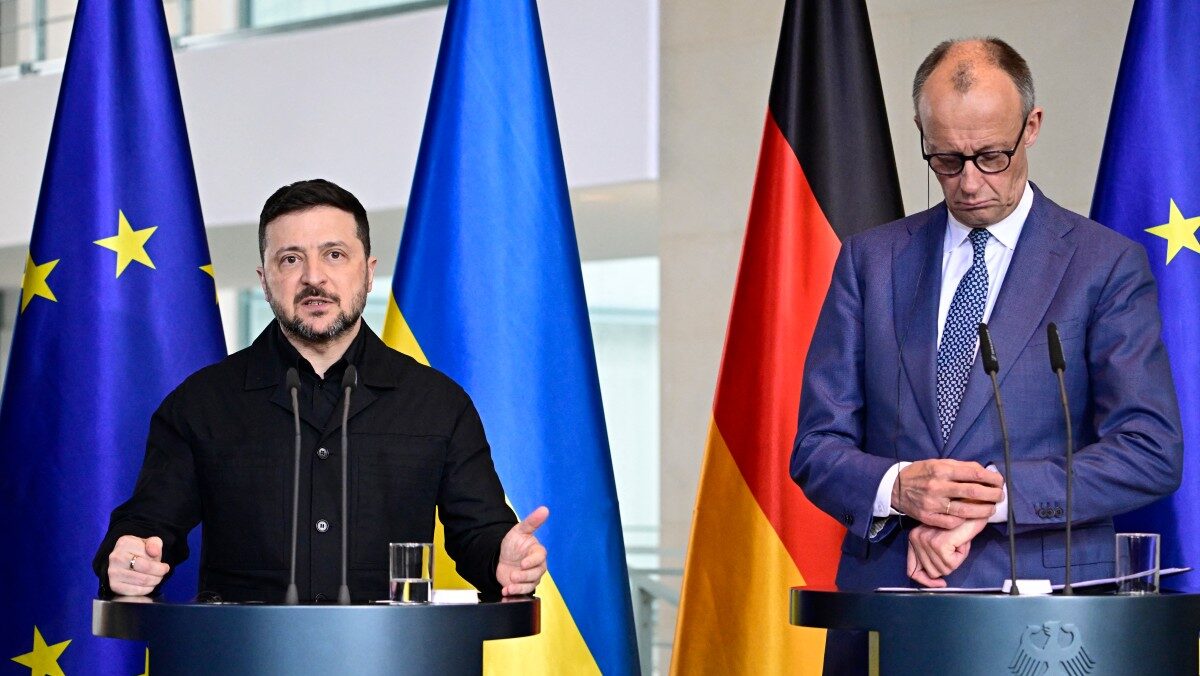
Ukrainian President Volodymyr Zelensky rejected Germany's proposed associate EU membership status, arguing it would marginalize Ukraine's voice in European decision-making and insisting instead on full membership with equal rights.

Dimitris Papafotis
Dimitris Papafotis Editor in Chief
MAY 23, 2026 AT 5:10 PM

According to The European Conservative, Zelensky outlined his objections in correspondence directed at EU leadership, arguing that an associate membership framework falls short of Ukraine’s legitimate expectations for integration.

The Ukrainian leader’s position reflects growing tension over the terms under which Kyiv might join the European Union. Rather than accept a subordinate standing within the bloc, Zelensky has signaled that Ukraine seeks full membership with equivalent rights and representation.

The German initiative, as The European Conservative reports, appears designed as a middle ground—offering Ukraine closer institutional ties to Brussels without immediate accession to full EU membership. However, this compromise has faced pushback from the Ukrainian side, which views associate status as a second-tier arrangement incompatible with the nation’s post-war reconstruction and security priorities.

The disagreement underscores a fundamental divide between Western capitals regarding Ukraine’s future European orientation. While some member states advocate a gradual integration approach, Zelensky has maintained that associate membership would leave Ukraine voiceless in key decisions.

Ukraine’s insistence on full membership rights rather than limited associate status represents a firm diplomatic stance as negotiations over EU expansion continue.

With information from The European Conservative

Share:
Dimitris Papafotis
Dimitris Papafotis

Dimitris Papafotis is the editor-in-chief of NewsFire.GR. He was born and raised in Athens. He studied at the Journalism Workshop (1991-1993). He currently lives in Pyrgos, Ilia, where he has been active in radio and various newspapers, while also maintaining his personal blog, Papafotis.gr.

According to The European Conservative, Zelensky outlined his objections in correspondence directed at EU leadership, arguing that an associate membership framework falls short of Ukraine’s legitimate expectations for integration.

The Ukrainian leader’s position reflects growing tension over the terms under which Kyiv might join the European Union. Rather than accept a subordinate standing within the bloc, Zelensky has signaled that Ukraine seeks full membership with equivalent rights and representation.

The German initiative, as The European Conservative reports, appears designed as a middle ground—offering Ukraine closer institutional ties to Brussels without immediate accession to full EU membership. However, this compromise has faced pushback from the Ukrainian side, which views associate status as a second-tier arrangement incompatible with the nation’s post-war reconstruction and security priorities.

The disagreement underscores a fundamental divide between Western capitals regarding Ukraine’s future European orientation. While some member states advocate a gradual integration approach, Zelensky has maintained that associate membership would leave Ukraine voiceless in key decisions.

Ukraine’s insistence on full membership rights rather than limited associate status represents a firm diplomatic stance as negotiations over EU expansion continue.

With information from The European Conservative

