
ZDF’s Arrogance Will Be Its Downfall: Musk and Schönbohm Cases
Germany's public broadcaster ZDF issued two retractions in one hour after legal defeats involving false claims about Elon Musk and a smear that ended a cybersecurity chief's career.
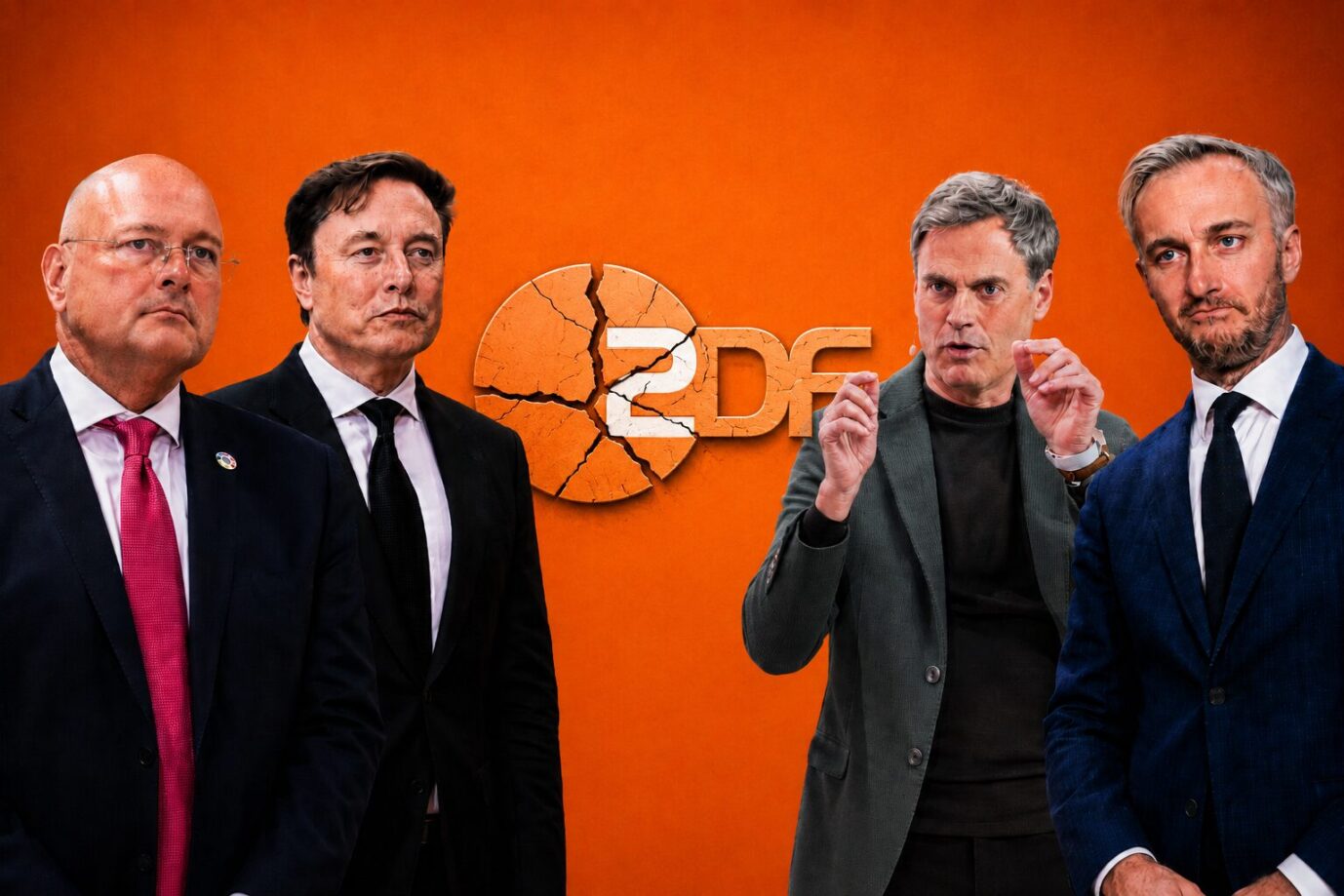

On Tuesday afternoon, the Second German Television network published press releases at 1:35 PM and 2:41 PM respectively, according to Junge Freiheit, acknowledging separate legal defeats involving tech billionaire Elon Musk and former German cybersecurity chief Arne Schönbohm.
False Claims Against Musk Force Legal Surrender
In the first case, ZDF confirmed it had signed a cease-and-desist declaration in response to legal action by Musk. A ZDF moderator on the program “heute live” had falsely claimed that Musk called for a “hunt on migrants” in Belfast. In reality, the American entrepreneur had merely shared content mobilizing people for “protests.” Musk retained legal counsel and successfully compelled ZDF to remove the offending passage from its broadcast.
Court Confirms Career-Ending Smear Campaign
The second retraction concerned Arne Schönbohm, former head of Germany’s Federal Office for Information Security. The Munich Higher Regional Court upheld a lower court ruling that four statements made on Jan Böhmermann’s “Neo Magazin Royale” constituted false claims of fact, as Junge Freiheit reports.
Böhmermann had deliberately created the impression in 2022 that Schönbohm maintained conscious contact with Russian intelligence services through an association he had founded. The ZDF satirist failed to disclose that Schönbohm had already left the organization’s board in 2016 and was no longer active in the group.
The consequences for Schönbohm proved devastating. Then-Interior Minister Nancy Faeser removed him from his position. The 56-year-old now finds himself relegated to heading the insignificant Federal Academy for Public Administration, effectively a career dead-end.
No Remorse From State Broadcaster
Beyond the journalistic failures themselves, both incidents share a troubling commonality: ZDF displays no willingness to critically examine its conduct. The broadcaster’s press releases contain no genuine self-criticism whatsoever.
Regarding the Musk case, ZDF merely refers to a “corrective transparency notice” claiming the wording was “imprecise and therefore misleading.” In truth, the statement was not misleading but plainly false—or to put it more bluntly, a lie.
Framing Defeat as Victory
ZDF’s statement on the Schönbohm ruling presents the judgment almost as a broadcaster victory. The network leads with the fact that the court denied Schönbohm’s claim for monetary compensation of at least 100,000 euros, burying the admission that four ZDF statements were found legally impermissible.
Rather than acknowledging error, ZDF insists it repeatedly clarified that any understanding suggesting Schönbohm knowingly maintained contact with Russian intelligence services “was not intended and would be inaccurate.” This evasive language mirrors the approach taken months earlier by ZDF director Norbert Himmler, who engaged in semantic hair-splitting rather than acknowledging Böhmermann’s judicially confirmed misconduct.
Ideological Blindness Driving Network Into Ground
The defects in both stories stem recognizably from the same source: journalists unable or unwilling to remove their ideological filters and report objectively. Public broadcasting in Germany has faced mounting criticism for years over its slanted coverage, making these twin scandals all the more remarkable.
That ZDF continues to generate such cases while responding with what critics describe as arrogance suggests a network convinced of its own untouchability. The Mainz-based broadcaster appears determined to destroy its own credibility through a toxic combination of partisan journalism and institutional hubris.
With information from Junge Freiheit





