Necessary Cookies

Required for the site to function. Cannot be disabled.

Analytics Cookies

Help us understand how visitors interact with our site (Google Analytics via GTM).

Marketing Cookies

Used to track visitors and deliver personalised advertisements.

We use cookies to enhance your browsing experience and analyse site traffic. By clicking Accept All, you consent to our use of cookies. Privacy Policy
NewsFire Global
Home News Europe World Christianity Culture Wars Opinion Video
Information
About Us Authors Advertising Terms & Conditions Privacy Policy Contact
R2B Media
R2B NEWSFIRE.GR PAPAFOTIS.GR THRACTION HELLENIC CONSERVATIVES RIGHT2THEBONE YT
News World

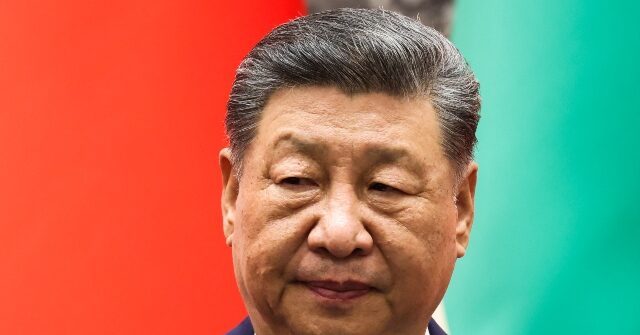
Xi Jinping Courts Cuba’s Castro as Latin America Shifts Right

Xi Jinping sent a message to Raúl Castro reaffirming China's commitment to Cuba amid a conservative shift in Latin American governance that threatens the communist alliance.

AUGUST 12, 2026 AT 9:57 AM

The outreach from Xi to Castro, who formally stepped down from leadership but remains influential within Cuba’s ruling apparatus, signals China’s determination to maintain its foothold in the Western Hemisphere even as the political landscape transforms around it.

The timing of Xi’s communication is notable given the recent electoral victories of right-leaning governments across Latin America, a trend that has alarmed both Beijing and Havana. Several nations in the region have begun reevaluating their relationships with authoritarian regimes and exploring closer ties with Western democracies.

Strategic Alliance Under Pressure

China has invested heavily in Cuba over the past decade, viewing the island as a strategic partner for economic and intelligence operations in proximity to the United States. The relationship has included infrastructure projects, technology transfers, and military cooperation that have raised concerns in Washington.

Castro, though no longer holding official titles, continues to wield considerable influence over Cuba’s Communist Party and its geopolitical orientation. Xi’s direct appeal to the aging revolutionary underscores China’s understanding of where real power still resides in Havana.

Regional Realignment Threatens Communist Stronghold

The rightward shift in Latin American politics has left Cuba increasingly isolated, with fewer regional allies willing to provide economic support or diplomatic cover for the regime’s human rights abuses. Countries that once formed part of a socialist bloc in the region have seen leadership changes that favor free market policies and stronger relations with the United States and Europe.

For Beijing, losing influence in Cuba would represent a significant strategic setback, potentially limiting China’s ability to project power in America’s backyard and reducing access to critical intelligence gathering capabilities.

The Chinese Communist Party has demonstrated repeated willingness to prop up failing authoritarian regimes that serve its geopolitical interests, regardless of the humanitarian cost to local populations.

With information from Breitbart News

Share:
Eleni Papadaki-Van Der Merwe

She was born in 1986 in Johannesburg, South Africa. She is the granddaughter of an immigrant from Crete who settled in the Greek community of Johannesburg (one of the largest in Africa). She holds a bachelor’s degree in International Relations and Political Science from the University of the Witwatersrand (Wits) in Johannesburg and a master’s degree in Journalism from Rhodes University in Grahamstown. She began her career at English-language media outlets in Johannesburg, covering politics and economics, with a focus on issues related to migration and the diaspora. She moved to Athens in 2015 to “return to her roots,” initially to pursue graduate studies, and has remained there permanently. She is married to an Afrikaner; they have two children and live in the southern suburbs of Athens.

The outreach from Xi to Castro, who formally stepped down from leadership but remains influential within Cuba’s ruling apparatus, signals China’s determination to maintain its foothold in the Western Hemisphere even as the political landscape transforms around it.

The timing of Xi’s communication is notable given the recent electoral victories of right-leaning governments across Latin America, a trend that has alarmed both Beijing and Havana. Several nations in the region have begun reevaluating their relationships with authoritarian regimes and exploring closer ties with Western democracies.

Strategic Alliance Under Pressure

China has invested heavily in Cuba over the past decade, viewing the island as a strategic partner for economic and intelligence operations in proximity to the United States. The relationship has included infrastructure projects, technology transfers, and military cooperation that have raised concerns in Washington.

Castro, though no longer holding official titles, continues to wield considerable influence over Cuba’s Communist Party and its geopolitical orientation. Xi’s direct appeal to the aging revolutionary underscores China’s understanding of where real power still resides in Havana.

Regional Realignment Threatens Communist Stronghold

The rightward shift in Latin American politics has left Cuba increasingly isolated, with fewer regional allies willing to provide economic support or diplomatic cover for the regime’s human rights abuses. Countries that once formed part of a socialist bloc in the region have seen leadership changes that favor free market policies and stronger relations with the United States and Europe.

For Beijing, losing influence in Cuba would represent a significant strategic setback, potentially limiting China’s ability to project power in America’s backyard and reducing access to critical intelligence gathering capabilities.

The Chinese Communist Party has demonstrated repeated willingness to prop up failing authoritarian regimes that serve its geopolitical interests, regardless of the humanitarian cost to local populations.

With information from Breitbart News