
Why Does Coburg Torch March Enrage the Left?
A German fraternity leader defended their traditional torchlight procession against accusations of Nazi symbolism, arguing critics ignore key differences and the ceremony's use in modern democratic state protocol.
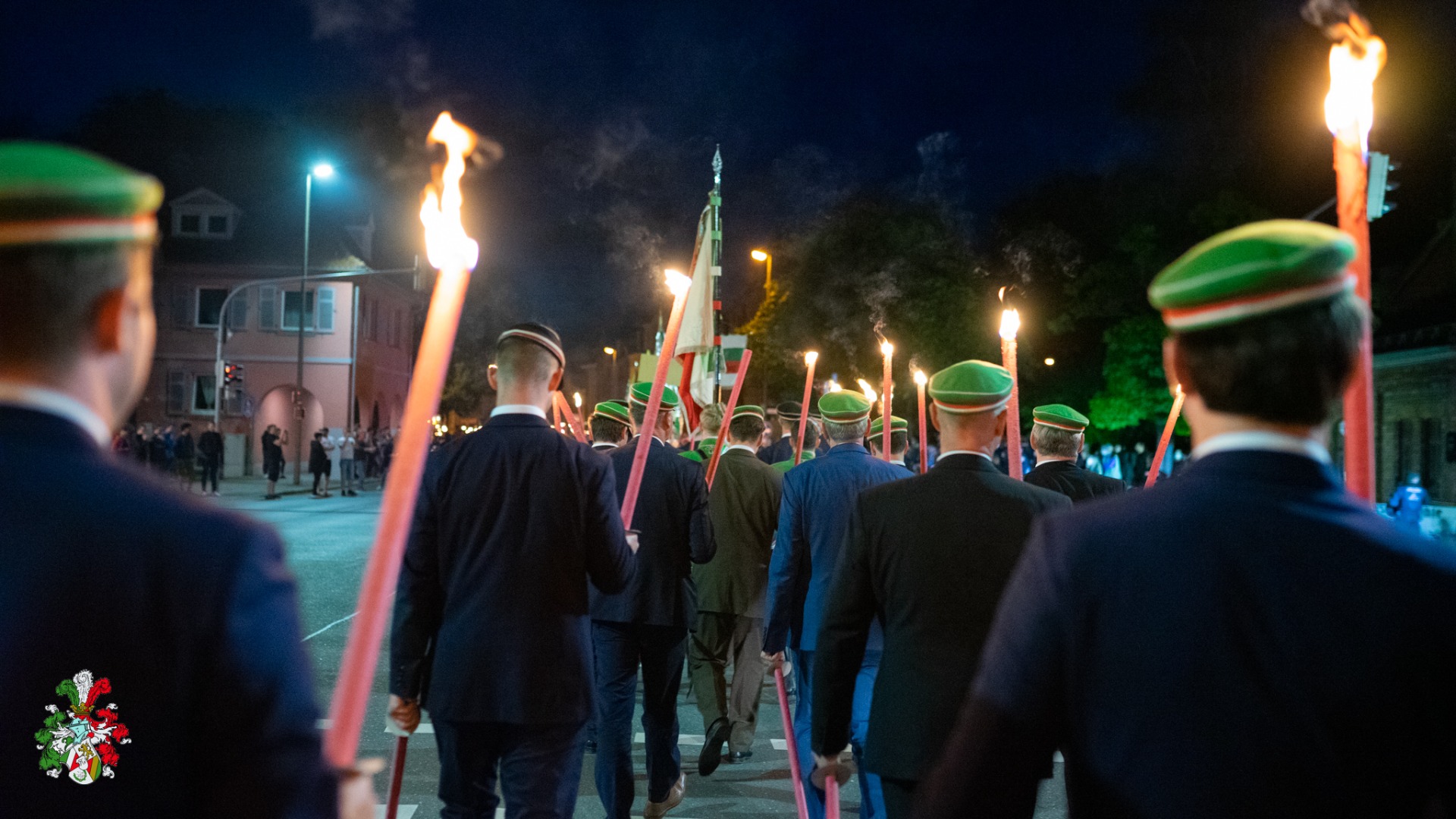

According to Junge Freiheit, Julian Theodor Islinger, a member of the student fraternity Landsmannschaft Mecklenburgia-Rostock zu Hamburg within the Coburger Convent, criticized what he described as repeated attempts by leftist groups and sympathetic media outlets to link the student torchlight march to National Socialism.
Islinger outlined what he characterized as the typical leftist argument: student fraternities are structurally conservative, therefore tend toward the right, and thus allegedly have one foot in National Socialism already. Combined with the fact that torchlight processions represent an aesthetic form also used by the Nazi regime, critics consider their case proven.
The fraternity member dismissed this reasoning as appealing only to those with limited education, noting that such critics deliberately ignore key differences. The colorfully capped groups carrying flags and banners through Coburg’s old town after four days of celebration bear no resemblance to the uniform appearance the Nazi regime sought to project with standardized measurements, goose-stepping, and black uniforms.
Tattoo Ceremony Mirrors State Protocol
The torchlight procession in Coburg follows the format of a military tattoo ceremony, which is used in democratic Germany to bid farewell to chancellors, federal presidents, and other dignitaries, as Junge Freiheit reports. The same ritual is employed at ceremonial oath-taking events and major celebrations of large associations including the Coburger Convent itself.
Anyone who searches for torchlight processions and associations online will quickly discover that such marches with musical accompaniment have remained a continuous tradition in Germany since the end of the National Socialist era, Islinger argued. Various shooting clubs, volunteer fire departments, and even the Protestant Church regularly organize such events, yet these groups are also generally considered structurally conservative.
Critics Rely on Superficial Historical Knowledge
The leftist opposition relies entirely on associations with National Socialism that arise from watching documentaries about the Nazi period while simultaneously lacking interest in actual traditional lineages, associational culture, and contemporary German civic life, according to the analysis. This approach builds on the same shallow worldview that likely forms the basis of their own opposition.
The accusation of proximity to National Socialism, or the transparent attempt to suggest such connections, remains as ridiculous today as it was twenty years ago, Islinger maintained. Such charges can only gain traction where ideological hostility has already been declared or where a lack of education and historical knowledge prevails.
The subjective perception of a martial appearance alone cannot justify questioning a tradition that has developed over more than one hundred years, he concluded.
The Coburger Convent represents one of the largest umbrella organizations of German student fraternities and holds its annual Pentecost Congress in Coburg, attracting fraternity members from across Germany.
With information from Junge Freiheit





