
When Words Change Sides
A Syrian journalist warns that Western progressivism has betrayed its principles by allying with Islamist movements that oppose secularism, feminism, and individual freedoms the left once championed.
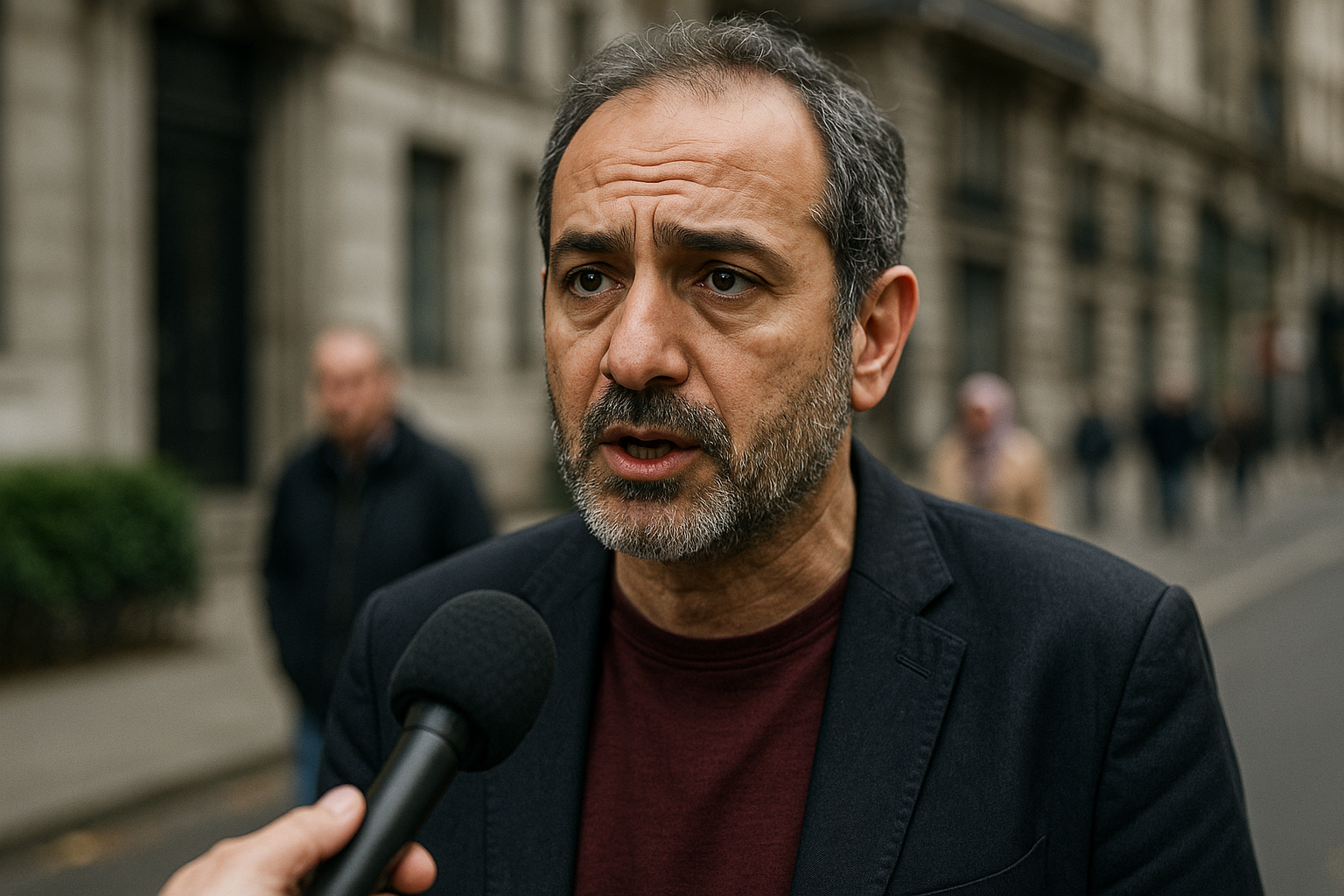

Faraj Alexandre Rifai, writing in Causeur, recounts how the term “progressiste” carried a clear and unambiguous meaning in Syria during his formative years. The word described secularists, democrats, communists, socialists, and feminists—those who championed a society free from religious law. Standing opposite were the Islamists and what Syrians called the “reactionaries.”
According to Causeur, Rifai explains that in Syria, these categories were straightforward. Progressives advocated for individual freedoms, secularism, and gender equality. Islamists, by contrast, viewed such figures as enemies deserving combat, accusing them of Westernizing society and betraying Islam, sometimes even labeling them apostates regardless of their personal faith.
The French Awakening
Born to communist parents and raised in that ideological milieu, Rifai naturally identified with the progressive camp defined by its opposition to Islamists and reactionaries. He believed these terms held universal meaning across cultures and borders. That assumption, he discovered, was fundamentally incorrect.
Upon arriving in France, Rifai initially encountered a left that remained faithful to the battles he had always associated with progressivism: secularism, emancipation, individual liberties, women’s rights, and rejection of all fundamentalisms. This republican left, as it is now termed, reinforced his attachment to the Republic, to France, to freedom of conscience, and to the values of the free world.
But that alignment proved temporary. Over subsequent years, Rifai witnessed a disturbing evolution within a significant portion of the French left. The very movement that had helped him emancipate from Middle Eastern ideological narratives appeared to be abandoning its own foundational principles.
A Rhetorical Reversal
Rifai had fled a region where Islamists were universally regarded as enemies of progress. Gradually, he discovered that segments of the Western left were adopting Islamist rhetoric, causes, and even slogans. More troubling still, some began relativizing or justifying forms of violence and terrorism when framed as acts of “resistance.”
The journalist describes witnessing a complete inversion. Those who had taught him to combat obscurantism were now repeating, often unconsciously, the language, priorities, and battles of Islamist movements they would have previously fought without hesitation.
For years, Rifai believed he had left one world for its opposite. In reality, the words themselves had changed meaning. A Syrian raised in a communist family discovered that the political categories of his youth no longer signified the same things in the West. He continued fighting Islamism as he had in Damascus. What disturbed him was not that Islamism had changed, but that those who had taught him to oppose it no longer viewed it through the same lens.
The Dominant Versus Dominated Framework
In the West, one portion of the left naturally continues defending women’s rights, homosexual rights, religious minorities, and freedom of conscience. However, another increasingly influential segment within universities, media outlets, and certain political parties has substituted these battles with a new interpretive framework: one that systematically opposes “dominants” against “dominated.”
Within this worldview, as Causeur reports, Islamism ceases being analyzed for what it actually represents—a profoundly reactionary political ideology—and instead becomes the supposed expression of an oppressed population.
The consequences are striking. Islamism has not become more progressive. The Muslim Brotherhood continues defending the primacy of religious law. Salafists continue rejecting equality between men and women. Jihadist movements continue presenting the West as a civilizational enemy.
What has changed is not the ideology itself but rather that a portion of Western progressivism has stopped examining this movement for what it truly is: a deeply reactionary force. The examples, Rifai notes, continue multiplying across European societies.
This ideological reversal represents perhaps the most profound betrayal of progressive values in modern Western political history—a development that has left those who fled Islamist oppression in the Middle East watching in dismay as their supposed allies in the West embrace the very forces they escaped.
With information from Causeur





