
When Memory of Slavery Becomes a Political Tool
African nations demand reparations from Europe for the transatlantic slave trade, but the debate omits discussion of African and Arab-Muslim participation in the practice itself.
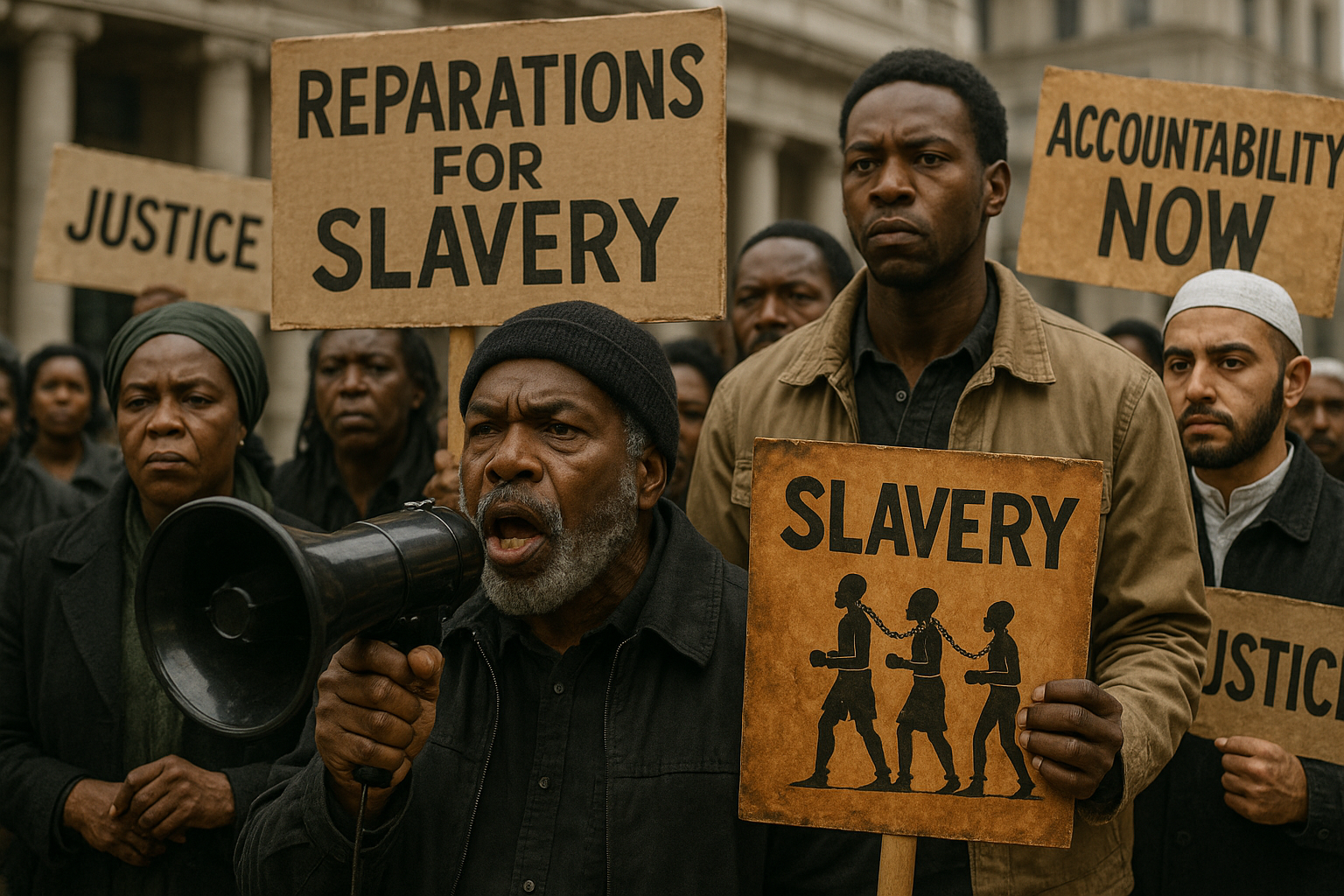

On March 25, 2026, a resolution brought forward by Ghana was adopted at the United Nations General Assembly by 123 votes in favor, 3 against, and 52 abstentions. The text recognizes the transatlantic slave trade as the most serious crime against humanity and calls for reflection on reparations, according to Causeur.
Following this vote, a conference of African and Caribbean states convened in Accra in June and adopted a 19-point plan. The demands include official, complete, and unconditional apologies, financial compensation for African and Afro-descendant populations, creation of a global reparations fund, debt relief or cancellation for affected countries, restitution of cultural objects and human remains held in Western museums, climate justice financing, specific measures for women and girls who were victims of slavery, and mechanisms to facilitate the return of diaspora members to Africa with potential access to citizenship.
While the official document provides no specific monetary figures and names no countries explicitly, the demands clearly target states and institutions that benefited from the transatlantic trade and its legacy. Former European colonial powers stand first in line as nations implicated in organizing a massive, brutal system of deportation that reduced African populations to slavery and from which European and American economies profited enormously.
The Inconvenient Historical Reality
Yet one uncomfortable question deserves serious attention—and remains curiously absent from mainstream media discourse: why should the bill fall exclusively on European nations?
Historical accuracy requires acknowledgment that Europeans did not invent slavery. The institution existed in Africa long before their arrival, just as it did throughout the Mediterranean world, the Middle East, Asia, and numerous other regions. This reality does not minimize European responsibility—the Atlantic trade fundamentally transformed the scale, organization, and economic logic of the phenomenon.
Historians estimate approximately 12.5 million captives were shipped from Africa during the Atlantic slave trade, with nearly 10.7 million surviving the crossing to the Americas. However, the system did not depend on European expeditions penetrating the African interior alone to capture people. European traders relied heavily on African networks for their supply.
As numerous historical studies have demonstrated, captives were brought to coastal trading posts after being taken prisoner during wars, raids, or organized expeditions, then sold to European merchants. This reality does not diminish the responsibility of European slave traders of that era. It simply reminds us that the Atlantic trade was a historical phenomenon involving multiple actors, and it would be reductive to present history as a simple confrontation between Europe as exclusively perpetrator and Africa as exclusively victim.
African Kingdoms and the Slave Trade
Long before the toubab—”white man” in Dioula—arrived in Africa, numerous African kingdoms had already institutionalized slavery.
The Kingdom of Dahomey, located in present-day Benin, constitutes perhaps the most problematic example for a simplistic decolonial reading of history. Research by historian Robin Law shows that the kingdom’s rise to power was intimately linked to the expansion of the slave trade. This monarchy directly participated in organizing the supply chain.
Initially, Dahomey’s kings relied on captives from raids conducted by the army. From the 18th century onward, the kingdom also became an intermediary between interior markets and coastal traders, accumulating wealth and influence through this commerce. The paradox is striking: an African state could derive a substantial portion of its power from trade in human beings.
The Arab-Muslim Dimension
The trans-Saharan and Indian Ocean slave trades, organized primarily by Arab-Muslim traders, transported millions of Africans over more than a millennium. Estimates suggest these routes may have affected between 9 and 17 million people.
Unlike the Atlantic trade, which has been extensively documented and condemned, the Arab-Muslim slave trades have received far less attention in contemporary reparations discourse. Yet these systems operated for centuries, involved systematic castration of male slaves, and created networks of human trafficking that persisted well into the modern era.
Selective Memory and Contemporary Politics
The current push for reparations reveals a troubling pattern of selective historical memory. While European nations face mounting pressure to pay compensation, acknowledge guilt, and restructure international economic relationships, the African elites whose ancestors actively participated in capturing and selling their fellow Africans face no similar accountability.
Similarly, Arab nations whose merchants and rulers built enormous wealth through centuries of slave trading have been entirely exempted from the reparations conversation. No calls for apologies emanate from Accra or the United Nations directed toward Middle Eastern states or the descendants of Arab slave traders.
This one-sided historical narrative serves contemporary political agendas rather than genuine historical justice. If the principle underlying reparations demands is that modern nations must pay for their ancestors’ crimes, then that principle must apply universally—or it applies to no one at all.
A Question of Consistency
The demand that European museums return cultural artifacts while ignoring the role of African kingdoms in wars of conquest raises similar questions of consistency. Should the descendants of Dahomey rulers also return wealth accumulated through slave trading? Should modern Benin compensate the descendants of neighboring peoples raided and sold by Dahomey’s armies?
These questions are not rhetorical exercises. They point to a fundamental problem with the entire reparations framework when applied selectively. History is complex, involving multiple perpetrators and victims across different contexts and time periods. Reducing this complexity to a simple narrative of European guilt and African victimhood does violence to historical truth.
As calls for reparations intensify, Western nations would do well to insist on a complete historical accounting—one that acknowledges all participants in the slave trade, African and Arab as well as European. Anything less represents not justice but political theater designed to extract resources under the guise of historical redress.
With information from Causeur





