Necessary Cookies

Required for the site to function. Cannot be disabled.

Analytics Cookies

Help us understand how visitors interact with our site (Google Analytics via GTM).

Marketing Cookies

Used to track visitors and deliver personalised advertisements.

We use cookies to enhance your browsing experience and analyse site traffic. By clicking Accept All, you consent to our use of cookies. Privacy Policy
NewsFire Global
Home News Europe World Christianity Culture Wars Opinion Video
Information
About Us Authors Advertising Terms & Conditions Privacy Policy Contact
R2B Media
R2B NEWSFIRE.GR PAPAFOTIS.GR THRACTION HELLENIC CONSERVATIVES RIGHT2THEBONE YT
News Europe

Wave the German Flag Proudly: Bundestag Can’t Stop Us

German police visited parliamentarians' offices for displaying the national flag, exposing the political establishment's conflicted relationship with patriotic symbols.
Stefanos Banos
Stefanos Banos Staff Writer
JUNE 9, 2026 AT 1:00 PM

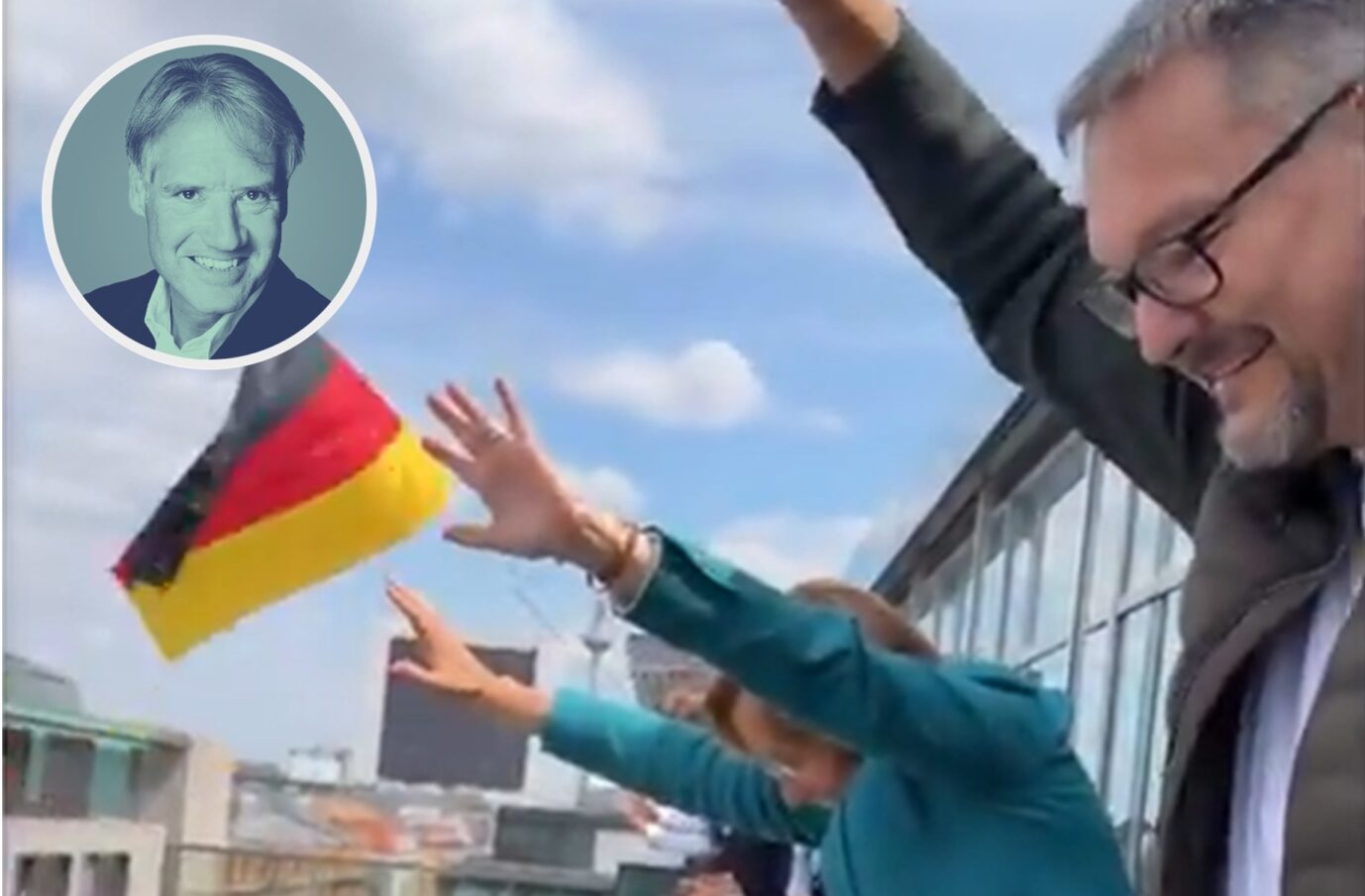
The Bundestag, Germany’s federal parliament and the democratic representation of the German people, dispatched its internal police force to the offices of members who were flying the black-red-gold flag, according to Junge Freiheit. The move has raised serious questions about how detached the country’s representatives have become from normal democratic practice.

In virtually every parliament across the globe, the national flag serves as an expression of sovereignty and democratic legitimacy. Yet in Germany, law enforcement is mobilized when elected officials display their own country’s colors.

The incident calls to mind a notorious moment from September 22, 2013, when then-Chancellor Angela Merkel snatched a small German flag from Hermann Gröhe, her CDU party’s general secretary at the time, and tossed it aside on election night. The gesture revealed to the world the conflicted relationship German political leadership maintains with its own national symbols.

That strained relationship has only deepened. The current leadership presides over a nation in multiple concurrent crises, with economic decline and profound social division marking recent years. Now even the national flag has been cast as something suspect.

Opposition Faces Systematic Marginalization

The flag incident represents just one element of what appears to be a coordinated effort to marginalize opposition voices in the German parliament. Opposition parties face allocation of inadequate meeting space, exclusion from committee chairmanships, and no representation in the Bundestag presidium. Now their members are effectively criminalized for displaying the national flag.

The affected parliamentarians, all from the Alternative for Germany party, responded to the police action with remarkable composure. Video footage they released shows bewilderment but also good humor, with no visible bitterness or aggression. The officers themselves appeared to carry out their orders with evident discomfort, likely embarrassed by the nature of their assignment.

A Symbol of Freedom Reclaimed

The black-red-gold flag has served for centuries as a symbol of freedom in German lands. That heritage should not be surrendered to political elites who view expressions of national identity with suspicion or hostility.

The timing is notable. With the World Cup beginning in days, German streets show far fewer national flags than in previous tournament years. This reflects both declining identification with an overly politicized national team and deliberate efforts by left-wing groups in past years to remove flags from vehicles.

By sending police after flag-displaying parliamentarians, the Bundestag leadership has effectively aligned itself with those who view patriotic expression as problematic. The incident demonstrates how far removed from normal democratic practice German political culture has drifted.

The word that opens Germany’s national anthem is “Einigkeit” — unity. Those who respond to division and harassment with more of the same only deepen fractures. The composed reaction of the targeted parliamentarians offers a better model: maintaining good spirits and refusing to be intimidated out of legitimate patriotic expression.

With information from Junge Freiheit

Share:
Stefanos Banos
Stefanos Banos

Stefanos Banos was born in Piraeus and is an editor at NewsFire.GR, specializing in political analysis and international relations. He graduated from the Department of Communication and Media at the University of Bremen in Germany, where he also completed his Master of Arts in Communication and Media Studies. Married to Zoi, he is a proud father of three boys.

The Bundestag, Germany’s federal parliament and the democratic representation of the German people, dispatched its internal police force to the offices of members who were flying the black-red-gold flag, according to Junge Freiheit. The move has raised serious questions about how detached the country’s representatives have become from normal democratic practice.

In virtually every parliament across the globe, the national flag serves as an expression of sovereignty and democratic legitimacy. Yet in Germany, law enforcement is mobilized when elected officials display their own country’s colors.

The incident calls to mind a notorious moment from September 22, 2013, when then-Chancellor Angela Merkel snatched a small German flag from Hermann Gröhe, her CDU party’s general secretary at the time, and tossed it aside on election night. The gesture revealed to the world the conflicted relationship German political leadership maintains with its own national symbols.

Ohne Worte 🇩🇪🇩🇪🇩🇪@Beatrix_vStorch @StefanKeuterAfD pic.twitter.com/WeUYBf8zHX

— Pierre Lamely (@Pierre_Lamely) June 8, 2026

That strained relationship has only deepened. The current leadership presides over a nation in multiple concurrent crises, with economic decline and profound social division marking recent years. Now even the national flag has been cast as something suspect.

Opposition Faces Systematic Marginalization

The flag incident represents just one element of what appears to be a coordinated effort to marginalize opposition voices in the German parliament. Opposition parties face allocation of inadequate meeting space, exclusion from committee chairmanships, and no representation in the Bundestag presidium. Now their members are effectively criminalized for displaying the national flag.

The affected parliamentarians, all from the Alternative for Germany party, responded to the police action with remarkable composure. Video footage they released shows bewilderment but also good humor, with no visible bitterness or aggression. The officers themselves appeared to carry out their orders with evident discomfort, likely embarrassed by the nature of their assignment.

A Symbol of Freedom Reclaimed

The black-red-gold flag has served for centuries as a symbol of freedom in German lands. That heritage should not be surrendered to political elites who view expressions of national identity with suspicion or hostility.

The timing is notable. With the World Cup beginning in days, German streets show far fewer national flags than in previous tournament years. This reflects both declining identification with an overly politicized national team and deliberate efforts by left-wing groups in past years to remove flags from vehicles.

By sending police after flag-displaying parliamentarians, the Bundestag leadership has effectively aligned itself with those who view patriotic expression as problematic. The incident demonstrates how far removed from normal democratic practice German political culture has drifted.

The word that opens Germany’s national anthem is “Einigkeit” — unity. Those who respond to division and harassment with more of the same only deepen fractures. The composed reaction of the targeted parliamentarians offers a better model: maintaining good spirits and refusing to be intimidated out of legitimate patriotic expression.

With information from Junge Freiheit

