
Von der Leyen Backs Social Media Ban for Under-13s
The European Commission plans to ban social media for children under 13 using a mandatory EU age verification app that critics fear could enable broader digital identity control.
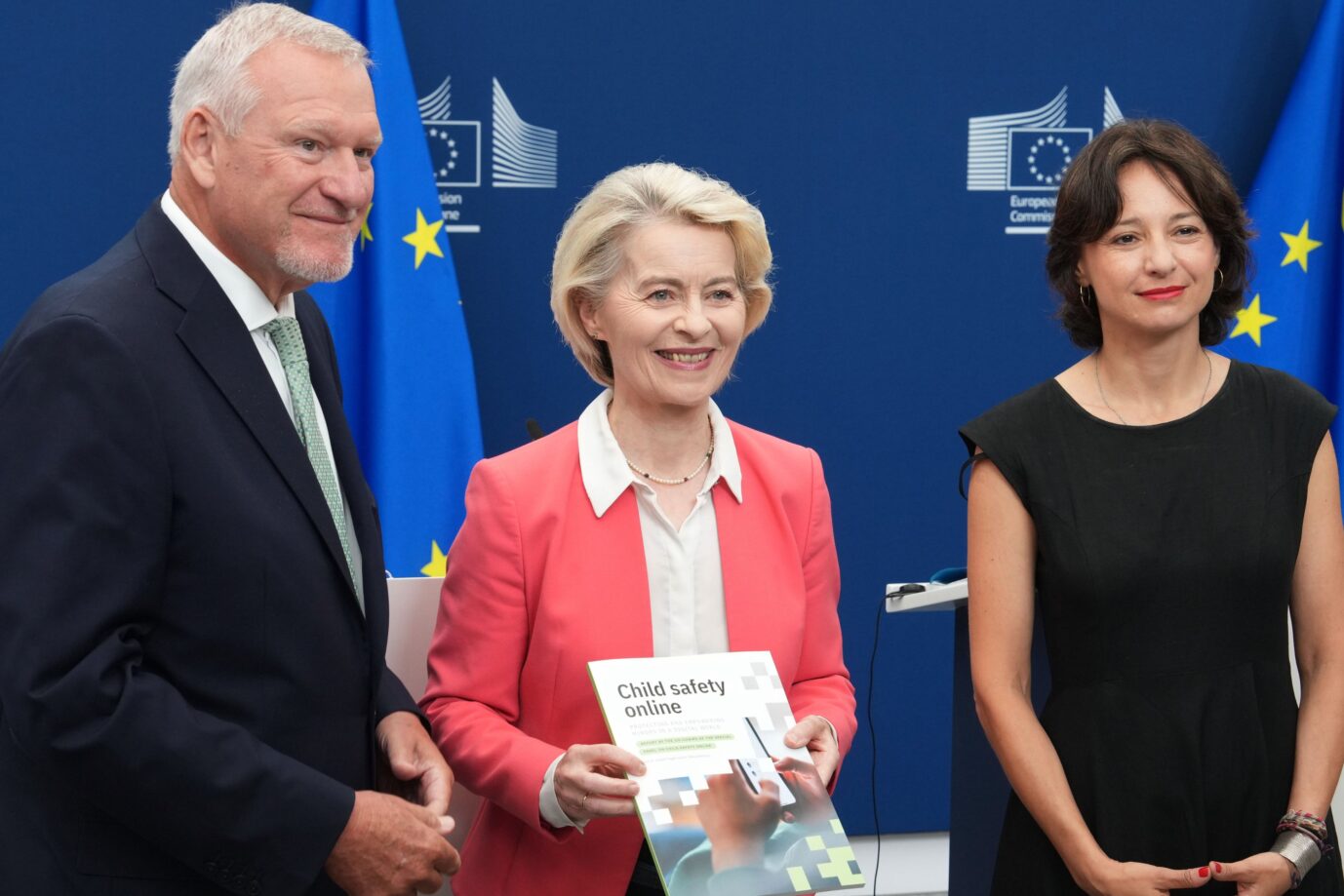

Commission President Ursula von der Leyen revealed the proposal at a press conference in Brussels on Monday, stating she would present formal legislation after the summer to restrict minors’ access to social platforms, according to Junge Freiheit. The 67-year-old CDU politician declared that social media is not a toy and insisted age-appropriate restrictions are necessary.
The enforcement mechanism centers on widespread adoption of an EU age verification application, which von der Leyen characterized as simple and privacy-compliant. She claimed the tool would place power back in parents’ hands, though the proposal has raised concerns about government overreach and the creation of centralized digital identification infrastructure.
Big Tech Blamed for Youth Mental Health Crisis
Von der Leyen accused major technology companies of fostering dependency among young users for commercial gain, holding Big Tech responsible for what she described as psychological damage, addiction and misery caused by unrestricted access to children. She pointed to screen times of four to six hours daily among young people as evidence of rising rates of depression, anxiety, cyberbullying and exposure to harmful content.
The Commission chief warned these conditions endanger brain development in adolescents. Her proposed solution extends beyond a simple age 13 cutoff, with tiered access restrictions envisioned for older cohorts as well. Under a so-called Social Media Plus program, even 15 and 16-year-olds would gain only gradual access to certain websites and content, according to Junge Freiheit.
EUDI Digital Wallet Emerges as Enforcement Tool
While von der Leyen stated she would keep technical implementation details open until September, the planned EU Digital Identity Wallet, known as EUDI Wallet, has been identified as the likely enforcement mechanism. The digital wallet system is scheduled to become available in Germany and across the bloc beginning in early 2027.
Users would theoretically prove minimum age without sharing personal data such as names or birthdates with platforms. The Commission president compared the cultural shift required to past public safety measures like banning drunk driving or mandating seatbelts, though critics note those analogies involved physical safety measures rather than digital identity tracking systems.
Following Australia’s Lead
Von der Leyen cited Australia as a model, where a social media ban for those under 16 took effect in December. Several European nations including Denmark, France, Greece and Spain are pursuing similar restrictions. Austria implemented a ban for those under 14 in March, while British Prime Minister Keir Starmer recently defended planned restrictions for under-16s by claiming the government was giving children back their childhood.
In Germany, the debate has gained momentum with Education Minister Karin Prien recommending restrictions for those under 13, while the SPD demands a ban for children under 14. Former Rhineland-Palatinate Minister President Alexander Schweitzer declared in February that self-regulation by platforms has failed.
Expert Panel Led by German Government Advisor
The Commission’s proposal follows recommendations from an expert panel composed of lawyers, scientists, health professionals, IT specialists and children’s rights advocates who worked on the report over four months under the designation Child Safety Online. Von der Leyen presented the plan alongside two report authors, university professor Jörg Fegert and social epidemiologist Maria Melchior.
Fegert, a German child and adolescent psychiatrist who directs the Center of Excellence for Child Protection in Medicine in Baden-Württemberg, has chaired the Scientific Advisory Board of the Federal Ministry for Family Affairs since 2017. His dual role positions him to play a significant part in implementing any ban within Germany, as Junge Freiheit reports.
Major platforms including YouTube, Instagram, TikTok and Snapchat already fall under the European Digital Services Act, with Article 28 requiring providers to take appropriate measures to protect minors. Many services already stipulate minimum age requirements of 13 in their terms of service, though enforcement has been lax. The Commission is currently pursuing proceedings against Meta over compliance issues.
With information from Junge Freiheit





