Necessary Cookies

Required for the site to function. Cannot be disabled.

Analytics Cookies

Help us understand how visitors interact with our site (Google Analytics via GTM).

Marketing Cookies

Used to track visitors and deliver personalised advertisements.

We use cookies to enhance your browsing experience and analyse site traffic. By clicking Accept All, you consent to our use of cookies. Privacy Policy
NewsFire Global
Home News Europe World Christianity Culture Wars Opinion Video
Information
About Us Authors Advertising Terms & Conditions Privacy Policy Contact
R2B Media
R2B NEWSFIRE.GR PAPAFOTIS.GR THRACTION HELLENIC CONSERVATIVES RIGHT2THEBONE YT
News World

Turkey Buys El Salvador Ports as Washington Stays Silent

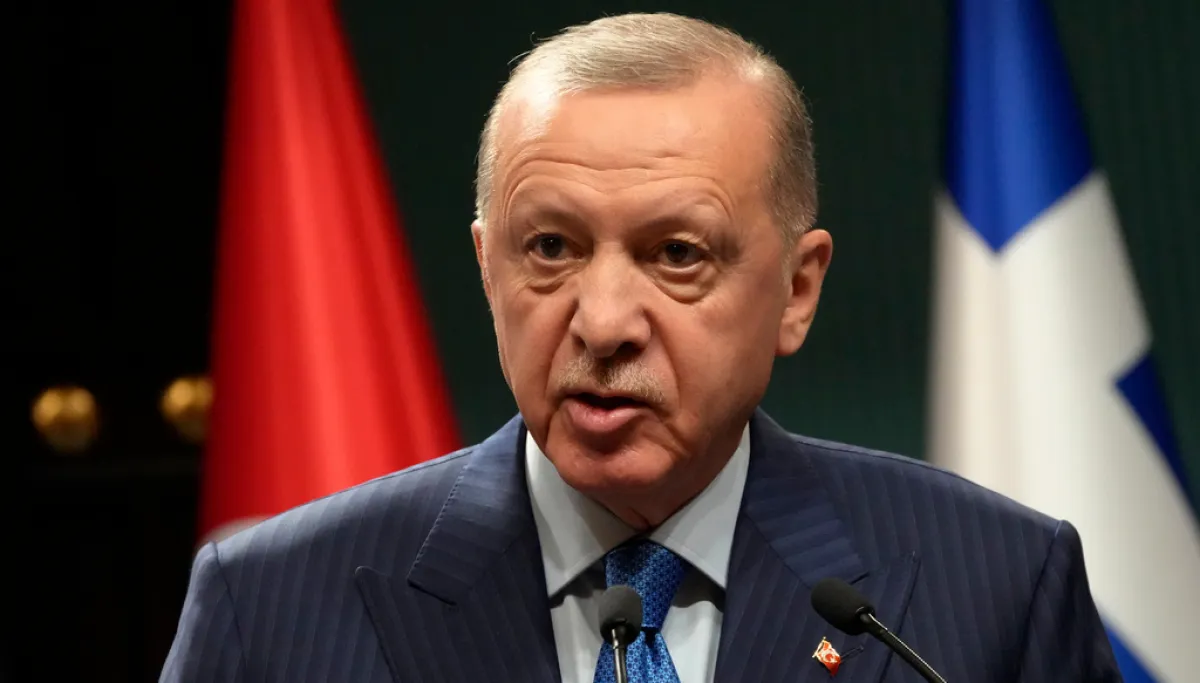
Turkey's acquisition of major ports across Latin America, including a $1.62 billion deal for El Salvador's facilities, challenges U.S. interests as Ankara gains control of critical maritime infrastructure.

AUGUST 17, 2026 AT 3:49 PM

A Turkish maritime conglomerate has secured the largest private investment in El Salvador’s history, according to Jose Lev Alvarez writing in Washington Examiner. Yilport, owned by Yıldırım Holding, finalized a $1.62 billion agreement to modernize and jointly operate El Salvador’s Acajutla and La Union ports under a 50-year concession. The deal aims to triple Acajutla’s capacity while reviving the dormant La Union facility.

The Salvadoran ports represent only the latest phase of Turkey’s hemispheric maritime expansion. Yilport already controls terminals at Ecuador’s Puerto Bolivar, Peru’s Paita, and Guatemala’s Puerto Quetzal. Meanwhile, Global Ports Holding, another Turkish operator, manages five Caribbean facilities including the San Juan Cruise Port in Puerto Rico, a U.S. territory.
Turkish Infrastructure Underpins Regional Strategy

These port acquisitions form the physical backbone of President Recep Tayyip Erdogan’s expanding neo-Ottoman ambitions beyond the Middle East and North Africa. Turkish firms currently hold $1.3 billion in investment stock across Latin America, while Turkish contractors have completed $1.6 billion in regional infrastructure projects. Bilateral trade between Turkey and Latin America has surged from roughly $1 billion in the early 2000s to more than $14 billion today, driven by rising Turkish exports in vehicles, steel, and industrial goods.

Critically, Turkish capital now controls Pacific and Caribbean logistics nodes that feed directly into North American supply chains, creating dependencies that extend far beyond ordinary commercial relationships.

Power Plants, Defense Ties, and Diplomatic Networks

Ports constitute only one element of Ankara’s strategic advance. Karpowership floating power plants currently deliver a quarter of Cuba’s electricity, manufacturing dependency inside a hostile regime. Turkish defense companies have established regional offices, signed aerospace agreements, and marketed armored vehicles throughout the hemisphere. Twenty Turkish embassies now operate across Latin America, providing the diplomatic infrastructure to reinforce Ankara’s growing commercial and strategic footprint.

Erdogan also wields a less visible instrument of influence through historical connections. Between 1860 and 1920, hundreds of thousands of Ottoman subjects—largely Arab Christians fleeing Turkish oppression in Syria, Lebanon, and the Land of Israel—arrived in Latin America carrying Ottoman passports. Locals labeled these immigrants “Los Turcos.” Their descendants number in the millions today and include Salvadoran President Nayib Bukele, former Paraguayan President Mario Abdo Benítez, Dominican President Luis Abinader, and cultural figures such as Shakira.

Ankara Cultivates Diaspora Influence

Turkey’s Directorate of Turks Abroad and Related Communities now conducts official research into these communities, incorporating them into Ankara’s conception of an extended global family. Erdogan is layering soft power atop hard infrastructure, with historical connections and diplomatic outreach reinforcing Turkish ports, power projects, defense relationships, and commercial investments.

Bukele’s government approved the Yilport agreement after years of direct Turkish courtship. Viewed separately, each initiative resembles ordinary trade, investment, or cultural diplomacy. Viewed together, they reveal Ankara’s accumulating strategic access across America’s immediate neighborhood.

Intelligence Vulnerabilities and Strategic Threats

From an intelligence perspective, Turkish-operated ports on southern maritime approaches create acute vulnerabilities for the United States. Ankara gains legitimate access to shipping manifests and container data bound for American shores. Simultaneously, Turkish power contracts in Cuba establish a hostile physical presence near vital undersea cables, while diaspora cultivation expands regional political leverage.

To counter Ankara’s expanding reach, Alvarez argues Washington must activate a modern Monroe Doctrine. First, the Coast Guard should deny port entry to vessels utilizing Turkish-operated Latin American terminals. Second, Congress must mandate secondary sanctions on maritime organizations underwriting Yilport assets. Finally, the State Department should revoke visas for officials supporting Ankara’s “Los Turcos” mapping initiatives.

Beachhead for Islamist Networks

American complacency has handed Erdogan uncontested ground in the Western Hemisphere. Allowing these commercial beachheads to solidify gives Turkey a platform to export its state-sponsored Muslim Brotherhood ideology. Erdogan’s Islamist networks actively subvert regional institutions, transforming commercial access into permanent intelligence architecture on America’s doorstep. Washington must dismantle these adversarial outposts before the threat becomes irreversible.

With information from Washington Examiner

Share:
Eleni Papadaki-Van Der Merwe

She was born in 1986 in Johannesburg, South Africa. She is the granddaughter of an immigrant from Crete who settled in the Greek community of Johannesburg (one of the largest in Africa). She holds a bachelor’s degree in International Relations and Political Science from the University of the Witwatersrand (Wits) in Johannesburg and a master’s degree in Journalism from Rhodes University in Grahamstown. She began her career at English-language media outlets in Johannesburg, covering politics and economics, with a focus on issues related to migration and the diaspora. She moved to Athens in 2015 to “return to her roots,” initially to pursue graduate studies, and has remained there permanently. She is married to an Afrikaner; they have two children and live in the southern suburbs of Athens.

A Turkish maritime conglomerate has secured the largest private investment in El Salvador’s history, according to Jose Lev Alvarez writing in Washington Examiner. Yilport, owned by Yıldırım Holding, finalized a $1.62 billion agreement to modernize and jointly operate El Salvador’s Acajutla and La Union ports under a 50-year concession. The deal aims to triple Acajutla’s capacity while reviving the dormant La Union facility.

The Salvadoran ports represent only the latest phase of Turkey’s hemispheric maritime expansion. Yilport already controls terminals at Ecuador’s Puerto Bolivar, Peru’s Paita, and Guatemala’s Puerto Quetzal. Meanwhile, Global Ports Holding, another Turkish operator, manages five Caribbean facilities including the San Juan Cruise Port in Puerto Rico, a U.S. territory.

Turkish Infrastructure Underpins Regional Strategy

These port acquisitions form the physical backbone of President Recep Tayyip Erdogan’s expanding neo-Ottoman ambitions beyond the Middle East and North Africa. Turkish firms currently hold $1.3 billion in investment stock across Latin America, while Turkish contractors have completed $1.6 billion in regional infrastructure projects. Bilateral trade between Turkey and Latin America has surged from roughly $1 billion in the early 2000s to more than $14 billion today, driven by rising Turkish exports in vehicles, steel, and industrial goods.

Critically, Turkish capital now controls Pacific and Caribbean logistics nodes that feed directly into North American supply chains, creating dependencies that extend far beyond ordinary commercial relationships.

Power Plants, Defense Ties, and Diplomatic Networks

Ports constitute only one element of Ankara’s strategic advance. Karpowership floating power plants currently deliver a quarter of Cuba’s electricity, manufacturing dependency inside a hostile regime. Turkish defense companies have established regional offices, signed aerospace agreements, and marketed armored vehicles throughout the hemisphere. Twenty Turkish embassies now operate across Latin America, providing the diplomatic infrastructure to reinforce Ankara’s growing commercial and strategic footprint.

Erdogan also wields a less visible instrument of influence through historical connections. Between 1860 and 1920, hundreds of thousands of Ottoman subjects—largely Arab Christians fleeing Turkish oppression in Syria, Lebanon, and the Land of Israel—arrived in Latin America carrying Ottoman passports. Locals labeled these immigrants “Los Turcos.” Their descendants number in the millions today and include Salvadoran President Nayib Bukele, former Paraguayan President Mario Abdo Benítez, Dominican President Luis Abinader, and cultural figures such as Shakira.

Ankara Cultivates Diaspora Influence

Turkey’s Directorate of Turks Abroad and Related Communities now conducts official research into these communities, incorporating them into Ankara’s conception of an extended global family. Erdogan is layering soft power atop hard infrastructure, with historical connections and diplomatic outreach reinforcing Turkish ports, power projects, defense relationships, and commercial investments.

Bukele’s government approved the Yilport agreement after years of direct Turkish courtship. Viewed separately, each initiative resembles ordinary trade, investment, or cultural diplomacy. Viewed together, they reveal Ankara’s accumulating strategic access across America’s immediate neighborhood.

Intelligence Vulnerabilities and Strategic Threats

From an intelligence perspective, Turkish-operated ports on southern maritime approaches create acute vulnerabilities for the United States. Ankara gains legitimate access to shipping manifests and container data bound for American shores. Simultaneously, Turkish power contracts in Cuba establish a hostile physical presence near vital undersea cables, while diaspora cultivation expands regional political leverage.

To counter Ankara’s expanding reach, Alvarez argues Washington must activate a modern Monroe Doctrine. First, the Coast Guard should deny port entry to vessels utilizing Turkish-operated Latin American terminals. Second, Congress must mandate secondary sanctions on maritime organizations underwriting Yilport assets. Finally, the State Department should revoke visas for officials supporting Ankara’s “Los Turcos” mapping initiatives.

Beachhead for Islamist Networks

American complacency has handed Erdogan uncontested ground in the Western Hemisphere. Allowing these commercial beachheads to solidify gives Turkey a platform to export its state-sponsored Muslim Brotherhood ideology. Erdogan’s Islamist networks actively subvert regional institutions, transforming commercial access into permanent intelligence architecture on America’s doorstep. Washington must dismantle these adversarial outposts before the threat becomes irreversible.

With information from Washington Examiner

