Trump’s Strategic Unpredictability: Madman Theory in Action
A foreign policy scholar argues Trump employs the "madman theory," deliberately feigning irrationality to unsettle opponents and extract concessions through strategic unpredictability.
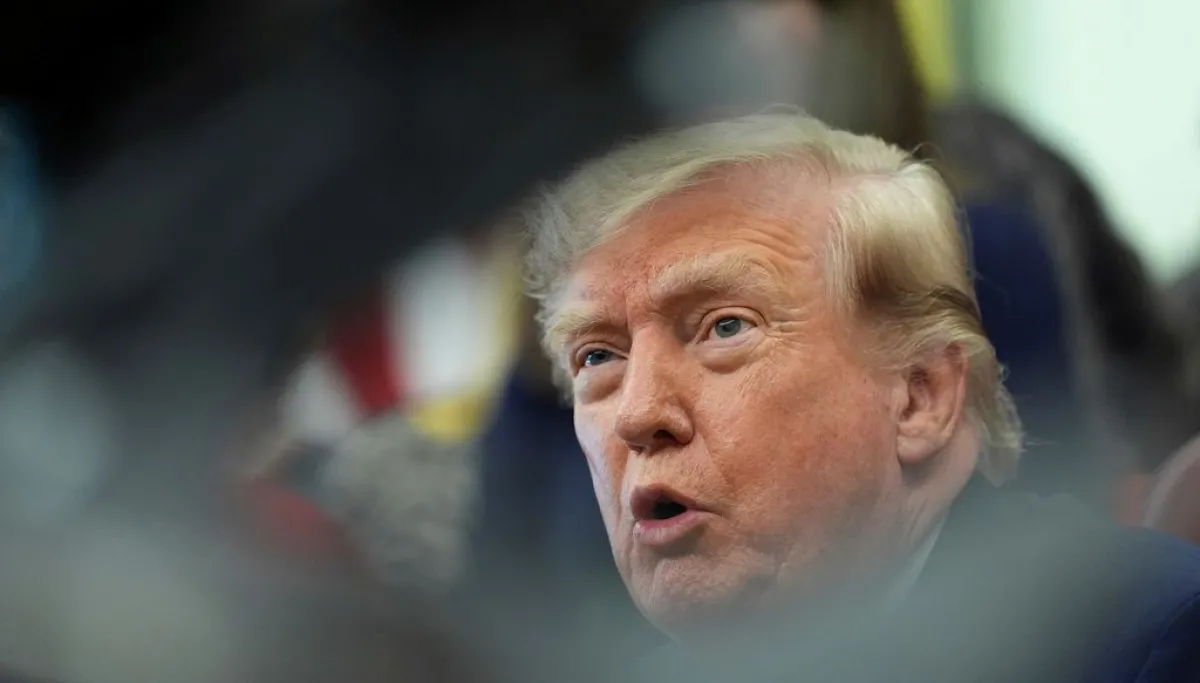

President Donald Trump’s confrontational approach to Iran and other international challenges may appear erratic to critics, but a leading foreign policy scholar argues the commander-in-chief is employing a calculated strategy rooted in Cold War-era diplomatic tactics.
According to Dr. James D. Boys writing in Washington Examiner, Trump is deliberately embracing what experts call the “madman theory” — a coercive bargaining technique where a rational leader feigns irrationality to unsettle opponents and extract favorable concessions through threats of disproportionate force.
While President Richard Nixon deployed this approach selectively and covertly during his administration, Trump has made it a centerpiece of his foreign policy, wielding it openly and consistently across multiple international theaters.
The strategy represents an extreme departure from conventional diplomatic practice, as Dr. Boys outlines in his new book, US Grand Strategy and the Madman Theory. By intentionally undermining established protocols with provocative actions, the approach creates strategic uncertainty that keeps adversaries and allies alike guessing about American intentions.
The track record suggests tangible results. During his first term, Trump leveraged this unpredictability to secure the United States-Mexico-Canada Agreement replacing NAFTA, renegotiate trade arrangements with Japan and South Korea, and pressure NATO members into substantially increasing their defense contributions.
In his current term, the president continues deploying what the White House describes as “purposeful strategic ambiguity” to challenge the international status quo and pursue sweeping changes on compressed timelines. This approach ensures no foreign power can confidently dismiss Trump’s pledges as mere bluster, regardless of how extreme they may initially appear.
The administration has demonstrated willingness to follow through on threats that observers initially dismissed as negotiating postures: withdrawing from international agreements, imposing comprehensive tariffs on allies and adversaries, authorizing strikes on Iran’s nuclear infrastructure, and conditioning Ukraine support on access to rare earth mineral deposits.


The international community has repeatedly underestimated Trump’s commitment to policy positions he has maintained for decades, mistaking long-held convictions for temporary bargaining tactics.
Yet sustaining this strategy through the remainder of his presidency presents significant challenges, Dr. Boys warns. As Trump’s methods become more familiar and his remaining time in office diminishes, adversaries may grow more willing to test American resolve and call what they perceive as bluffs.
The madman theory contains inherent contradictions that could undermine its effectiveness. If an opponent dismisses the threat as empty rhetoric, the bluffing nation faces difficult escalation choices. Conversely, if adversaries take threats at face value, they might launch preemptive strikes to neutralize perceived dangers before facing attack themselves.
Perhaps most paradoxically, convincing opponents that a leader is genuinely irrational raises questions about whether meaningful negotiations could ever resolve tensions peacefully. The strategy depends on projecting irrationality while simultaneously relying on rational diplomatic processes to de-escalate crises.
Only Trump himself knows the full extent to which he consciously employs madman theory tactics. As America’s political divisions deepen, partisan interpretations of presidential actions increasingly cloud objective analysis of whether Trump’s moves represent genuine instability or calculated strategic choices.
Understanding the madman theory and recognizing its application in Trump’s decision-making remains essential for accurately interpreting American actions on the global stage, particularly as the gap between perceived madness and deliberate strategy grows wider in an polarized political environment.
Dr. James D. Boys serves as senior research fellow at the Centre on US Politics at University College London. His analysis draws from his latest book examining American grand strategy and the madman theory, published by Manchester University Press.
With information from Washington Examiner