Necessary Cookies

Required for the site to function. Cannot be disabled.

Analytics Cookies

Help us understand how visitors interact with our site (Google Analytics via GTM).

Marketing Cookies

Used to track visitors and deliver personalised advertisements.

We use cookies to enhance your browsing experience and analyse site traffic. By clicking Accept All, you consent to our use of cookies. Privacy Policy
NewsFire Global
Home News Europe World Christianity Culture Wars Opinion Video
Information
About Us Authors Advertising Terms & Conditions Privacy Policy Contact
R2B Media
R2B NEWSFIRE.GR PAPAFOTIS.GR THRACTION HELLENIC CONSERVATIVES RIGHT2THEBONE YT
News World

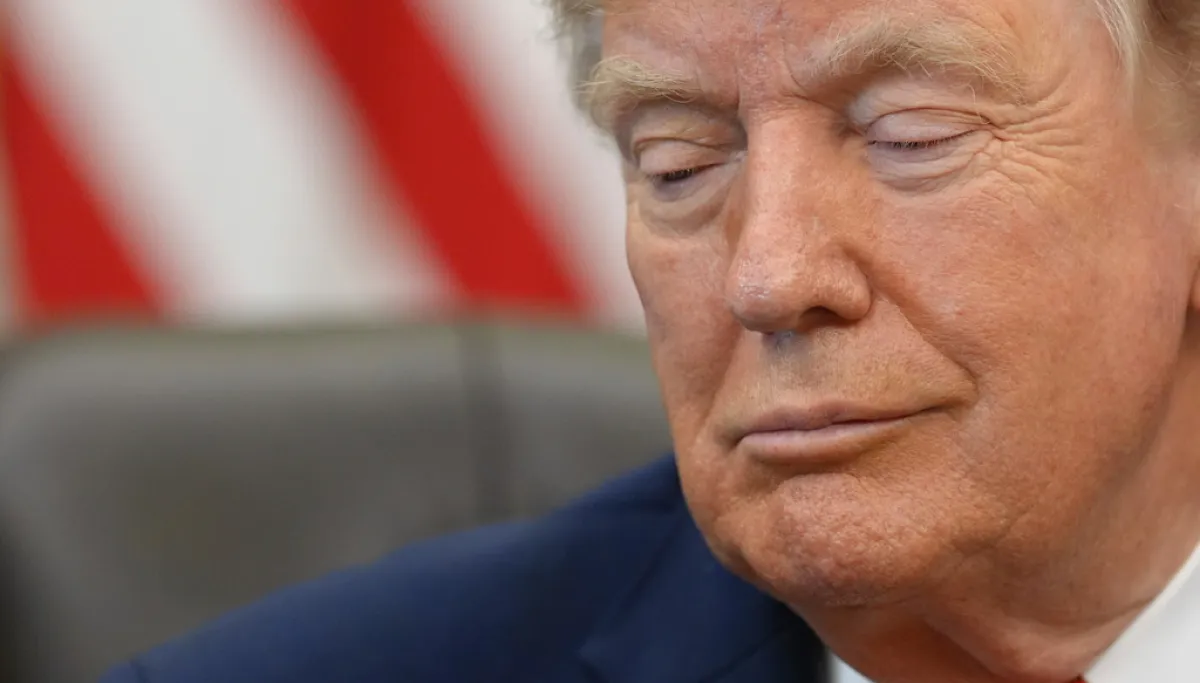
Trump’s Patchwork Presidency: Pressure Without Permanence

Trump's second-term foreign policy produces tactical wins on Panama, Greenland and Canada but risks leaving temporary fixes rather than durable strategic achievements, warns Washington Examiner analysis.
Stefanos Banos
Stefanos Banos Staff Writer
JULY 3, 2026 AT 6:13 PM

Writing in Washington Examiner, Jose Lev Alvarez contends that Trump’s operational pattern follows a consistent script: when decisive victory proves elusive, he declares success and moves forward, leaving unresolved questions in his wake. This approach, Alvarez warns, could damage Republican prospects in the approaching midterm elections and complicate any future presidential ambitions of Vice President JD Vance.

The Panama situation illustrates the problem. Trump addressed legitimate concerns about China’s substantial share of global cargo operations and pressured Panama to withdraw from Beijing’s Belt and Road Initiative. He secured a February 2026 Supreme Court decision invalidating China’s Hutchison concession and obtained troop rotation rights for American forces. Yet no binding treaty anchors these gains, leaving open the possibility that a future nationalist government in Panama could reverse course and restore Chinese access.

Greenland represents a similar pattern. Tariff pressure and military positioning yielded a Davos framework that grants Washington partial veto authority over mineral development. However, full acquisition never materialized, and the placement of the Golden Dome remains unsettled. Denmark’s limited sovereignty continues to leave Arctic access points vulnerable to Russian and Chinese pressure.
Canada received the “51st state” treatment, with Trump imposing 25 percent tariffs on non-energy goods over border security failures and fentanyl trafficking. Ottawa complied, but no permanent economic integration resulted. The tariffs extracted short-term behavioral changes rather than fundamental geopolitical realignment—leverage that must be renewed monthly rather than power established for the long term.

Venezuela delivered a genuine tactical success when American forces apprehended former dictator Nicolás Maduro earlier this year and redirected three billion dollars in oil revenues into Washington-controlled accounts. Despite this achievement, Trump has neither established a democratic succession nor dismantled the Chavismo movement that continues to shape Venezuelan politics.

Maximum pressure campaigns and Israeli military strikes compelled Iran to sign a 14-point memorandum on June 17, 2026. The agreement paused hostilities and temporarily eased commercial traffic through the Strait of Hormuz. However, it left Tehran’s nuclear stockpile and proxy networks intact, deferring both issues to 60-day negotiations that the mullahs can extend indefinitely. Alvarez characterizes this not as victory but as another temporary arrangement accompanied by favorable press coverage.

Cuba continues absorbing secondary sanctions and power outages without policy changes. Iran will likely demonstrate similar resistance once American pressure diminishes.

Across these various theaters, immediate leverage has displaced institutional outcomes. Court decisions without supporting treaties, frameworks without territorial transfers, and compressed timelines without genuine brinkmanship all invite reversal once American pressure subsides. Trump’s deals create momentum and project durability until media attention shifts elsewhere.

Alvarez proposes two structural solutions for Congress to consider. A Hemispheric Chokepoint Security Act would establish renewable 99-year U.S. basing rights at the Panama Canal and Greenland, financed exclusively through seized Venezuelan oil revenues. A Continental Economic Zone could deepen Canada’s integration into American defense and trade structures without formal statehood. The Trump administration should also launch Periphery Accords for the Americas—modeled on the Abraham Accords—binding the United States, Israel, and regional partners through intelligence sharing to counter Iran’s international capacity development.

The fundamental weakness lies exposed. Trump demonstrated that concentrated pressure forces adversaries to yield. Without permanence, however, the results amount to political theater rather than strategic transformation.

North Korea provided the cautionary precedent in 2018. Summit spectacle satisfied Trump’s desire for historic imagery, then dissolved into silence as Kim Jong Un’s nuclear program continued developing beyond public scrutiny. Iran now confronts the same trajectory. When a crisis loses its urgency or novelty, the White House declares success and redirects attention elsewhere.

A presidency built on temporary patches mistakes tactical pauses for strategic conquest, leaving Republicans to manage the consequences. The midterm elections will determine whether Trump constructed durable institutions or merely capitalized on the transient power of personal brand recognition.

Jose Lev Alvarez is an American-Israeli scholar specializing in international security policy. A multilingual veteran of both IDF special forces and the U.S. Army, he holds three master’s degrees and is completing doctoral studies in Intelligence and Global Security in the Washington area.

With information from Washington Examiner
Share:
Stefanos Banos
Stefanos Banos

Stefanos Banos was born in Piraeus and is an editor at NewsFire.GR, specializing in political analysis and international relations. He graduated from the Department of Communication and Media at the University of Bremen in Germany, where he also completed his Master of Arts in Communication and Media Studies. Married to Zoi, he is a proud father of three boys.

Writing in Washington Examiner, Jose Lev Alvarez contends that Trump’s operational pattern follows a consistent script: when decisive victory proves elusive, he declares success and moves forward, leaving unresolved questions in his wake. This approach, Alvarez warns, could damage Republican prospects in the approaching midterm elections and complicate any future presidential ambitions of Vice President JD Vance.

The Panama situation illustrates the problem. Trump addressed legitimate concerns about China’s substantial share of global cargo operations and pressured Panama to withdraw from Beijing’s Belt and Road Initiative. He secured a February 2026 Supreme Court decision invalidating China’s Hutchison concession and obtained troop rotation rights for American forces. Yet no binding treaty anchors these gains, leaving open the possibility that a future nationalist government in Panama could reverse course and restore Chinese access.

Greenland represents a similar pattern. Tariff pressure and military positioning yielded a Davos framework that grants Washington partial veto authority over mineral development. However, full acquisition never materialized, and the placement of the Golden Dome remains unsettled. Denmark’s limited sovereignty continues to leave Arctic access points vulnerable to Russian and Chinese pressure.

Canada received the “51st state” treatment, with Trump imposing 25 percent tariffs on non-energy goods over border security failures and fentanyl trafficking. Ottawa complied, but no permanent economic integration resulted. The tariffs extracted short-term behavioral changes rather than fundamental geopolitical realignment—leverage that must be renewed monthly rather than power established for the long term.

Venezuela delivered a genuine tactical success when American forces apprehended former dictator Nicolás Maduro earlier this year and redirected three billion dollars in oil revenues into Washington-controlled accounts. Despite this achievement, Trump has neither established a democratic succession nor dismantled the Chavismo movement that continues to shape Venezuelan politics.

Maximum pressure campaigns and Israeli military strikes compelled Iran to sign a 14-point memorandum on June 17, 2026. The agreement paused hostilities and temporarily eased commercial traffic through the Strait of Hormuz. However, it left Tehran’s nuclear stockpile and proxy networks intact, deferring both issues to 60-day negotiations that the mullahs can extend indefinitely. Alvarez characterizes this not as victory but as another temporary arrangement accompanied by favorable press coverage.

Cuba continues absorbing secondary sanctions and power outages without policy changes. Iran will likely demonstrate similar resistance once American pressure diminishes.

Across these various theaters, immediate leverage has displaced institutional outcomes. Court decisions without supporting treaties, frameworks without territorial transfers, and compressed timelines without genuine brinkmanship all invite reversal once American pressure subsides. Trump’s deals create momentum and project durability until media attention shifts elsewhere.

Alvarez proposes two structural solutions for Congress to consider. A Hemispheric Chokepoint Security Act would establish renewable 99-year U.S. basing rights at the Panama Canal and Greenland, financed exclusively through seized Venezuelan oil revenues. A Continental Economic Zone could deepen Canada’s integration into American defense and trade structures without formal statehood. The Trump administration should also launch Periphery Accords for the Americas—modeled on the Abraham Accords—binding the United States, Israel, and regional partners through intelligence sharing to counter Iran’s international capacity development.

The fundamental weakness lies exposed. Trump demonstrated that concentrated pressure forces adversaries to yield. Without permanence, however, the results amount to political theater rather than strategic transformation.

North Korea provided the cautionary precedent in 2018. Summit spectacle satisfied Trump’s desire for historic imagery, then dissolved into silence as Kim Jong Un’s nuclear program continued developing beyond public scrutiny. Iran now confronts the same trajectory. When a crisis loses its urgency or novelty, the White House declares success and redirects attention elsewhere.

A presidency built on temporary patches mistakes tactical pauses for strategic conquest, leaving Republicans to manage the consequences. The midterm elections will determine whether Trump constructed durable institutions or merely capitalized on the transient power of personal brand recognition.

Jose Lev Alvarez is an American-Israeli scholar specializing in international security policy. A multilingual veteran of both IDF special forces and the U.S. Army, he holds three master’s degrees and is completing doctoral studies in Intelligence and Global Security in the Washington area.

With information from Washington Examiner