Necessary Cookies

Required for the site to function. Cannot be disabled.

Analytics Cookies

Help us understand how visitors interact with our site (Google Analytics via GTM).

Marketing Cookies

Used to track visitors and deliver personalised advertisements.

We use cookies to enhance your browsing experience and analyse site traffic. By clicking Accept All, you consent to our use of cookies. Privacy Policy
NewsFire Global
Home News Europe World Christianity Culture Wars Opinion Video
Information
About Us Authors Advertising Terms & Conditions Privacy Policy Contact
R2B Media
R2B NEWSFIRE.GR PAPAFOTIS.GR THRACTION HELLENIC CONSERVATIVES RIGHT2THEBONE YT
News World

Thousands protest G7 summit in Geneva: Anti-Trump demos and burning car

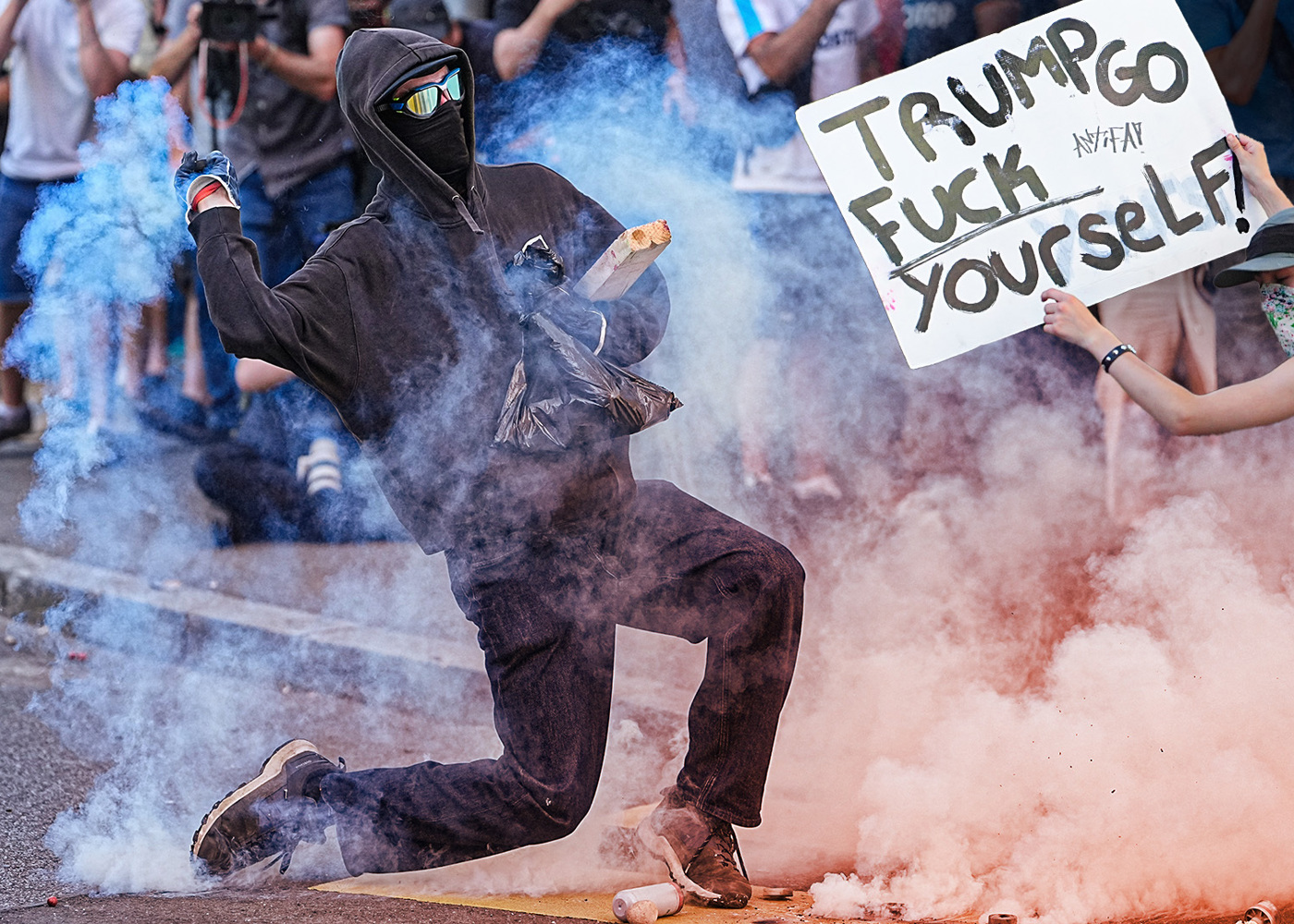
Thousands protested the G7 summit in Geneva, Switzerland, with violence erupting as demonstrators torched a Tesla, clashed with police, and damaged property including bank windows.

Newsroom
Newsroom Staff Writer
JUNE 14, 2026 AT 11:00 PM

According to Nius, the protests targeted the gathering of leaders from Germany, France, Britain, Italy, Canada, Japan, and the United States, with demonstrators primarily directing their anger at capitalism and American President Donald Trump. The G7 summit commenced on Monday in Évian, located on the French side of Lake Geneva approximately 50 kilometers from the protest site.

Security preparations for the event had been extensive, with approximately 7,000 security personnel deployed in anticipation of up to 50,000 demonstrators on the Swiss side. French authorities had made clear they would not tolerate protests on French soil, prompting organizers to register their demonstration in Geneva under the banner “No G7.” By late afternoon, organizers claimed tens of thousands had participated.
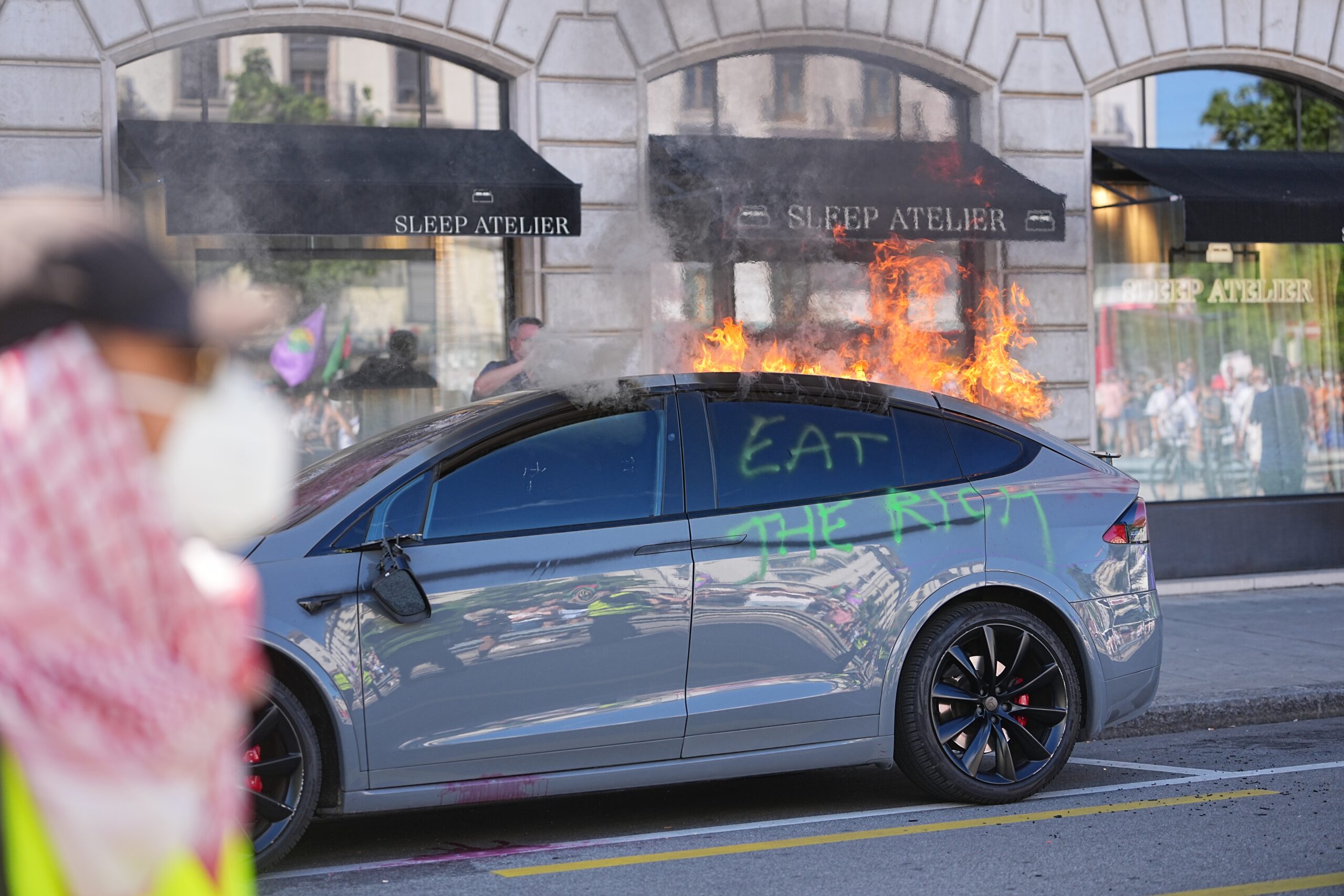
Ein Tesla wurde in Brand gesetzt.
Photo: nius.de

The demonstration proceeded along its authorized route through most of the afternoon without major incident. However, as the day progressed, violence erupted. Protesters hurled stones at police lines, prompting law enforcement to deploy tear gas. Near the city’s bus station, demonstrators set fire to a Tesla automobile.
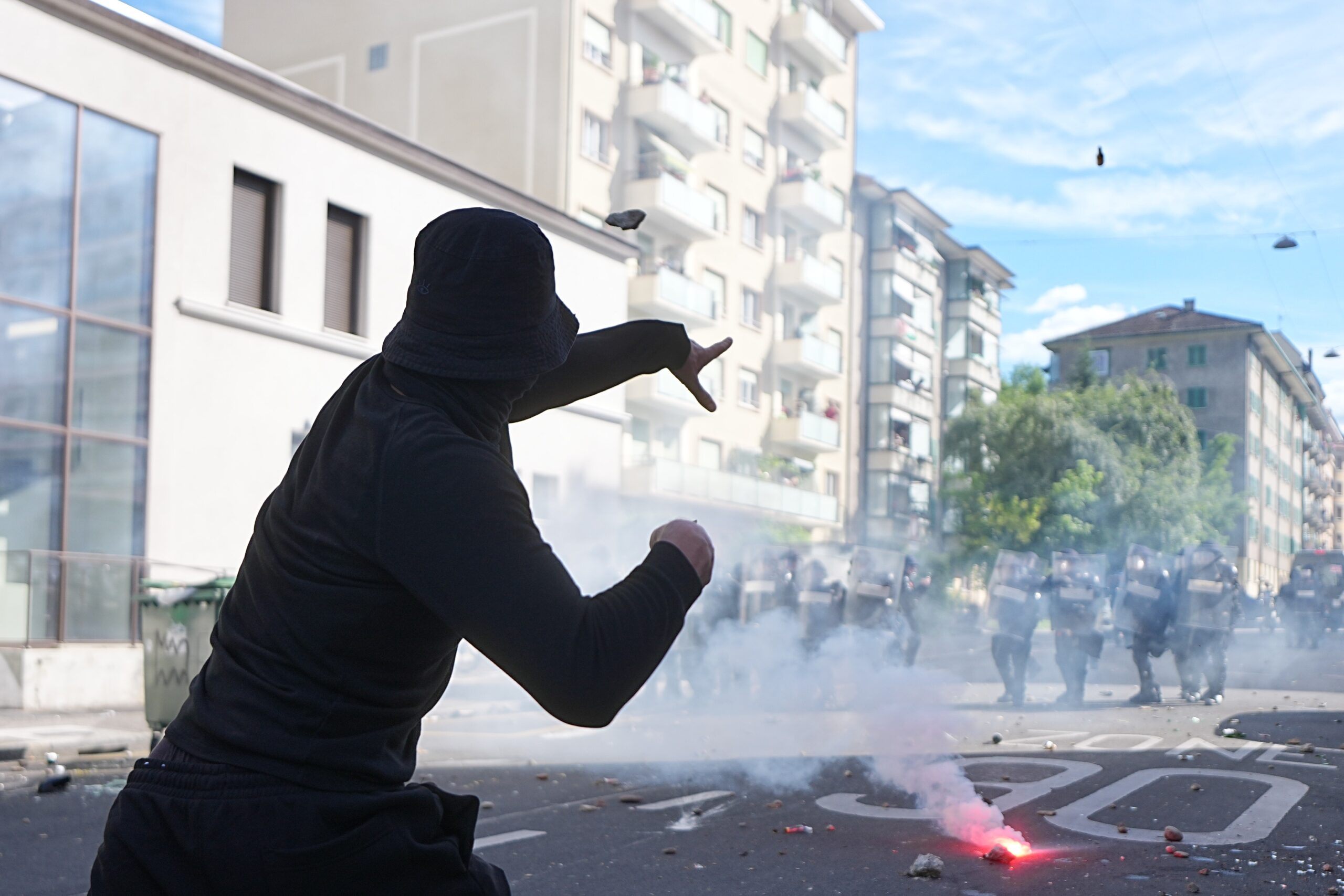
Einige Demonstranten skandierten nahe den Polizeiketten: „Die ganze Welt hasst die Polizei“.
Photo: nius.de

Property damage escalated as certain protesters tore down plywood boards that had been installed to protect hundreds of storefronts throughout the city. Windows were smashed at a bank and a moped dealership. Groups of demonstrators chanted anti-police slogans near security cordons, though they generally continued moving along the prescribed route.

Geneva police announced via Facebook that they had confiscated several items apparently intended for confrontations with law enforcement. The city’s preparations reflected deep concerns stemming from devastating riots during a 2003 demonstration against what was then the G8 summit, which still included Russia. Monica Bonfanti, the canton’s police chief, described those 2003 events as traumatic for Geneva law enforcement.

In the days leading up to the protests, hundreds of Geneva business owners and hoteliers boarded up their storefronts with plywood. Police reinforcements had been called in from across Switzerland, with several thousand officers conducting vehicle and identity checks throughout the city for two days prior to the demonstration.
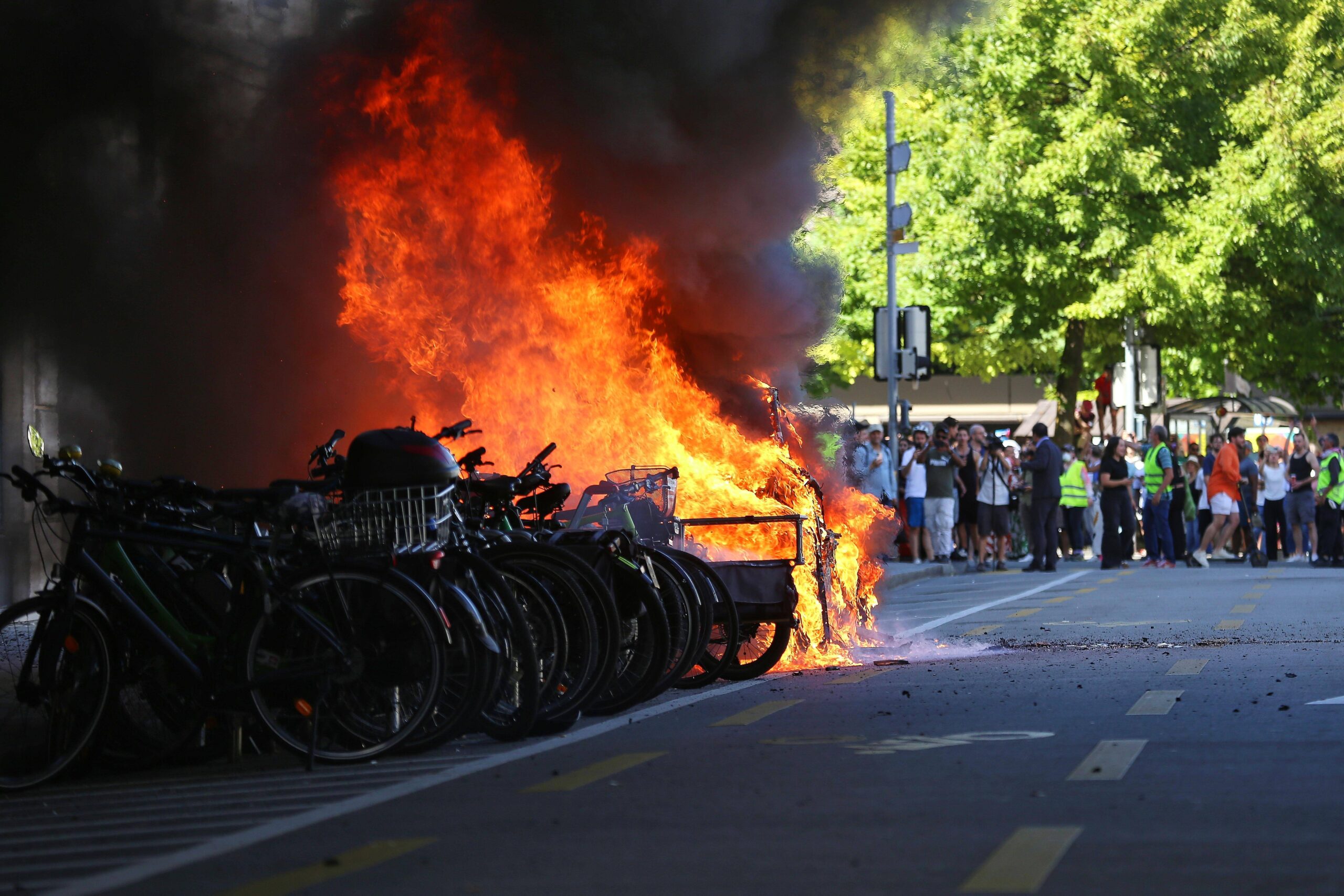
Die Protestler legten einen Brand.
Photo: nius.de

The protest coalition, comprised of approximately 60 different groups including feminists, trade union representatives, Kurds, and a self-described “revolutionary bloc,” gathered in a park directly on Lake Geneva under bright sunshine. Many participants carried Palestinian flags alongside their protest banners.

According to their published manifesto, the “No G7” coalition protested against American military bases in Europe and advocated for higher minimum wages, free contraceptives, unlimited freedom of movement for workers worldwide, and the removal of gender designation from all identity documents. They characterized the G7 as an illegitimate and obsolete institution, describing it as a private club out of step with the modern world where major powers make decisions favoring the most privileged minority at the expense of more than 90 percent of the global population.

The security operation extended beyond managing the demonstration itself. Swiss forces were also tasked with ensuring the safe arrival of heads of state and government. Geneva’s airport, the closest to Évian, served as the primary arrival point for most delegations on Monday.

Geneva’s geographical position resembles an enclave surrounded by French territory. Swiss authorities closed approximately 30 border crossings, leaving only seven operational, and began conducting identity checks throughout the city as early as Friday.

With information from Nius

Share:
Newsroom
Newsroom

NewsFire.GR is a website created with the hope that the media will rediscover their true identity, which is none other than informing the public about the real stakes of our times. Journalism and political analysis must hold power accountable, not serve it.

According to Nius, the protests targeted the gathering of leaders from Germany, France, Britain, Italy, Canada, Japan, and the United States, with demonstrators primarily directing their anger at capitalism and American President Donald Trump. The G7 summit commenced on Monday in Évian, located on the French side of Lake Geneva approximately 50 kilometers from the protest site.

Security preparations for the event had been extensive, with approximately 7,000 security personnel deployed in anticipation of up to 50,000 demonstrators on the Swiss side. French authorities had made clear they would not tolerate protests on French soil, prompting organizers to register their demonstration in Geneva under the banner “No G7.” By late afternoon, organizers claimed tens of thousands had participated.

Ein Tesla wurde in Brand gesetzt.
Photo: nius.de

The demonstration proceeded along its authorized route through most of the afternoon without major incident. However, as the day progressed, violence erupted. Protesters hurled stones at police lines, prompting law enforcement to deploy tear gas. Near the city’s bus station, demonstrators set fire to a Tesla automobile.

Einige Demonstranten skandierten nahe den Polizeiketten: „Die ganze Welt hasst die Polizei“.
Photo: nius.de

Property damage escalated as certain protesters tore down plywood boards that had been installed to protect hundreds of storefronts throughout the city. Windows were smashed at a bank and a moped dealership. Groups of demonstrators chanted anti-police slogans near security cordons, though they generally continued moving along the prescribed route.

Geneva police announced via Facebook that they had confiscated several items apparently intended for confrontations with law enforcement. The city’s preparations reflected deep concerns stemming from devastating riots during a 2003 demonstration against what was then the G8 summit, which still included Russia. Monica Bonfanti, the canton’s police chief, described those 2003 events as traumatic for Geneva law enforcement.

In the days leading up to the protests, hundreds of Geneva business owners and hoteliers boarded up their storefronts with plywood. Police reinforcements had been called in from across Switzerland, with several thousand officers conducting vehicle and identity checks throughout the city for two days prior to the demonstration.

Die Protestler legten einen Brand.
Photo: nius.de

The protest coalition, comprised of approximately 60 different groups including feminists, trade union representatives, Kurds, and a self-described “revolutionary bloc,” gathered in a park directly on Lake Geneva under bright sunshine. Many participants carried Palestinian flags alongside their protest banners.

According to their published manifesto, the “No G7” coalition protested against American military bases in Europe and advocated for higher minimum wages, free contraceptives, unlimited freedom of movement for workers worldwide, and the removal of gender designation from all identity documents. They characterized the G7 as an illegitimate and obsolete institution, describing it as a private club out of step with the modern world where major powers make decisions favoring the most privileged minority at the expense of more than 90 percent of the global population.

The security operation extended beyond managing the demonstration itself. Swiss forces were also tasked with ensuring the safe arrival of heads of state and government. Geneva’s airport, the closest to Évian, served as the primary arrival point for most delegations on Monday.

Geneva’s geographical position resembles an enclave surrounded by French territory. Swiss authorities closed approximately 30 border crossings, leaving only seven operational, and began conducting identity checks throughout the city as early as Friday.

With information from Nius