Necessary Cookies

Required for the site to function. Cannot be disabled.

Analytics Cookies

Help us understand how visitors interact with our site (Google Analytics via GTM).

Marketing Cookies

Used to track visitors and deliver personalised advertisements.

We use cookies to enhance your browsing experience and analyse site traffic. By clicking Accept All, you consent to our use of cookies. Privacy Policy
NewsFire Global
Home News Europe World Christianity Culture Wars Opinion Video
Information
About Us Authors Advertising Terms & Conditions Privacy Policy Contact
R2B Media
R2B NEWSFIRE.GR PAPAFOTIS.GR THRACTION HELLENIC CONSERVATIVES RIGHT2THEBONE YT
News Culture Wars

Theater Play on Magdeburg Christmas Market Terror Ends in Climate Utopia

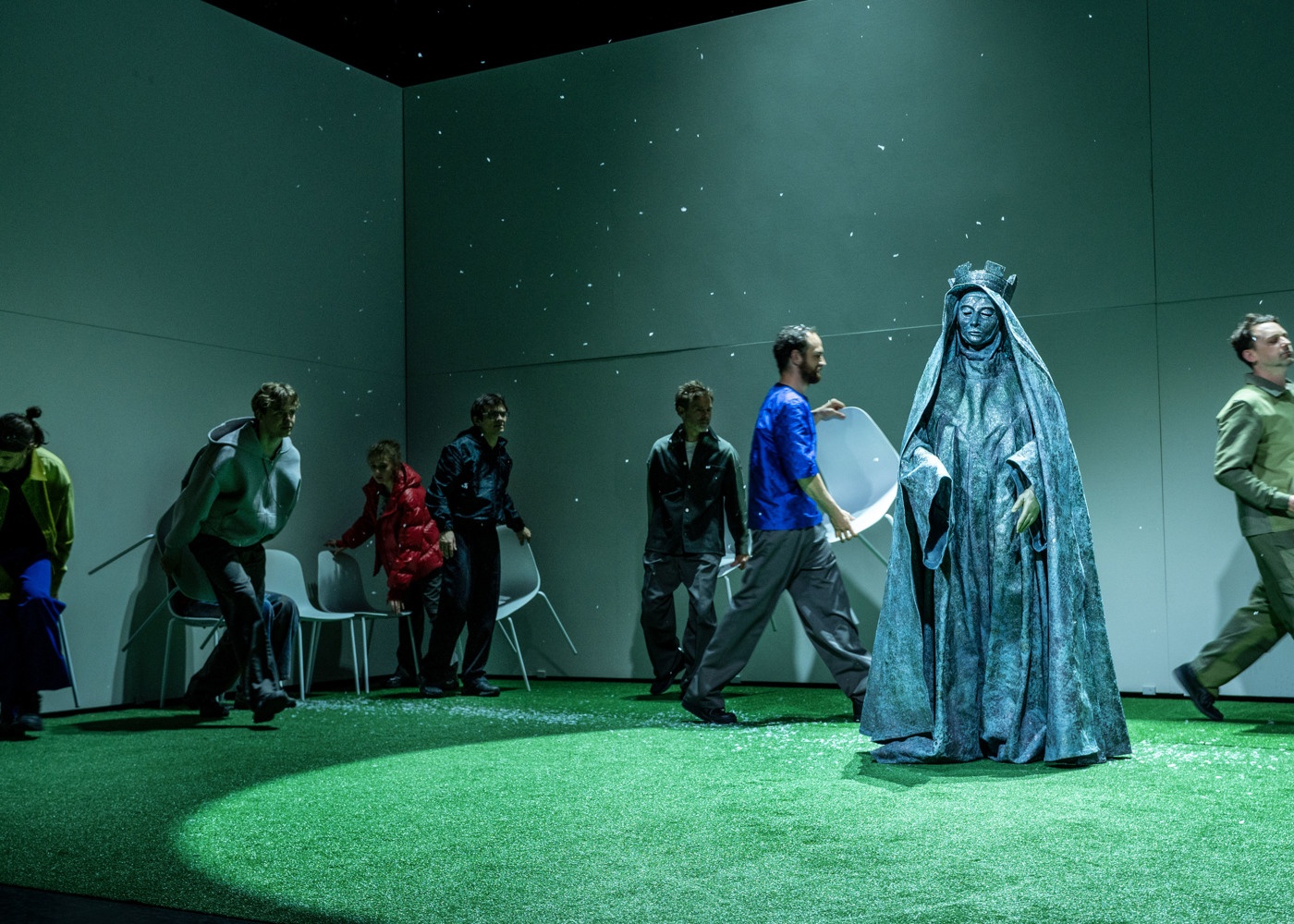
A Magdeburg theater play about the 2024 Christmas market attack omits the perpetrator and ends with a climate utopia featuring migrant integration themes, sparking protests.
Stefanos Banos
Stefanos Banos Staff Writer
MAY 28, 2026 AT 6:03 PM

The play “Wunde Stadt” (Wounded City) at Theater Magdeburg premiered over the weekend to nearly 200 spectators, according to Nius. The production attempts to process the December 20, 2024 attack in which Saudi Arabian national Taleb al-Abdulmohsen drove a BMW X3 through the city’s Christmas market, killing six people and injuring over 300. Al-Abdulmohsen had arrived in Germany in 2006.

Director Kevin Rittberger made the deliberate choice to exclude both the attack itself and the attacker from the stage, claiming he wanted to deny them a platform. Instead, the production frames the aftermath through what Nius describes as a therapeutic group session, with ten actors in gray work pants and hooded sweatshirts running in circles while carrying chairs, the scraping sound hammering into the audience’s ears.
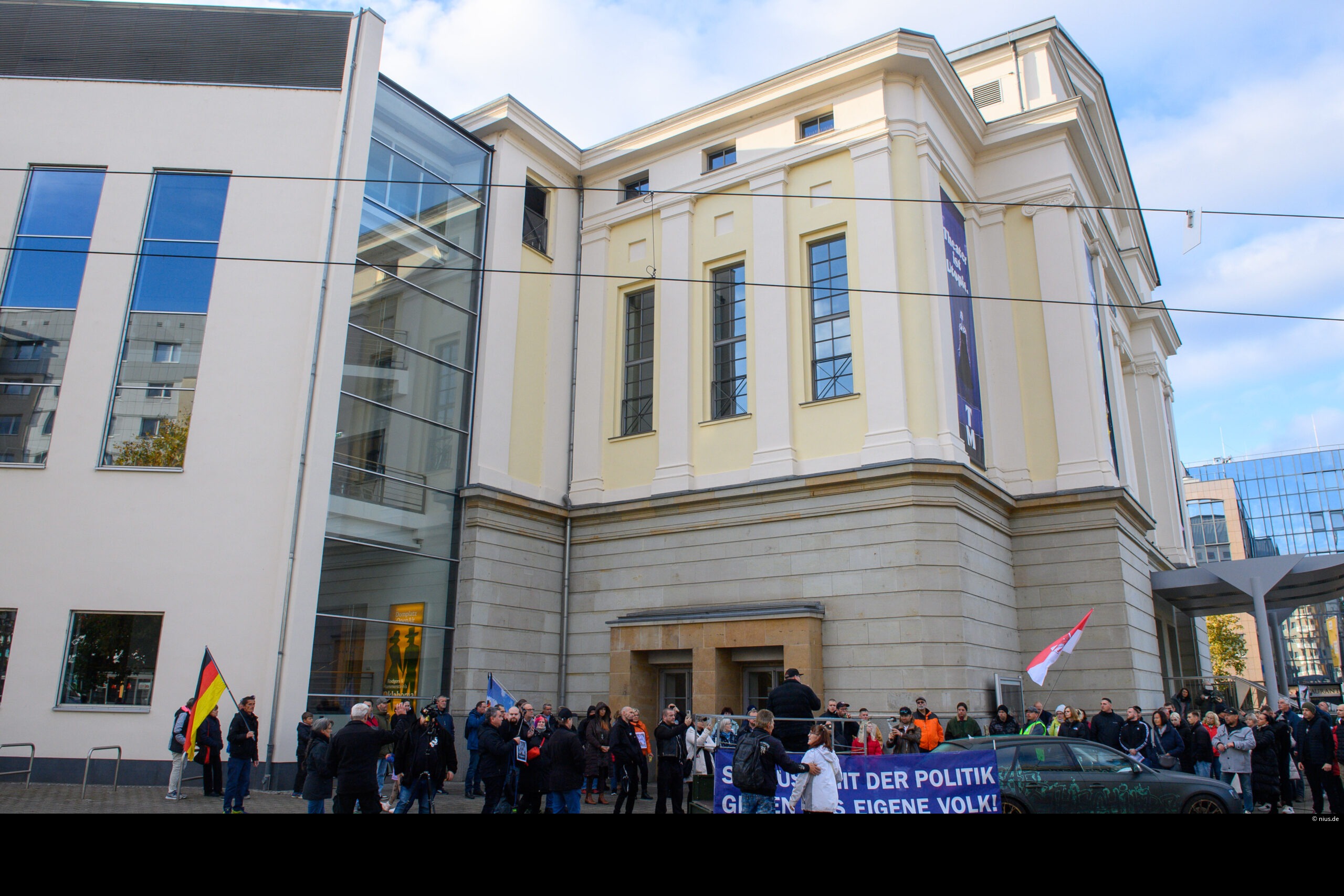
Gegner des Stücks demonstrieren im November 2025 vor dem Magdeburger Theater.
Photo: nius.de

Controversial Approach Draws Protests

The production generated demonstrations outside the theater as early as November 2025, with protesters carrying signs reading “Remigration saves lives.” The theater felt compelled to hold a press conference before the premiere. The controversy comes as state elections approach in Saxony-Anhalt, where the AfD has called for new patriotic art. Theater management positioned itself explicitly as opposition to such demands.

In the performance, victims, helpers, and a nurse share their experiences and anger in a circle format. Individual voices ask questions like “Why do we let such people into the country?” while others respond with statements such as “I don’t like blanket statements about groups of people” and “You can’t let traumatized people get away with everything.”
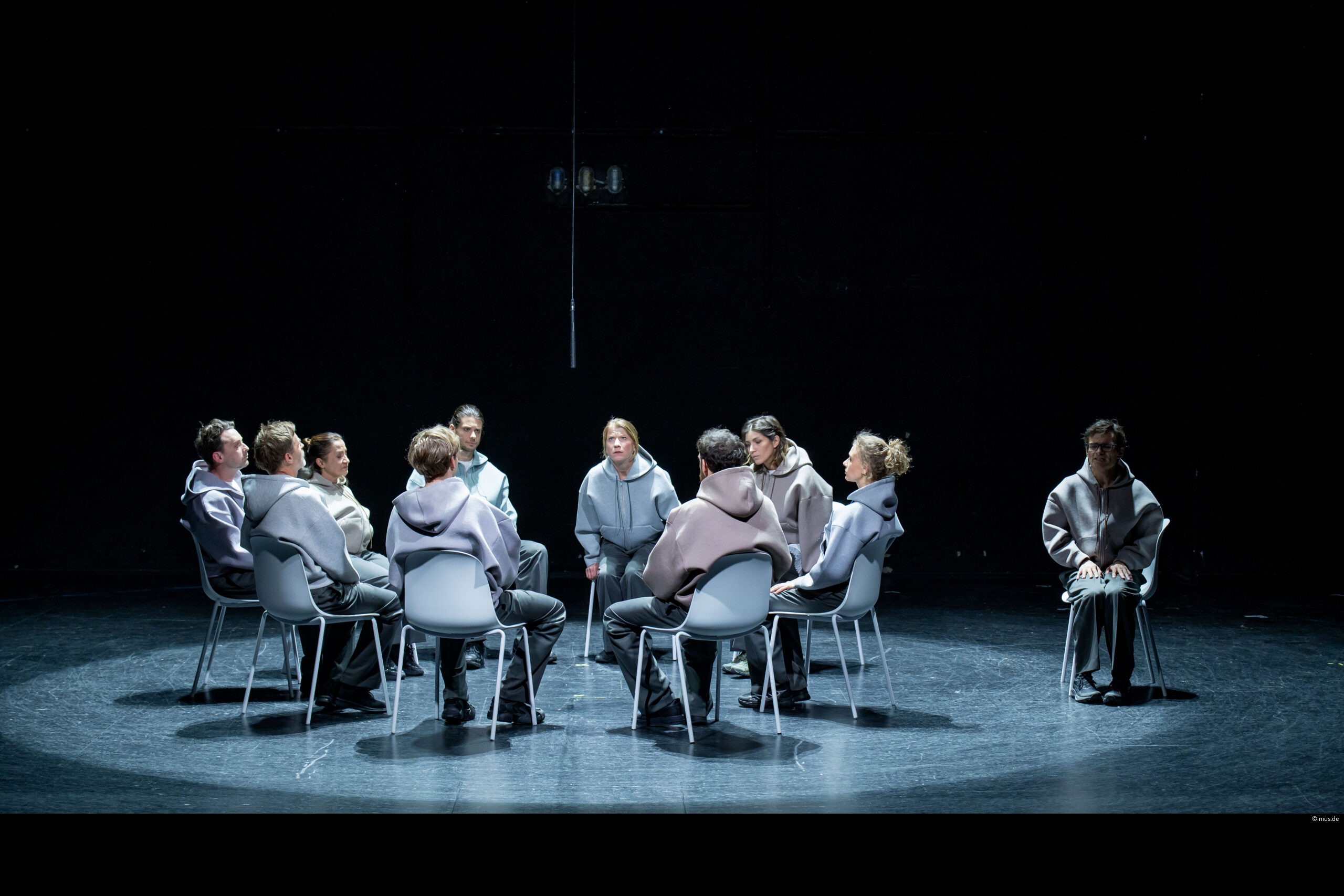
Der therapeutische Stuhlkreis steht im Mittelpunkt des Stücks. Quelle: Theater Magdeburg
Photo: nius.de

Migrant Nurse Takes Center Stage

As the play progresses, a migrant nurse becomes the central figure, the only character granted an explicit ethnic identity by the director. She expresses uncertainty about remaining in Magdeburg due to insults she has faced since the attack, as Nius reports. This framing stands in stark contrast to the attacker’s own stated motivations. Al-Abdulmohsen wrote before his rampage that he wanted to “kill Germans” and reaffirmed afterward his intent to “slaughter more Germans.”

Rather than exploring German victimhood, the production shifts into what Nius characterizes as hymns to Arab culture and multiculturalism. The play claims that without Arabic scholars translating Aristotle’s works, there would have been no Enlightenment. It notes that algebra originated in Baghdad and that Magdeburg historically heard many different languages.

Climate Utopia Finale

The performance concludes with a surreal climate dystopia vision set in a future Magdeburg experiencing 37-degree heat. In this imagined scenario, an Iraqi character named Amir and a German-Chinese woman named Jia reconcile while kneading spelt dough together. Amir bakes with cardamom and rosewater while Jia rides a cargo bicycle, and together they prepare Hungarian lángos in what the play calls the “flood city” of Magdeburg.
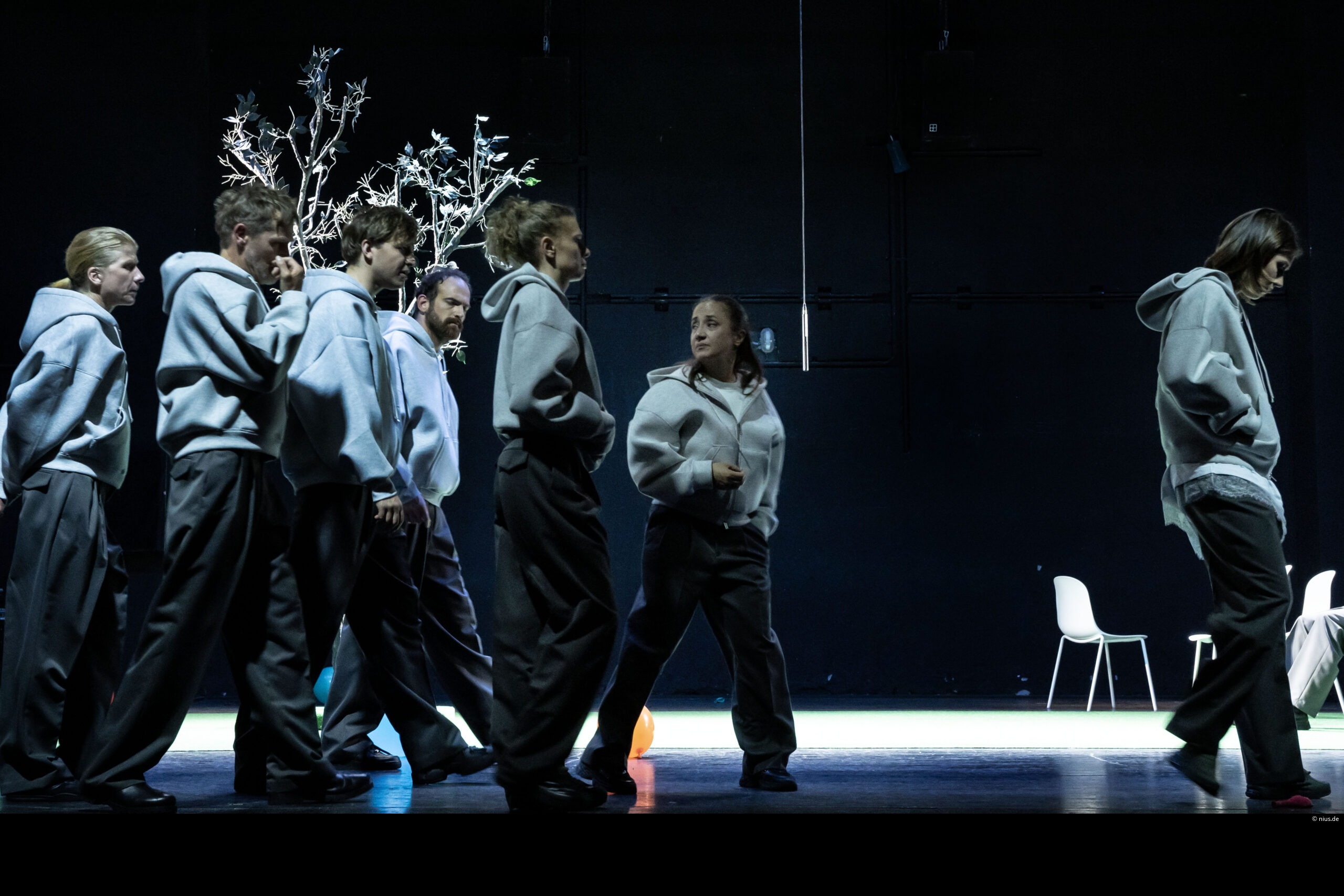
Die Therapie-Gruppe streift im Einheitsgrau über die Bühne.
Photo: nius.de

The Arab nurse demands that “we must mourn together,” repeating “we together” in what Nius describes as sounding almost like a threat. The chorus repeatedly hammers into the audience that “trauma is not political,” suggesting that anger over migration policy represents merely a “phase of mourning” rather than legitimate political sentiment.

The production attempts to connect the Saudi Arabian’s vehicular rampage with the Holocaust, the Thirty Years’ War, and climate change within a single narrative framework. Critics see this as emblematic of left-wing attempts to reframe migrant terror attacks away from immigration policy questions.

With information from Nius

Share:
Stefanos Banos
Stefanos Banos

Stefanos Banos was born in Piraeus and is an editor at NewsFire.GR, specializing in political analysis and international relations. He graduated from the Department of Communication and Media at the University of Bremen in Germany, where he also completed his Master of Arts in Communication and Media Studies. Married to Zoi, he is a proud father of three boys.

The play “Wunde Stadt” (Wounded City) at Theater Magdeburg premiered over the weekend to nearly 200 spectators, according to Nius. The production attempts to process the December 20, 2024 attack in which Saudi Arabian national Taleb al-Abdulmohsen drove a BMW X3 through the city’s Christmas market, killing six people and injuring over 300. Al-Abdulmohsen had arrived in Germany in 2006.

Director Kevin Rittberger made the deliberate choice to exclude both the attack itself and the attacker from the stage, claiming he wanted to deny them a platform. Instead, the production frames the aftermath through what Nius describes as a therapeutic group session, with ten actors in gray work pants and hooded sweatshirts running in circles while carrying chairs, the scraping sound hammering into the audience’s ears.

Gegner des Stücks demonstrieren im November 2025 vor dem Magdeburger Theater.
Photo: nius.de

Controversial Approach Draws Protests

The production generated demonstrations outside the theater as early as November 2025, with protesters carrying signs reading “Remigration saves lives.” The theater felt compelled to hold a press conference before the premiere. The controversy comes as state elections approach in Saxony-Anhalt, where the AfD has called for new patriotic art. Theater management positioned itself explicitly as opposition to such demands.

In the performance, victims, helpers, and a nurse share their experiences and anger in a circle format. Individual voices ask questions like “Why do we let such people into the country?” while others respond with statements such as “I don’t like blanket statements about groups of people” and “You can’t let traumatized people get away with everything.”

Der therapeutische Stuhlkreis steht im Mittelpunkt des Stücks. Quelle: Theater Magdeburg
Photo: nius.de

Migrant Nurse Takes Center Stage

As the play progresses, a migrant nurse becomes the central figure, the only character granted an explicit ethnic identity by the director. She expresses uncertainty about remaining in Magdeburg due to insults she has faced since the attack, as Nius reports. This framing stands in stark contrast to the attacker’s own stated motivations. Al-Abdulmohsen wrote before his rampage that he wanted to “kill Germans” and reaffirmed afterward his intent to “slaughter more Germans.”

Rather than exploring German victimhood, the production shifts into what Nius characterizes as hymns to Arab culture and multiculturalism. The play claims that without Arabic scholars translating Aristotle’s works, there would have been no Enlightenment. It notes that algebra originated in Baghdad and that Magdeburg historically heard many different languages.

Climate Utopia Finale

The performance concludes with a surreal climate dystopia vision set in a future Magdeburg experiencing 37-degree heat. In this imagined scenario, an Iraqi character named Amir and a German-Chinese woman named Jia reconcile while kneading spelt dough together. Amir bakes with cardamom and rosewater while Jia rides a cargo bicycle, and together they prepare Hungarian lángos in what the play calls the “flood city” of Magdeburg.

Die Therapie-Gruppe streift im Einheitsgrau über die Bühne.
Photo: nius.de

The Arab nurse demands that “we must mourn together,” repeating “we together” in what Nius describes as sounding almost like a threat. The chorus repeatedly hammers into the audience that “trauma is not political,” suggesting that anger over migration policy represents merely a “phase of mourning” rather than legitimate political sentiment.

The production attempts to connect the Saudi Arabian’s vehicular rampage with the Holocaust, the Thirty Years’ War, and climate change within a single narrative framework. Critics see this as emblematic of left-wing attempts to reframe migrant terror attacks away from immigration policy questions.

With information from Nius

