Necessary Cookies

Required for the site to function. Cannot be disabled.

Analytics Cookies

Help us understand how visitors interact with our site (Google Analytics via GTM).

Marketing Cookies

Used to track visitors and deliver personalised advertisements.

We use cookies to enhance your browsing experience and analyse site traffic. By clicking Accept All, you consent to our use of cookies. Privacy Policy
NewsFire Global
Home News Europe World Christianity Culture Wars Opinion Video
Information
About Us Authors Advertising Terms & Conditions Privacy Policy Contact
R2B Media
R2B NEWSFIRE.GR PAPAFOTIS.GR THRACTION HELLENIC CONSERVATIVES RIGHT2THEBONE YT
News World

Syria Vows to Keep Nuclear Materials Under IAEA Oversight

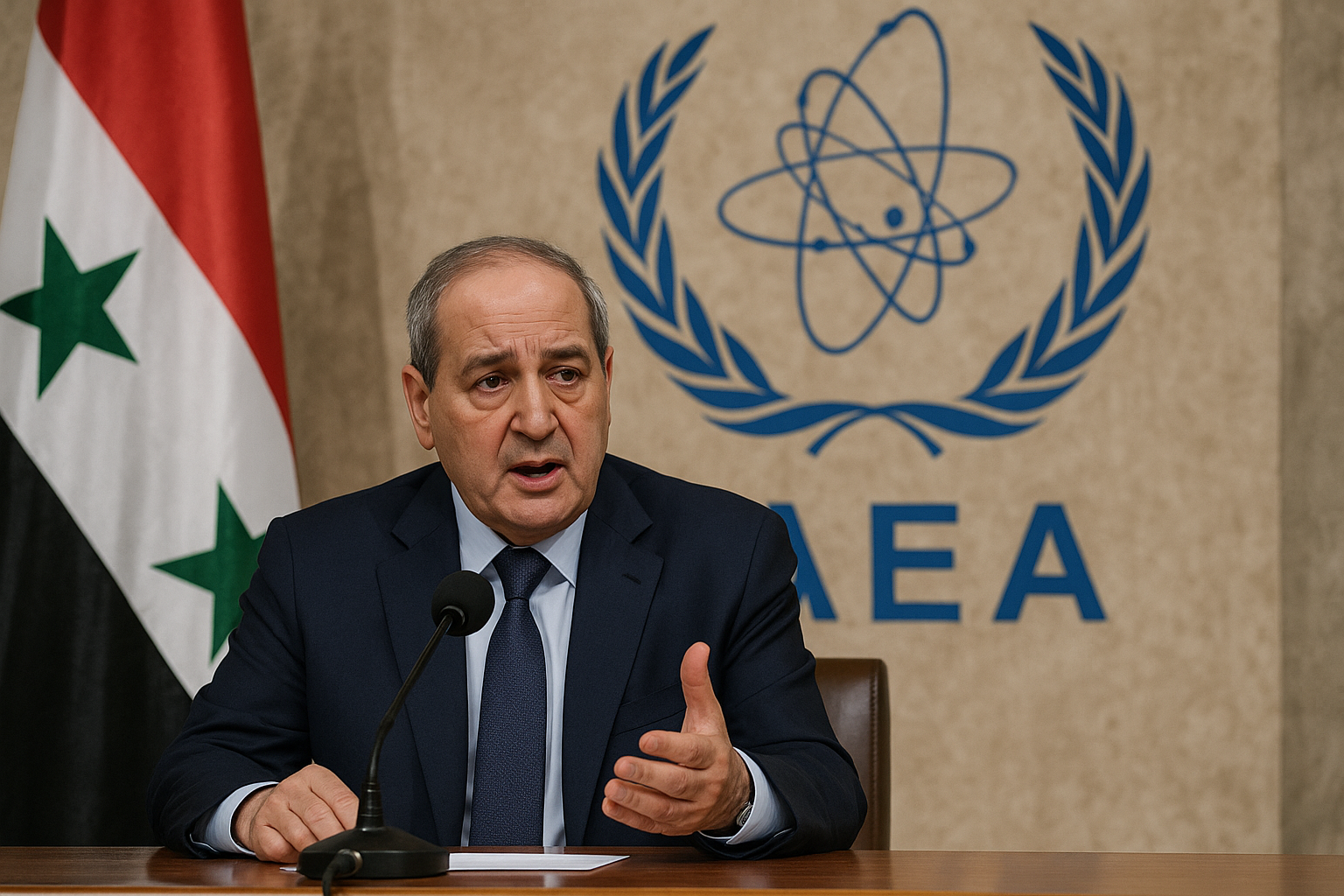
Syria's new Foreign Minister confirmed nuclear materials will remain under Syrian control while subject to International Atomic Energy Agency monitoring.

AUGUST 18, 2026 AT 6:49 PM

The announcement comes as the transitional government in Damascus moves to clarify its position on sensitive security matters inherited from the Assad regime, according to Telegram @me_observer_TG.

Asaad Hassan al-Shibani, serving as Foreign Minister in Syria’s interim administration, made the statement amid ongoing questions about the disposition of strategic materials and facilities following the regime change that took place earlier this year.

The commitment to IAEA oversight represents a continuity in Syria’s formal obligations under international non-proliferation frameworks, even as the country undergoes significant political transformation.

Syria has been a signatory to the Nuclear Non-Proliferation Treaty since 1969, though its nuclear program has been subject to scrutiny and controversy over the years. The IAEA has conducted inspections and monitoring activities in Syria, particularly following a 2007 Israeli airstrike on what was alleged to be an undeclared nuclear reactor site at al-Kibar.

The Foreign Minister’s assurance that nuclear material will remain in Syrian custody while accepting IAEA guarantees appears designed to balance national sovereignty concerns with international transparency requirements.

How the transitional government will manage its relationship with the IAEA and other international bodies remains a key question as Damascus seeks to rebuild diplomatic relationships and potentially secure the lifting of sanctions that have crippled the Syrian economy for over a decade.

With information from Telegram @me_observer_TG

Share:
Eleni Papadaki-Van Der Merwe

She was born in 1986 in Johannesburg, South Africa. She is the granddaughter of an immigrant from Crete who settled in the Greek community of Johannesburg (one of the largest in Africa). She holds a bachelor’s degree in International Relations and Political Science from the University of the Witwatersrand (Wits) in Johannesburg and a master’s degree in Journalism from Rhodes University in Grahamstown. She began her career at English-language media outlets in Johannesburg, covering politics and economics, with a focus on issues related to migration and the diaspora. She moved to Athens in 2015 to “return to her roots,” initially to pursue graduate studies, and has remained there permanently. She is married to an Afrikaner; they have two children and live in the southern suburbs of Athens.

The announcement comes as the transitional government in Damascus moves to clarify its position on sensitive security matters inherited from the Assad regime, according to Telegram @me_observer_TG.

Asaad Hassan al-Shibani, serving as Foreign Minister in Syria’s interim administration, made the statement amid ongoing questions about the disposition of strategic materials and facilities following the regime change that took place earlier this year.

The commitment to IAEA oversight represents a continuity in Syria’s formal obligations under international non-proliferation frameworks, even as the country undergoes significant political transformation.

Syria has been a signatory to the Nuclear Non-Proliferation Treaty since 1969, though its nuclear program has been subject to scrutiny and controversy over the years. The IAEA has conducted inspections and monitoring activities in Syria, particularly following a 2007 Israeli airstrike on what was alleged to be an undeclared nuclear reactor site at al-Kibar.

The Foreign Minister’s assurance that nuclear material will remain in Syrian custody while accepting IAEA guarantees appears designed to balance national sovereignty concerns with international transparency requirements.

How the transitional government will manage its relationship with the IAEA and other international bodies remains a key question as Damascus seeks to rebuild diplomatic relationships and potentially secure the lifting of sanctions that have crippled the Syrian economy for over a decade.

With information from Telegram @me_observer_TG

