Necessary Cookies

Required for the site to function. Cannot be disabled.

Analytics Cookies

Help us understand how visitors interact with our site (Google Analytics via GTM).

Marketing Cookies

Used to track visitors and deliver personalised advertisements.

We use cookies to enhance your browsing experience and analyse site traffic. By clicking Accept All, you consent to our use of cookies. Privacy Policy
NewsFire Global
Home News Europe World Christianity Culture Wars Opinion Video
Information
About Us Authors Advertising Terms & Conditions Privacy Policy Contact
R2B Media
R2B NEWSFIRE.GR PAPAFOTIS.GR THRACTION HELLENIC CONSERVATIVES RIGHT2THEBONE YT
News Europe

Steinmeier Accuses Citizens of Voting Against Democracy

Germany's Federal President Frank-Walter Steinmeier says he will abandon required political neutrality to oppose voters choosing parties he claims threaten democracy.

Dimitris Papafotis
Dimitris Papafotis Editor in Chief
JULY 13, 2026 AT 7:13 PM

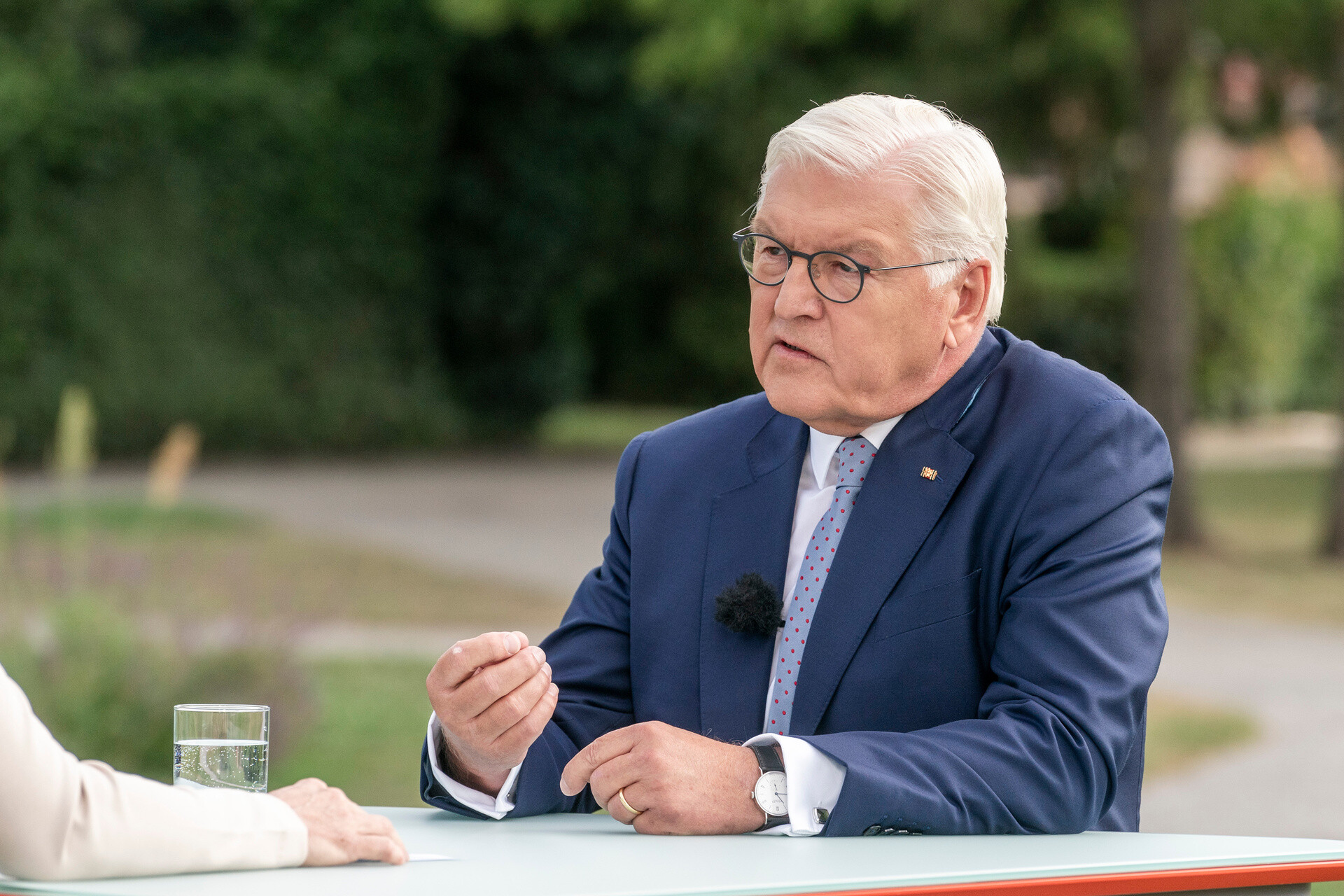
In a startling admission during his summer interview with ZDF television, Steinmeier told journalist Diana Zimmermann that he no longer considers nonpartisanship sufficient when citizens vote against the democratic system, according to Nius.

The Federal President stated that a considerable portion of voters today are not choosing between right or left, correct or incorrect, but are voting against democracy itself. In such circumstances, he argued, the question of impartiality is no longer adequate and one must take a position.

The comment represents a fundamental departure from the constitutional role of Germany’s head of state, who is expected to serve as a unifying figure for all citizens regardless of party affiliation. The office of Federal President carries an explicit mandate for political neutrality and nonpartisanship.

Targeting Democratic Opposition

Steinmeier’s remarks are widely understood to target the Alternative for Germany party, which has gained substantial electoral support across the country. The implication is clear: when citizens fail to vote for approved parties, the head of state believes intervention is necessary.

That a sitting Federal President would declare his intention to discard the political restraint of his office in order to suppress a democratically elected party represents a troubling erosion of institutional norms. The position is designed to represent all Germans, including those who support opposition parties, and maintain strict separation from partisan political battles.

Constitutional Concerns

The Federal President’s role in Germany’s political system is deliberately conceived as an integrative function, standing above the fray of daily partisan conflict. By announcing his intention to take sides in what he frames as a battle for democracy, Steinmeier effectively declares that voters who choose alternative parties place themselves outside the community he is willing to represent.

This marks a significant shift in how Germany’s institutional establishment views its relationship with citizens who reject the political consensus. Rather than accepting democratic outcomes and working within constitutional bounds, the country’s highest ceremonial office now signals its willingness to become an active partisan force.

With information from Nius

Share:
Dimitris Papafotis
Dimitris Papafotis

Dimitris Papafotis is the editor-in-chief of NewsFire.GR. He was born and raised in Athens. He studied at the Journalism Workshop (1991-1993). He currently lives in Pyrgos, Ilia, where he has been active in radio and various newspapers, while also maintaining his personal blog, Papafotis.gr.

In a startling admission during his summer interview with ZDF television, Steinmeier told journalist Diana Zimmermann that he no longer considers nonpartisanship sufficient when citizens vote against the democratic system, according to Nius.

The Federal President stated that a considerable portion of voters today are not choosing between right or left, correct or incorrect, but are voting against democracy itself. In such circumstances, he argued, the question of impartiality is no longer adequate and one must take a position.

The comment represents a fundamental departure from the constitutional role of Germany’s head of state, who is expected to serve as a unifying figure for all citizens regardless of party affiliation. The office of Federal President carries an explicit mandate for political neutrality and nonpartisanship.

Targeting Democratic Opposition

Steinmeier’s remarks are widely understood to target the Alternative for Germany party, which has gained substantial electoral support across the country. The implication is clear: when citizens fail to vote for approved parties, the head of state believes intervention is necessary.

That a sitting Federal President would declare his intention to discard the political restraint of his office in order to suppress a democratically elected party represents a troubling erosion of institutional norms. The position is designed to represent all Germans, including those who support opposition parties, and maintain strict separation from partisan political battles.

Constitutional Concerns

The Federal President’s role in Germany’s political system is deliberately conceived as an integrative function, standing above the fray of daily partisan conflict. By announcing his intention to take sides in what he frames as a battle for democracy, Steinmeier effectively declares that voters who choose alternative parties place themselves outside the community he is willing to represent.

This marks a significant shift in how Germany’s institutional establishment views its relationship with citizens who reject the political consensus. Rather than accepting democratic outcomes and working within constitutional bounds, the country’s highest ceremonial office now signals its willingness to become an active partisan force.

With information from Nius

