
Steingart Compares Chancellor Merz to Communist Leader Ulbricht
A German journalist compares Chancellor Merz to East German leader Ulbricht, warning that demanding more work from citizens without offering benefits risks provoking mass resistance.


Writing in his influential “Morning Briefing” newsletter to mark the anniversary of the June 17, 1953 East German uprising, Gabor Steingart argues that Friedrich Merz and the late SED chief are connected by an invisible thread, according to Nius.
The June 17 uprising was observed as a public holiday in West Germany for 36 years before being quietly dropped from the calendar after reunification. Steingart warns that when you abolish a national holiday, the memory it represents often dies too.
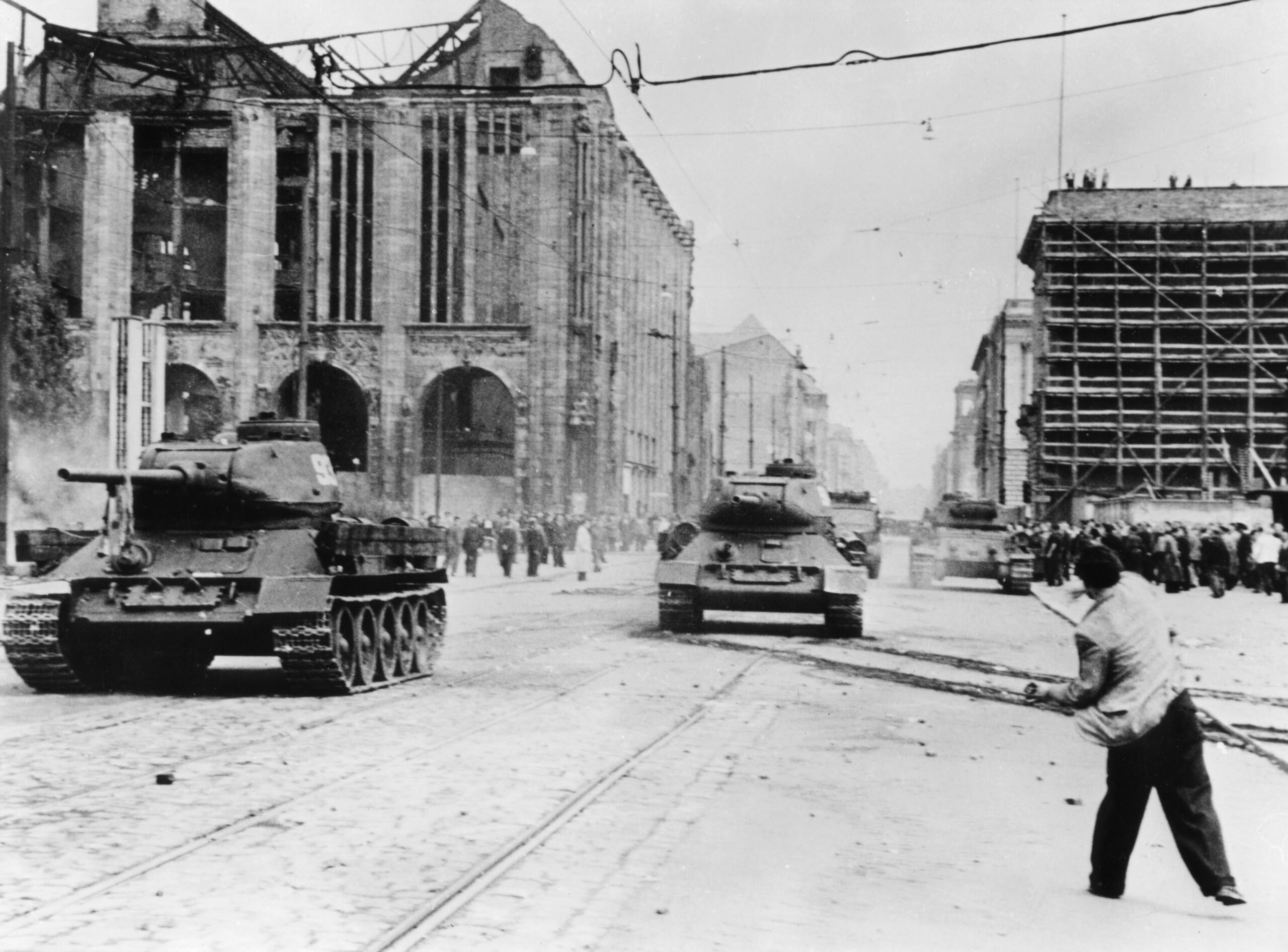
Economic Crisis Sparked Mass Revolt
The 1953 uprising began when workers in East Berlin took to the streets to protest against the communist government. On Stalinallee, demonstrators chanted against Ulbricht with slogans demanding his removal. The protests quickly spread across the Soviet occupation zone, with roughly one million people participating in strikes and unrest. More than 250 buildings were occupied before Soviet troops brutally crushed the rebellion.
The catalyst was an economic crisis. The centrally planned economy was failing, food supplies were inadequate, and nearly 31,000 people fled to the West in March 1953 alone. The situation exploded when the SED regime announced in May 1953 that work quotas would be increased by ten percent, meaning workers would have to labor faster and harder for the same wages.
Merz’s Work Demands Echo Failed Socialist Approach
Steingart draws his first lesson from history for the present day: state appeals for harder work make people stubborn, not industrious. He applies this directly to Germany’s current debate over longer working hours, which Chancellor Merz has been publicly advocating.
While acknowledging the obvious differences between a communist dictatorship and the Federal Republic, Steingart argues the underlying mechanism is similar. Citizens respond negatively when political leaders demand more work during crisis periods without offering a compelling benefit in return.

The journalist characterizes Merz’s pitch as a poor bargain: more work in exchange for preserving the status quo. At best, people would work harder simply to keep things as they are. At the World Economic Forum in Davos, Merz identified productivity as Germany’s main obstacle, noting that Germans work 200 fewer hours annually than their Swiss counterparts.
The difference between 1953 and today, Steingart observes, is that workers no longer take to the streets with shovels in hand. Instead, modern citizens express their dissatisfaction by crossing their arms in stubborn refusal.
Worker Protests Serve as Early Warning Systems
Steingart’s second conclusion from the June 17 events is that labor protests function as early warning systems. Political leaders who ignore or attempt to suppress them only intensify the underlying crisis.
He warns against responding to political discontent with intimidation or criminal prosecution, specifically citing recent cases where citizens face legal action for allegedly insulting government officials with terms like “dandy” or “lying Fritz.” Such heavy-handed responses do not produce consent, Steingart writes, but rather generate resistance.
The People Remain Sovereign
The third principle Steingart emphasizes is fundamental: the people are sovereign. Even in the East German dictatorship, a government could not govern indefinitely against the will of its population, despite having the Stasi secret police and National People’s Army at its disposal. This applies even more forcefully in the Federal Republic.
Steingart invokes Bertolt Brecht’s famous satirical poem written after June 17, 1953, which mocked the communist government for losing confidence in its own people. Brecht’s sardonic conclusion suggested it would be simpler for the government to dissolve the people and elect a new one.
In contrast, popular sovereignty is explicitly enshrined in Germany’s Basic Law. All state authority emanates from the people, Steingart notes, adding that this principle has even made it into the constitution.
Modern Resistance Happens at the Ballot Box
The key difference between then and now, Steingart concludes, is the method of resistance. In 1953, East German workers grabbed their tools and marched. Today’s citizens express their discontent in voting booths rather than streets.
The warning to Chancellor Merz is clear: political leaders who believe they can govern without genuine popular support dramatically increase their political risk. A government that asks more of its citizens while offering nothing compelling in return may find that invisible thread connecting it to failed regimes of the past becoming uncomfortably visible.
With information from Nius





