
Starmer Pushes AI Surveillance to Monitor Children’s Photos
Britain plans to force Apple and Google to implement age verification systems blocking children from pornography, but critics warn the measure creates a backdoor digital ID scheme.
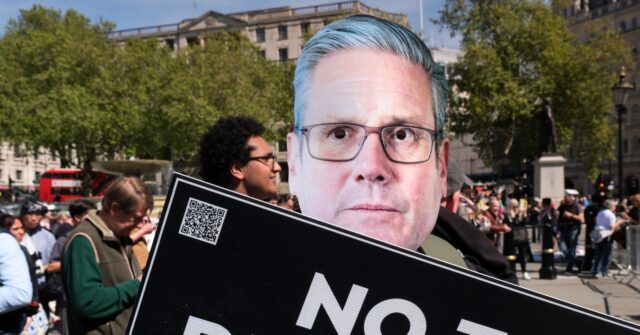

Prime Minister Sir Keir Starmer announced on Monday that legislation will be introduced compelling tech firms to deploy device-level controls preventing minors from taking, sharing, or viewing nude images within a three-month deadline, or face substantial fines and potential criminal prosecution.
Speaking at a London Tech Week event, Starmer indicated that major technology companies already possess the capability to activate built-in age verification systems on their platforms. He expressed confidence that these innovative corporations could resolve the technical challenges involved in blocking children from explicit material.
Civil liberties advocates have raised alarm that the government’s demands would necessitate collecting biometric data from ordinary citizens to verify their ages, potentially establishing the framework for a comprehensive digital ID infrastructure.
Silkie Carlo of the Big Brother Watch campaign group issued a stark warning on Monday that the proposals represent a dangerous overreach. She stated that while protecting children online remains vital, these outrageous plans fail to address underlying causes of online harm and will result in population-wide identity checks for basic device usage.
Carlo emphasized that the Labour government is effectively threatening to impose ID checks for internet access, arguing that no one in a democracy should be required to show their passport simply to get online. She warned that citizens refusing to submit to identity verification would face internet access restrictions, with their devices essentially child-locked, while minors could easily circumvent such measures by using adult-registered devices.
Beyond age verification requirements, the government is also pursuing mandates for companies to implement scanning programs for private messages to detect child abuse material, powers granted under the controversial Online Safety Bill which enables broadcast regulator Ofcom to make such demands of technology firms.
Several tech companies have warned that British government demands would force them to compromise their encryption systems. Messaging platform Signal has stated it would rather withdraw from the UK market entirely than compromise user privacy, noting that the history of digital technology is filled with government attempts to create backdoors accessible only to authorities while remaining secure against other threats—efforts that have failed because such aims are fundamentally impossible.
Carlo described government mandates requiring all phones in Britain to incorporate ID and surveillance software as crossing the Rubicon, warning it would transform the UK into one of the world’s most authoritarian internet regimes. She called for rigorous public and parliamentary scrutiny that is currently entirely absent.
Imposing new internet restrictions appears to be a central priority for the Labour Party during its current term. Former Safeguarding and Violence Against Women and Girls Minister Jess Phillips cited insufficient progress on these measures as a primary reason for her resignation last month, arguing that because Labour governments come around rarely, the party should seize this opportunity with gusto rather than waiting for crises to force faster progress.
Following Phillips’ departure, Starmer announced plans for national digital IDs, a longtime objective of former Labour Prime Minister Sir Tony Blair that was abandoned after the 2010 general election amid widespread public opposition to what many viewed as an authoritarian and fundamentally un-British concept.
Whether Starmer will remain in power long enough to implement such a system remains uncertain, as the Prime Minister faces the prospect of a leadership challenge in coming weeks. Reform UK leader Nigel Farage has pledged to overturn any digital ID system if his party gains power at the next general election.
The Labour Party appears to be unifying behind the initiative. Home Secretary Shabana Mahmood issued a forceful defense of the government’s plans on Monday, declaring she makes no apologies for doing the right thing to protect children from paedophiles. Mahmood characterized the measures as stopping coercion and sextortion of children rather than surveilling or policing people’s phones.
Mahmood asserted that the required technology already exists on devices and tech firms simply need to activate it to block children from viewing nude imagery.
With information from Breitbart News





