Necessary Cookies

Required for the site to function. Cannot be disabled.

Analytics Cookies

Help us understand how visitors interact with our site (Google Analytics via GTM).

Marketing Cookies

Used to track visitors and deliver personalised advertisements.

We use cookies to enhance your browsing experience and analyse site traffic. By clicking Accept All, you consent to our use of cookies. Privacy Policy
NewsFire Global
Home News Europe World Christianity Culture Wars Opinion Video
Information
About Us Authors Advertising Terms & Conditions Privacy Policy Contact
R2B Media
R2B NEWSFIRE.GR PAPAFOTIS.GR THRACTION HELLENIC CONSERVATIVES RIGHT2THEBONE YT
News Europe

Socialism rises from the dead in Britain

The UK has installed its seventh prime minister in a decade as Andy Burnham replaces Keir Starmer without a general election, continuing Britain's pattern of leadership instability.

Dimitris Papafotis
Dimitris Papafotis Editor in Chief
JULY 20, 2026 AT 9:58 PM

The United Kingdom has once again changed its prime minister this week, marking the seventh leadership transition in just a decade—and Americans should pay attention to what’s happening across the Atlantic, according to Hugo Gurdon writing in Washington Examiner.


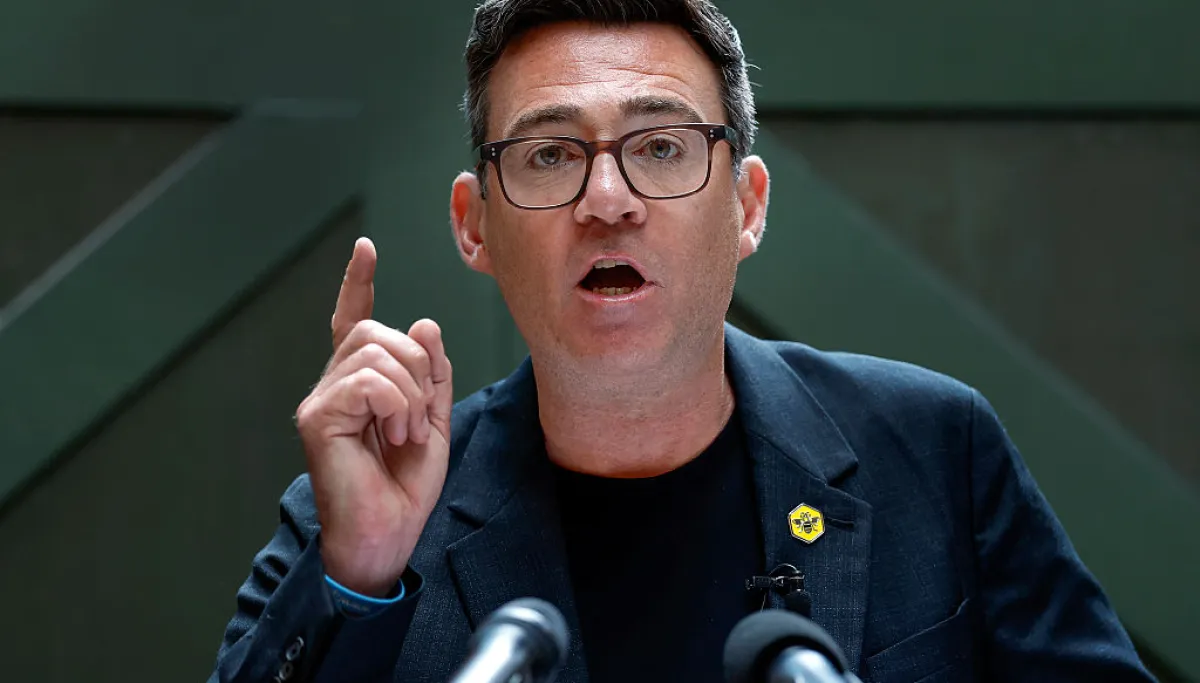
Andy Burnham, often dubbed the King of the North, has replaced Sir Keir Starmer as Britain’s leader after meeting with King Charles III to form a new government. The transition occurred without a general election, following demands from over 100 Labour MPs for Starmer to step down after he lost the confidence of his own parliamentary majority.

While the practice of installing prime ministers without direct public votes may seem peculiar to outsiders, it reflects Britain’s parliamentary system where the executive branch is embedded within the legislature. Unlike the American separation of powers, the British prime minister must command majority support in the House of Commons. Past recent leaders including Theresa May, Boris Johnson, Liz Truss, and Rishi Sunak similarly took office between general elections.

In his first address outside 10 Downing Street, Burnham acknowledged the troubling pattern of leadership instability, stating his generation of politicians must rise to the new challenge and restore Britain’s standing. He pledged to make politics work better for the nation.

A Leftward Turn Away From Thatcher’s Success

Despite two potential advantages over his predecessor—stronger communication skills and hints at abandoning Starmer’s destructive climate policies—Burnham appears poised to lead Britain even further left. Under Starmer, Britain pursued absurd energy policies that left domestic oil and gas reserves under the North Sea untapped while purchasing the same resources from Norway at premium prices, resulting in the highest energy costs in Europe.

More concerning is Burnham’s explicit rejection of the proven economic model established by Margaret Thatcher four decades ago. When Thatcher became prime minister, she rescued Britain from its status as the sick man of Europe through decisive free-market reforms. She slashed taxes by more than half, reduced inflation by 90 percent, and propelled Britain to become the world’s fourth-largest economy within five years.

Thatcher achieved this transformation by privatizing nationalized industries including railways, utility companies, and British Airways, turning ordinary Britons into shareholders with direct stakes in national prosperity. She freed businesses from state control and restored economic dynamism.

More State Control, Less Individual Freedom

Burnham now advocates the opposite approach, repeatedly calling for expanded government control over sectors that function best under private enterprise. Whether he intends to renationalize airlines, energy companies, and other industries Thatcher successfully privatized remains unclear, as the new prime minister has provided few concrete policy details.

The Labour leader also shows no inclination to reform Britain’s culturally destructive immigration policies, which have sent a clear message to native Britons that their government prioritizes foreign interests over their own citizens. This stands in stark contrast to Thatcher’s approach of putting British interests first.

As Britain embarks on yet another leadership experiment, the question for Americans isn’t just academic. The trajectory of Britain’s oldest ally—whether toward renewed prosperity through economic freedom or deeper decline through socialist intervention—carries implications for the entire Western alliance.

With information from Washington Examiner

Share:
Dimitris Papafotis
Dimitris Papafotis

Dimitris Papafotis is the editor-in-chief of NewsFire.GR. He was born and raised in Athens. He studied at the Journalism Workshop (1991-1993). He currently lives in Pyrgos, Ilia, where he has been active in radio and various newspapers, while also maintaining his personal blog, Papafotis.gr.

The United Kingdom has once again changed its prime minister this week, marking the seventh leadership transition in just a decade—and Americans should pay attention to what’s happening across the Atlantic, according to Hugo Gurdon writing in Washington Examiner.

Andy Burnham, often dubbed the King of the North, has replaced Sir Keir Starmer as Britain’s leader after meeting with King Charles III to form a new government. The transition occurred without a general election, following demands from over 100 Labour MPs for Starmer to step down after he lost the confidence of his own parliamentary majority.

While the practice of installing prime ministers without direct public votes may seem peculiar to outsiders, it reflects Britain’s parliamentary system where the executive branch is embedded within the legislature. Unlike the American separation of powers, the British prime minister must command majority support in the House of Commons. Past recent leaders including Theresa May, Boris Johnson, Liz Truss, and Rishi Sunak similarly took office between general elections.

In his first address outside 10 Downing Street, Burnham acknowledged the troubling pattern of leadership instability, stating his generation of politicians must rise to the new challenge and restore Britain’s standing. He pledged to make politics work better for the nation.

A Leftward Turn Away From Thatcher’s Success

Despite two potential advantages over his predecessor—stronger communication skills and hints at abandoning Starmer’s destructive climate policies—Burnham appears poised to lead Britain even further left. Under Starmer, Britain pursued absurd energy policies that left domestic oil and gas reserves under the North Sea untapped while purchasing the same resources from Norway at premium prices, resulting in the highest energy costs in Europe.

More concerning is Burnham’s explicit rejection of the proven economic model established by Margaret Thatcher four decades ago. When Thatcher became prime minister, she rescued Britain from its status as the sick man of Europe through decisive free-market reforms. She slashed taxes by more than half, reduced inflation by 90 percent, and propelled Britain to become the world’s fourth-largest economy within five years.

Thatcher achieved this transformation by privatizing nationalized industries including railways, utility companies, and British Airways, turning ordinary Britons into shareholders with direct stakes in national prosperity. She freed businesses from state control and restored economic dynamism.

More State Control, Less Individual Freedom

Burnham now advocates the opposite approach, repeatedly calling for expanded government control over sectors that function best under private enterprise. Whether he intends to renationalize airlines, energy companies, and other industries Thatcher successfully privatized remains unclear, as the new prime minister has provided few concrete policy details.

The Labour leader also shows no inclination to reform Britain’s culturally destructive immigration policies, which have sent a clear message to native Britons that their government prioritizes foreign interests over their own citizens. This stands in stark contrast to Thatcher’s approach of putting British interests first.

As Britain embarks on yet another leadership experiment, the question for Americans isn’t just academic. The trajectory of Britain’s oldest ally—whether toward renewed prosperity through economic freedom or deeper decline through socialist intervention—carries implications for the entire Western alliance.

With information from Washington Examiner

