Necessary Cookies

Required for the site to function. Cannot be disabled.

Analytics Cookies

Help us understand how visitors interact with our site (Google Analytics via GTM).

Marketing Cookies

Used to track visitors and deliver personalised advertisements.

We use cookies to enhance your browsing experience and analyse site traffic. By clicking Accept All, you consent to our use of cookies. Privacy Policy
NewsFire Global
Home News Europe World Christianity Culture Wars Opinion Video
Information
About Us Authors Advertising Terms & Conditions Privacy Policy Contact
R2B Media
R2B NEWSFIRE.GR PAPAFOTIS.GR THRACTION HELLENIC CONSERVATIVES RIGHT2THEBONE YT
News World

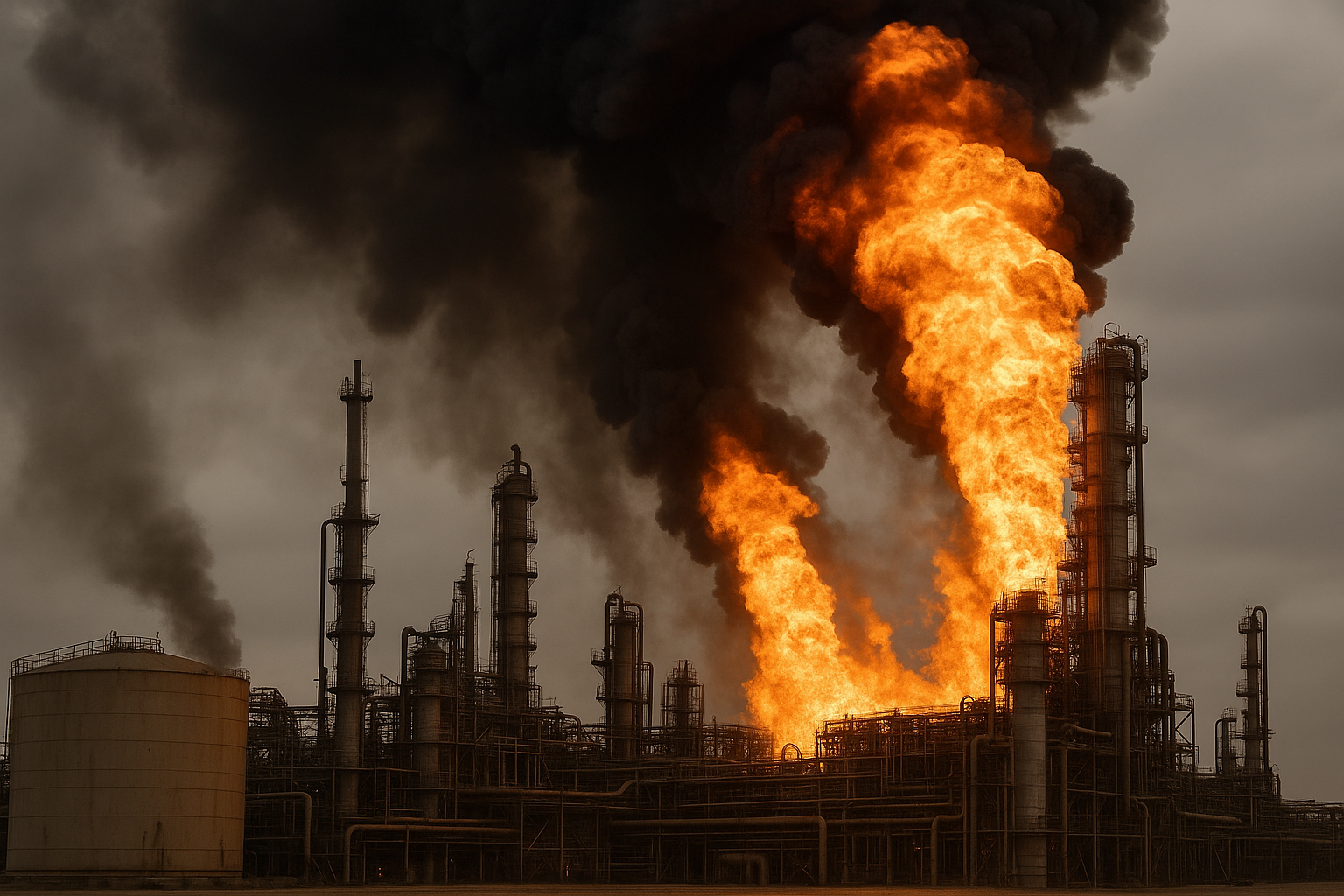
Saudi Aramco Refinery Hit by Iranian-Backed Houthi Strike

Renewed Houthi attacks on Saudi energy facilities are alarming Western nations concerned about global oil supply disruptions and Middle East stability amid the ongoing Yemen conflict.

JULY 25, 2026 AT 6:17 PM

The Iran-backed Houthi militia has intensified attacks targeting Saudi Arabian energy facilities in recent weeks, according to Telegram @OSINTLive, reviving concerns about the security of vital petroleum transit routes that supply European and American markets. The development marks a dangerous new phase in the long-running Yemen conflict with direct implications for Western energy security.

Strategic Energy Chokepoints Under Fire

Saudi Arabia remains one of the world’s largest oil exporters, with its production capacity and refining infrastructure serving as a cornerstone of global energy markets. Any sustained campaign against these facilities could send shockwaves through international oil prices, already under pressure from geopolitical tensions and constrained production capacity.

The Houthi movement, which controls significant territory in Yemen including the capital Sanaa, has previously demonstrated both the capability and willingness to strike deep inside Saudi territory using drones and missiles. Previous attacks on Saudi Aramco facilities in 2019 temporarily knocked out half of the kingdom’s oil production, sending global markets into turmoil.

Western Interests at Stake

Energy analysts warn that a new wave of attacks could force Western nations to confront difficult choices about military intervention and regional security commitments. The United States and European powers have substantial strategic interests in maintaining stable energy flows from the Gulf region, particularly as sanctions on Russian energy supplies have increased dependence on Middle Eastern producers.

The escalation also threatens maritime security in the Red Sea and Bab al-Mandab strait, through which millions of barrels of oil pass daily en route to European and Asian markets. Houthi forces have previously targeted commercial shipping in these waters, raising insurance costs and forcing some vessels to seek alternative routes.

Potential Scenarios for Western Involvement

Military strategists are reportedly considering several potential responses should the situation deteriorate further. These range from enhanced intelligence sharing and defensive weapons systems for Saudi Arabia to direct naval intervention to protect shipping lanes. The Biden administration has already faced criticism from conservative lawmakers for inadequate support of regional allies against Iranian proxy forces.

A full-scale regional conflict could draw in multiple actors, including Israel, which has its own concerns about Iranian weapons proliferation through Yemen. The Abraham Accords signatories view Houthi aggression as part of a broader Iranian strategy to destabilize the region and undermine normalization efforts between Arab states and Israel.

Iran’s Shadow Role

Western intelligence agencies have long documented Iranian military and financial support for the Houthis, including advanced weapons systems and tactical guidance. The Islamic Republic views the Yemen conflict as a cost-effective way to pressure Saudi Arabia and project power across the Arabian Peninsula without direct military confrontation.

Conservative security experts argue that the current escalation vindicates warnings about the dangers of appeasing Tehran and demonstrates the failure of diplomatic engagement strategies that do not include credible deterrence measures.

As winter approaches and European energy security remains precarious, any disruption to Gulf oil supplies could have cascading economic and political consequences across the Western world, potentially forcing governments to revisit their Middle East security commitments and energy diversification strategies.

With information from Telegram @OSINTLive

Share:
Eleni Papadaki-Van Der Merwe

She was born in 1986 in Johannesburg, South Africa. She is the granddaughter of an immigrant from Crete who settled in the Greek community of Johannesburg (one of the largest in Africa). She holds a bachelor’s degree in International Relations and Political Science from the University of the Witwatersrand (Wits) in Johannesburg and a master’s degree in Journalism from Rhodes University in Grahamstown. She began her career at English-language media outlets in Johannesburg, covering politics and economics, with a focus on issues related to migration and the diaspora. She moved to Athens in 2015 to “return to her roots,” initially to pursue graduate studies, and has remained there permanently. She is married to an Afrikaner; they have two children and live in the southern suburbs of Athens.

The Iran-backed Houthi militia has intensified attacks targeting Saudi Arabian energy facilities in recent weeks, according to Telegram @OSINTLive, reviving concerns about the security of vital petroleum transit routes that supply European and American markets. The development marks a dangerous new phase in the long-running Yemen conflict with direct implications for Western energy security.

Strategic Energy Chokepoints Under Fire

Saudi Arabia remains one of the world’s largest oil exporters, with its production capacity and refining infrastructure serving as a cornerstone of global energy markets. Any sustained campaign against these facilities could send shockwaves through international oil prices, already under pressure from geopolitical tensions and constrained production capacity.

The Houthi movement, which controls significant territory in Yemen including the capital Sanaa, has previously demonstrated both the capability and willingness to strike deep inside Saudi territory using drones and missiles. Previous attacks on Saudi Aramco facilities in 2019 temporarily knocked out half of the kingdom’s oil production, sending global markets into turmoil.

Western Interests at Stake

Energy analysts warn that a new wave of attacks could force Western nations to confront difficult choices about military intervention and regional security commitments. The United States and European powers have substantial strategic interests in maintaining stable energy flows from the Gulf region, particularly as sanctions on Russian energy supplies have increased dependence on Middle Eastern producers.

The escalation also threatens maritime security in the Red Sea and Bab al-Mandab strait, through which millions of barrels of oil pass daily en route to European and Asian markets. Houthi forces have previously targeted commercial shipping in these waters, raising insurance costs and forcing some vessels to seek alternative routes.

Potential Scenarios for Western Involvement

Military strategists are reportedly considering several potential responses should the situation deteriorate further. These range from enhanced intelligence sharing and defensive weapons systems for Saudi Arabia to direct naval intervention to protect shipping lanes. The Biden administration has already faced criticism from conservative lawmakers for inadequate support of regional allies against Iranian proxy forces.

A full-scale regional conflict could draw in multiple actors, including Israel, which has its own concerns about Iranian weapons proliferation through Yemen. The Abraham Accords signatories view Houthi aggression as part of a broader Iranian strategy to destabilize the region and undermine normalization efforts between Arab states and Israel.

Iran’s Shadow Role

Western intelligence agencies have long documented Iranian military and financial support for the Houthis, including advanced weapons systems and tactical guidance. The Islamic Republic views the Yemen conflict as a cost-effective way to pressure Saudi Arabia and project power across the Arabian Peninsula without direct military confrontation.

Conservative security experts argue that the current escalation vindicates warnings about the dangers of appeasing Tehran and demonstrates the failure of diplomatic engagement strategies that do not include credible deterrence measures.

As winter approaches and European energy security remains precarious, any disruption to Gulf oil supplies could have cascading economic and political consequences across the Western world, potentially forcing governments to revisit their Middle East security commitments and energy diversification strategies.

With information from Telegram @OSINTLive

