Necessary Cookies

Required for the site to function. Cannot be disabled.

Analytics Cookies

Help us understand how visitors interact with our site (Google Analytics via GTM).

Marketing Cookies

Used to track visitors and deliver personalised advertisements.

We use cookies to enhance your browsing experience and analyse site traffic. By clicking Accept All, you consent to our use of cookies. Privacy Policy
NewsFire Global
Home News Europe World Christianity Culture Wars Opinion Video
Information
About Us Authors Advertising Terms & Conditions Privacy Policy Contact
R2B Media
R2B NEWSFIRE.GR PAPAFOTIS.GR THRACTION HELLENIC CONSERVATIVES RIGHT2THEBONE YT
News World

Region Faces Growing Turmoil and Instability

Turkey's President Erdogan signaled Ankara's ambitions to dominate the emerging Middle East order while avoiding direct mention of Israel, as tensions escalate between the two regional powers.

AUGUST 28, 2026 AT 1:00 AM

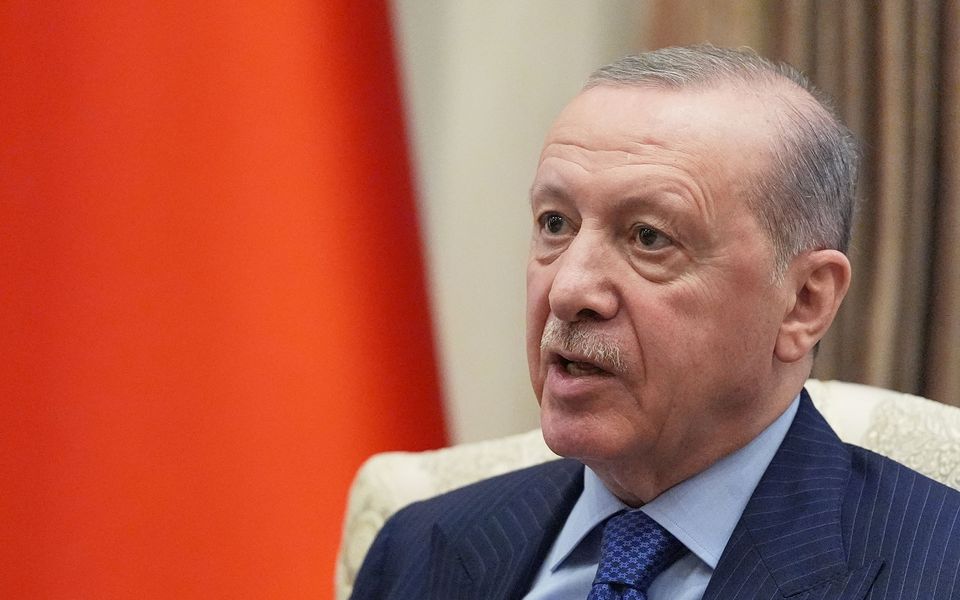
Turkey’s President Recep Tayyip Erdogan delivered a pointed speech at commemorations for the 955th anniversary of the Battle of Manzikert this week, declaring that history is being rewritten across the region and signaling Ankara’s ambitions to shape the emerging geopolitical order in the Middle East.

In an analysis published by Kathimerini (EN), Costas Iordanidis contends that Erdogan’s remarks on Wednesday reveal Turkey’s strategy to exploit current regional instability and establish itself as a dominant power. The Turkish leader emphasized that his country has no alternative but to remain strong and unified in this geographic zone, suggesting Ankara intends to leave its mark on whatever new regional framework emerges from current upheavals.

According to the analysis, the primary catalyst disrupting the region’s fragile equilibrium was the largely ineffective joint American and Israeli military operation against Iran, which Erdogan deliberately avoided mentioning by name in his address.

Turkey-Israel Confrontation Intensifies

The most significant tension now exists between Turkey and Israel, though Erdogan refrained from direct references to the Jewish state in his Manzikert speech. He made only one oblique reference, noting that Seljuk Sultan Alp Arslan’s victory over Byzantine Emperor Romanos IV Diogenes not only opened Anatolia to Turkish tribes but also paved the road that led Saladin to Jerusalem and Mehmed II to Constantinople.

The confrontation between the two regional powers continues to escalate, with Israeli Prime Minister Benjamin Netanyahu accusing Erdogan of attempting to resurrect the Ottoman Empire, while Netanyahu himself seeks to secure Israeli hegemony throughout the Middle East by whatever means necessary.

Greece Absent From Turkish Rhetoric

Notably absent from Erdogan’s Manzikert address were any references to Greece or Cyprus. The period of intense rhetorical confrontation between the Turkish president and Greek Prime Minister Kyriakos Mitsotakis appears to have concluded, at least temporarily.

However, Ankara remains visibly concerned about the strategic alliance between Greece, Cyprus, and Israel. Turkish leadership took particular note of the August 18-19 visit by Greece’s Chief of the Hellenic National Defense General Staff, General Dimitrios Houpis, to Tel Aviv, where he conducted talks with his Israeli counterpart, Lieutenant General Eyal Zamir.

The regional situation remains highly volatile, with potential for unforeseen developments that could further destabilize an already turbulent Middle East.

With information from Kathimerini (EN)
Share:
Eleni Papadaki-Van Der Merwe

She was born in 1986 in Johannesburg, South Africa. She is the granddaughter of an immigrant from Crete who settled in the Greek community of Johannesburg (one of the largest in Africa). She holds a bachelor’s degree in International Relations and Political Science from the University of the Witwatersrand (Wits) in Johannesburg and a master’s degree in Journalism from Rhodes University in Grahamstown. She began her career at English-language media outlets in Johannesburg, covering politics and economics, with a focus on issues related to migration and the diaspora. She moved to Athens in 2015 to “return to her roots,” initially to pursue graduate studies, and has remained there permanently. She is married to an Afrikaner; they have two children and live in the southern suburbs of Athens.

Turkey’s President Recep Tayyip Erdogan delivered a pointed speech at commemorations for the 955th anniversary of the Battle of Manzikert this week, declaring that history is being rewritten across the region and signaling Ankara’s ambitions to shape the emerging geopolitical order in the Middle East.

In an analysis published by Kathimerini (EN), Costas Iordanidis contends that Erdogan’s remarks on Wednesday reveal Turkey’s strategy to exploit current regional instability and establish itself as a dominant power. The Turkish leader emphasized that his country has no alternative but to remain strong and unified in this geographic zone, suggesting Ankara intends to leave its mark on whatever new regional framework emerges from current upheavals.

According to the analysis, the primary catalyst disrupting the region’s fragile equilibrium was the largely ineffective joint American and Israeli military operation against Iran, which Erdogan deliberately avoided mentioning by name in his address.

Turkey-Israel Confrontation Intensifies

The most significant tension now exists between Turkey and Israel, though Erdogan refrained from direct references to the Jewish state in his Manzikert speech. He made only one oblique reference, noting that Seljuk Sultan Alp Arslan’s victory over Byzantine Emperor Romanos IV Diogenes not only opened Anatolia to Turkish tribes but also paved the road that led Saladin to Jerusalem and Mehmed II to Constantinople.

The confrontation between the two regional powers continues to escalate, with Israeli Prime Minister Benjamin Netanyahu accusing Erdogan of attempting to resurrect the Ottoman Empire, while Netanyahu himself seeks to secure Israeli hegemony throughout the Middle East by whatever means necessary.

Greece Absent From Turkish Rhetoric

Notably absent from Erdogan’s Manzikert address were any references to Greece or Cyprus. The period of intense rhetorical confrontation between the Turkish president and Greek Prime Minister Kyriakos Mitsotakis appears to have concluded, at least temporarily.

However, Ankara remains visibly concerned about the strategic alliance between Greece, Cyprus, and Israel. Turkish leadership took particular note of the August 18-19 visit by Greece’s Chief of the Hellenic National Defense General Staff, General Dimitrios Houpis, to Tel Aviv, where he conducted talks with his Israeli counterpart, Lieutenant General Eyal Zamir.

The regional situation remains highly volatile, with potential for unforeseen developments that could further destabilize an already turbulent Middle East.

With information from Kathimerini (EN)